Get in Touch with SINOFUDE Company

Contact Form 使用中

Gummy Depositor Systems for Industrial Confectionery Production

A gummy depositor is the forming unit of a starchless gummy line. It is a candy depositor built for one job, metering cooked syrup into individual mould cavities, and the weight it holds decides whether the rest of your line is worth running. SINOFUDE builds servo depositing systems in five sizes, and every one of them holds depositing weight to 0.1 g.

This page is written for manufacturers sizing a line, not for anyone comparing benchtop units. The smallest model here fills 20 moulds per stroke and draws 78 kW. If you are filling trays by hand today and want the next step up, a tabletop depositor is the honest answer, and the section on when a mogul or tabletop unit fits better explains where that boundary sits.

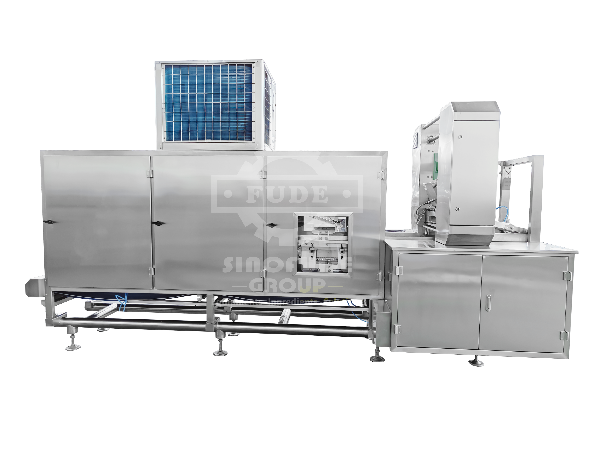
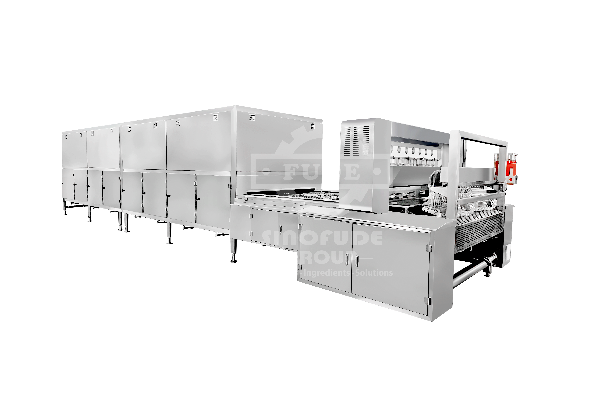
Gummy Depositor View 1
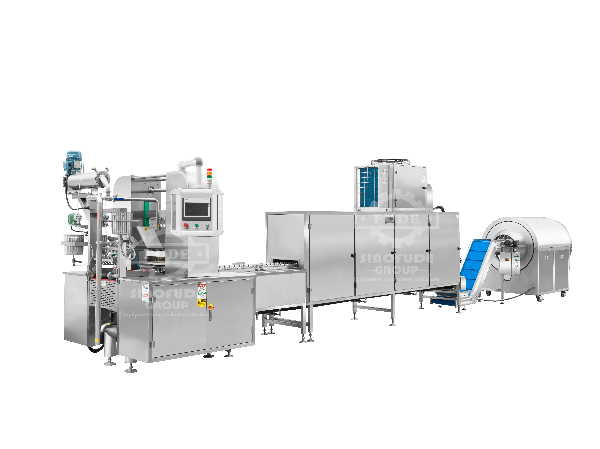
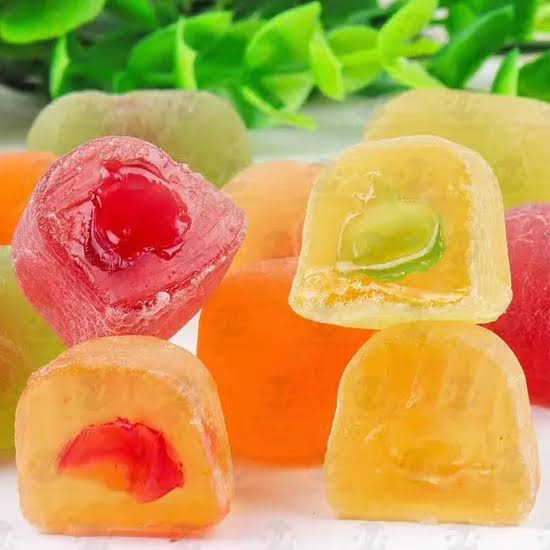
Gummy Depositor View 2
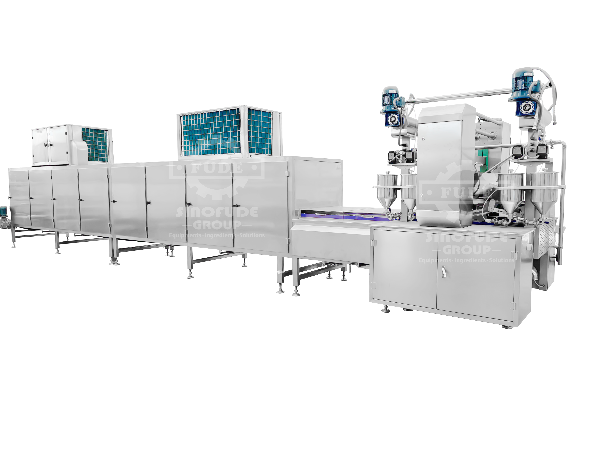
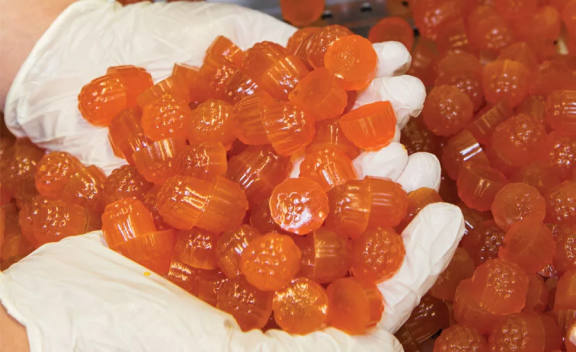
Gummy Depositor View 3

Reply within 24 hours

30-45 working days for a single depositing machine

Depositing weight tolerance 0.1 g

Five models, CLM40 to CLM600

SINOFUDE Gummy Depositor Range at a Glance

Industrial Gummy Depositor Range

Models

CLM40, CLM80, CLM150, CLM300, CLM600

Depositing weight tolerance

0.1 g on every model in the range

Moulds per stroke

20 on CLM40 through CLM150, 40 on CLM300, 80 on CLM600

Installed power

78 kW on CLM40 rising to 400 kW on CLM600

Operators required

2 on CLM40, 4 on every larger model

Mould changeover

30 minutes on CLM40, 120 minutes on CLM600

System Selection Protocol

Those six rows make up the entire selection problem, and the specification section below sets out The Four-Row Read of them. Moulds per stroke provides the number of products leaving the depositing head per cycle. Installed power and footprint determine if your structure can accommodate the machine. Operator number also establishes the running cost that is never reflected in a quote, and changeover time determines the number of products you can run on one line.

This entire page describes a gummy depositing machine that is built into a line. If you are looking for a gummy candy depositor as a standalone bench unit, the section on when a mogul or tabletop unit fits better describes where that boundary lies and why that purchase is different.

DEPOSITOR

Starchless Servo Depositing for Industrial Gummy Lines

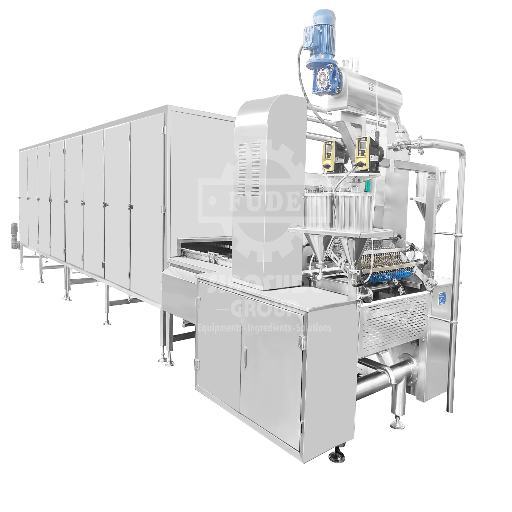
A complete starchless depositing system is made up of three things working in sequence: a depositing head, a mould circuit, and a cooling tunnel. Cooked gummy syrup is stored in a heated hopper which has multiple pump cylinders and material control valves. Each valve governs one deposit point. Piston displacement causes syrup to be pumped into the mould circuit.

// SYS_OVERVIEW ACTIVE

During a run the mould circuit moves continuously while the depositing head follows that movement. All main movements of the head are servo driven and mechanically linked, which is what keeps positioning repeatable over a long shift rather than only over the first hour.

In this context, the head is what a confectioner would call a candy depositor. The combination of the mould circuit, the cooling tunnel, and the demoulding station create a gummy depositor rather than a general candy machine.

What the full process covers [ MODULE 01 ]

Our starchless gummy production runs cooking, colour and flavour and active ingredient mixing, servo depositing, cooling, automatic demoulding, and coating. Compared with starch based production it removes starch preparation entirely, which takes out the powder handling areas along with it and makes product changeover faster.

> SYS_WARNING: DRYING_TIME

One aspect I must stress because customers used to the mogul line think the opposite. In a starch free line, depositing happens at final solids, so the product requires time to set before demoulding and absolutely no drying. This aspect of the process is not due to any one machine, as the time is required by the recipe rather than by the equipment.

Setting time is specific to the recipe. For scale, Confectionery Production reported in February 2022 that on the Baker Perkins ServoForm Flexi, setting time ran from a few minutes for some pectin recipes up to a maximum of four hours for gelatin. These are a couple of manufacturer numbers from a single launch report and are not a specification for SINOFUDE, and are quoted here only to show which direction the variable moves. The setting time is confirmed during the commissioning process for the recipe, and on most starchless installations, the setting room limits the line speed more than the depositor.

LIVE FEED // DEP_HEAD
Starchless Depositing Machine Head

Applications the range is built for [ MODULE 02 ]

LIVE FEED // OUTPUT
Gummy Production Applications

Product Matrix

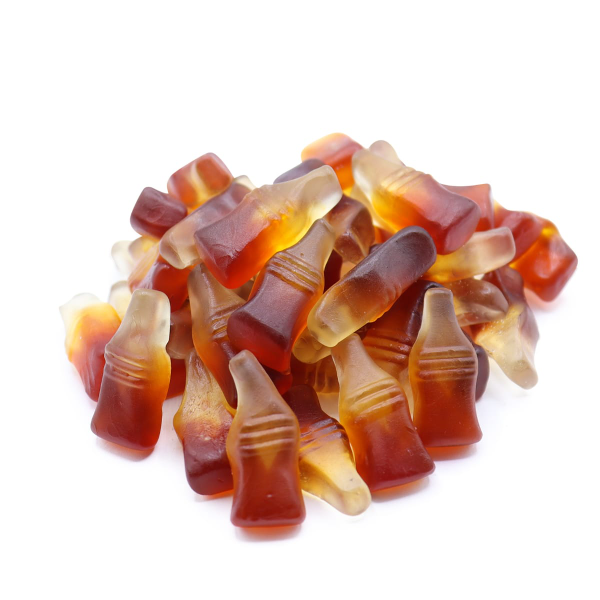
The equipment supports traditional gelatin gummies, pectin gummies, vitamin gummies, CBD and THC gummies, functional gummies, two colour gummies, and centre filled gummies.

System Capability (CLM300A)

The CLM300A starchless gummy production line is designed for gelatin, CBD and THC, vitamin and functional gummy production, and offers full servo and PLC automation.

Industrial Factory Blueprint Fit Check

Factory conditions a fit check needs

[ CRITICAL REQUIREMENT ]

Half the specification problems we see start with the building rather than the machine. Before we can confirm whether a model will fit, we require building information such as your factory layout and ceiling height, your steam and utility supplies, your cooling water system, and the temperatures and humidity of the ambient conditions.

A quote based on machine specifications alone is how we end up finding out about delays in installations and unexpected civil works after the crate shows up.

Gel Systems and Product Formats the Depositor Runs

This is what most clients learn the hard way after leaving a mogul facility. A starch mould is not simply a shape. A US patent application on a starch-less gummy composition claims the presence of starch mold in the gummy composition lowers temperature and absorbs water, and these effects assist in solidification of the gummy. Removal of starch will result in the temperature control and water absorption functions falling on your cooling tunnel and recipe. Thus, replacing a gel system is not simply switching a component.

This patent application describes the practical implication of the above statement: Gelatin based compositions cannot be easily removed from starchless molds and need a long removal time before they can be processed further. Pectin used as the sole structurant is brittle. Its own claimed working range is a pH of 3.1 to 3.45 and 76 to 81 degrees Brix, with a maximum removal time of 30 minutes from a starchless mold.

Product types the range is validated for

Gelatin gummy Validated
Pectin gummy Validated
Starch-free gummy Validated
Centre-filled gummy Validated

All gummy depositor models are validated for producing these types of products, which enables a manufacturer to add additional product categories without the need for a change of the production platform.

SYS.NO.8492
Gummy Depositor System

What changes between gelatin and pectin

Gelatin becomes viscous at temperatures below the set range but loses structure at too high a temperature. The result is inaccurate depositing. Compared to gelatin, pectin sets on pH within a much more restricted process window, and in Baker Perkins' words, poor control can result in premature setting or incomplete gel formation.

Pectin also begins to set quickly once deposited, which Baker Perkins describes as an advantage only if the depositing system is well optimised, because otherwise it can lead to blockages or inconsistent fill. High methoxyl pectin requires high sugar and low pH to set quickly; however, low methoxyl pectin sets at lower sugar levels using calcium ions, and therefore, requires adequate precise calcium control, and suits sugar reduced products.

Industrial Gummy Depositor Machine Core
SYS.DOC // OVERVIEW

Moulds, Changeover and Coating for Industrial Gummy Depositors

Mould selection drives gummy appearance, design flexibility and production efficiency. SINOFUDE gummy depositors support both silicone moulds and metal moulds, so the choice follows product design, surface requirement and production volume rather than machine limitation.

Silicone moulds

Products that require customization, use premium gummies, have complex shapes, or quickly change design. They allow the greatest flexibility in product development and simplify the introduction of a new gummy design.

Metal moulds

Durability and long service life are decisive and design turnover has little impact. They are appropriate for scenarios that involve continuous long-term running operations.

Buyers arriving from benchtop equipment regularly ask about polycarbonate molds, which are common at that scale. This range uses silicone and metal moulds and the mould is carried by the circuit rather than being handled which allows for a timed changeover.

Gummy Depositor Operations
METRIC // EFFICIENCY & CAPACITY

Changeover is a capacity decision, not a maintenance detail

The difference between mould changeover on CLM40 and CLM600 is approximately six hours of production versus ninety minutes on a single shift line running four products a week. Changeover time is the primary reason why starchless depositing is more flexible for manufacturers who run many kinds of product offerings in colors, shapes, flavors, and filling options, rather than running it in one long standard batch.

METRIC // COMPLIANCE & SPECS

Oil spraying in the moulds

Spraying a moderate amount of oil in the moulds is part of the recipe, and insufficient sprayed oil is one of the causes of product sticking during demoulding.

Oil in a food contact zone is also regulated. 21 CFR 117.40(a)(2) requires that equipment be designed, constructed and used so as to avoid the adulteration of food with lubricants, fuel, metal fragments, contaminated water or any other contaminant. The selection of release agents and the amount used should be included in the process specification and not left to the discretion of the operator.

CLM40 to CLM600 Depositor Specifications

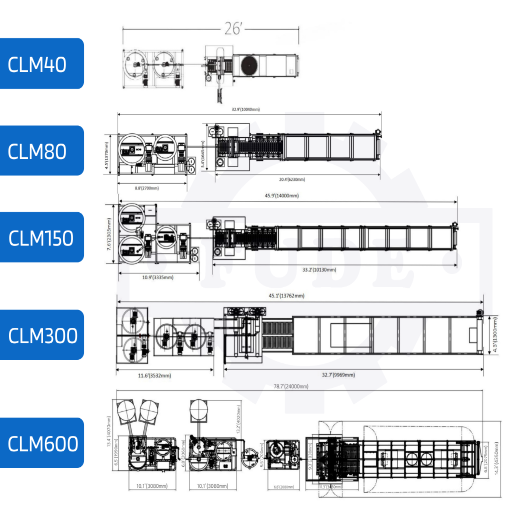
Five models, six specifications each. Every figure below comes from the SINOFUDE model comparison table, with imperial conversions calculated from the metric values at 25.4 mm to the inch, and the analysis under it is The Four-Row Read, because four rows other than capacity decide which model you buy.

Specification CLM40 CLM80 CLM150 CLM300 CLM600
Moulds per stroke 20 20 20 40 80
Footprint, length by width 9 × 1.6 m (354.3 × 63.0 in) 10 × 1.6 m (393.7 × 63.0 in) 15 × 1.6 m (590.6 × 63.0 in) 15 × 3 m (590.6 × 118.1 in) 20 × 5.8 m (787.4 × 228.3 in)
Installed power 78 kW 100 kW 150 kW 300 kW 400 kW
Operators required 2 4 4 4 4
Depositing weight tolerance 0.1 g 0.1 g 0.1 g 0.1 g 0.1 g
Mould changeover time 30 min 40 min 60 min 60 min 120 min

The Four-Row Read

Four things this table says that a capacity number does not. Explore the critical factors behind the specifications.

Moulds per stroke steps rather than slides.

INSIGHT 01

It sits at 20 from CLM40 through CLM150, doubles to 40 on CLM300, and doubles again to 80 on CLM600. The three smallest models separate on footprint and installed power, not on how much leaves the head per cycle.

Operator count stops climbing at CLM80.

INSIGHT 02

CLM40 runs with 2 operators. Every model above it runs with 4, including CLM600. Labour per unit of output therefore falls across the range, and it falls hardest in the step from CLM150 to CLM600, where moulds per stroke goes up four times on the same crew.

Power and floor area are what actually scale.

INSIGHT 03

Installed power runs from 78 kW to 400 kW, and footprint from 9 by 1.6 m to 20 by 5.8 m. Those two are the constraints your building imposes on the decision, and they are the two numbers a quotation based on output alone will never surface.

Depositing weight tolerance does not relax with size.

INSIGHT 04

It is 0.1 g on CLM40 and 0.1 g on CLM600. Buying a larger machine does not buy a looser weight band, and three calculators work off this table: which models fit your building, what changeover costs you in a year and what the weight tolerance means at your piece weight.

01 / 04
SINOFUDE

Dosing Accuracy and Quality Control

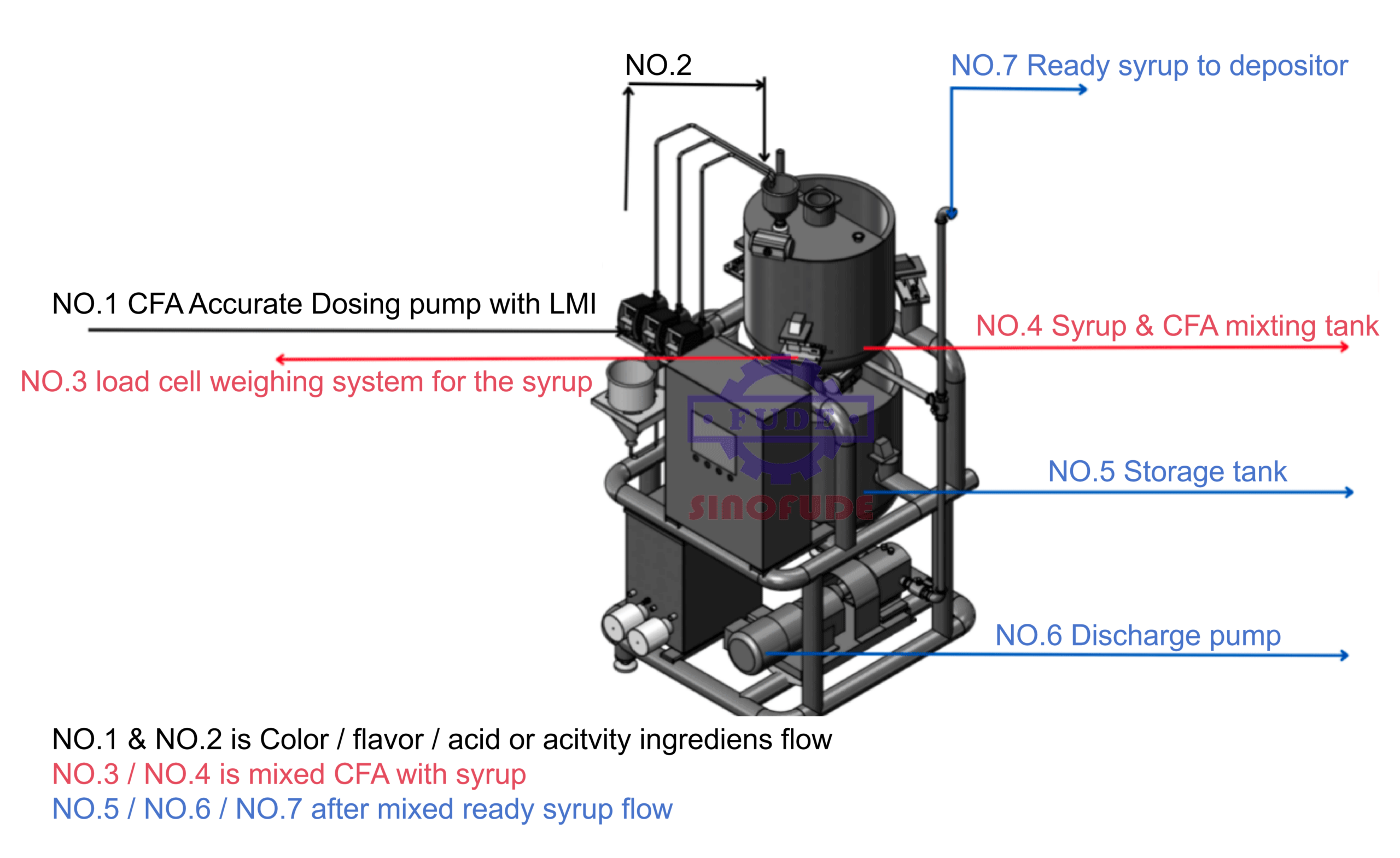
Consistent colour and flavour distribution is where premium gummy production is won or lost. SINOFUDE supplies CFA dosing systems, covering colour, flavour and acid, integrated with the gummy line to add liquid ingredients, active ingredients and functional additives accurately. Dosing accuracy of liquid ingredients reaches 0.1 per cent.

Batch vs Inline Mixing

The CFA batch mixing system includes buffer tanks, weighing tanks with load cells, automatic switching valves, PLC control and heating. Each batch of syrup is weighed before ingredients are added, which makes the formulation percentage a controlled quantity as opposed to an inferred quantity.

In inline mixing, the percentage is inferred. Precision there is influenced by several factors, including temperature, power supply, pump efficiency, pressure and recipe, because every one of those conditions changes syrup flow speed and CFA dosing speed. Inline mixing also does not give a means to determine how much CFA was added, and it cannot be stopped to perform another task on the line. Where dosing precision is a priority, we advise batch mixing.

Batch type mixing and inline mixing are not substitutable. With batch mixing, each ingredient is prepared by weight in order to ensure accuracy, so nothing else in the system affects the percentage. Where accurate dosing of ingredients is a requirement, we recommend batch type mixing.


Engineering Architecture

For powder active ingredients an optional servo driven screw feeder controls powder feed against the recipe, and mixing is controlled through PLC and HMI so operators can set mixing time by gummy material.

Regulatory Compliance

Under 21 CFR 117.40(f), instruments and controls used for measuring, regulating or recording temperature, pH, acidity, or water activity must be accurate and precise, adequately maintained, and adequate in number for their designated uses. That paragraph covers the acid dosing loop directly since on a pectin line, pH is a setting parameter and not a quality parameter.

Candy Machine Dosing Accuracy
Dosing Control System // 01

Cleaning access and product changeover

The starchless production process means removing starch preparation and the powder handling facilities involved, which is a smaller surface to be cleaned with hoses before anyone starts. A mogul line has additional starch contact areas and de-starching sections that a starchless line does not have.

European Union Compliance (EN 1672-2:2020)

Two regulatory frameworks outline what the remaining surfaces have to accomplish. For the European Union, EN 1672-2:2020 outlines requirements on common hygiene and cleanability for food processing machines, and was adopted to clarify the hygiene requirements of the Machinery Directive 2006/42/EC.

A peer-reviewed cross industry analysis of the standards states a 2B stainless steel finish is usually recommended for product contact surfaces, as it provides a roughness of Ra 0.8 micrometres or less. The number associates with the finish, not the alloy, for this reason specifying stainless steel on its own does not assist in cleanability.

United States Mandates (21 CFR 117.40)

In the United States, 21 CFR 117.40(a)(1) mandates equipment to be designed and built so as to be adequately cleanable, and maintained to prevent allergen cross contact and contamination.

Furthermore, 117.40(b) mandates that seams on food contact surfaces be smoothly bonded to minimise accumulation of food particles, dirt and organic matter. Those are the criteria a changeover between an allergen bearing recipe and a clean label one has to satisfy, and they are the reason weld quality on a depositing head is a food safety concern and not a cosmetic concern.

How SINOFUDE builds to that

Since 2010 we have used high power laser cutting for complex parts, high end laser welding, friction welding and tube welding for weld strength and appearance with no sanitary corners.

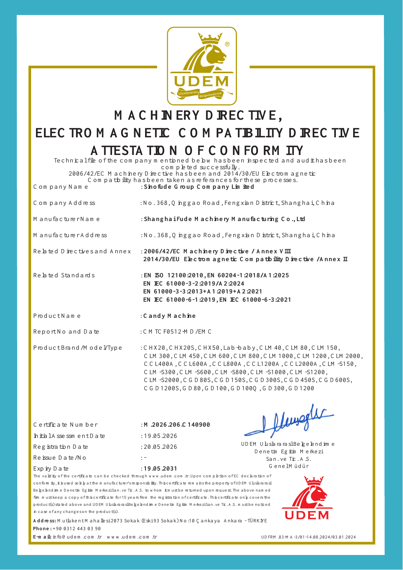
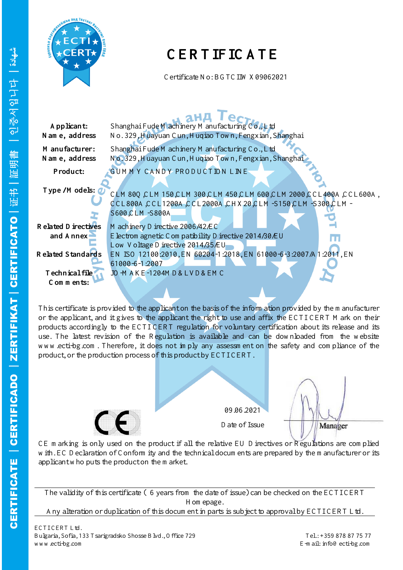
We rely on CNC sawing, wire cutting, machining centres, inclined rail lathes, drilling machines and gantry milling for component accuracy. We introduced the ISO 9001 management system in 2004, and most of our products have passed EU CE and UL certification.

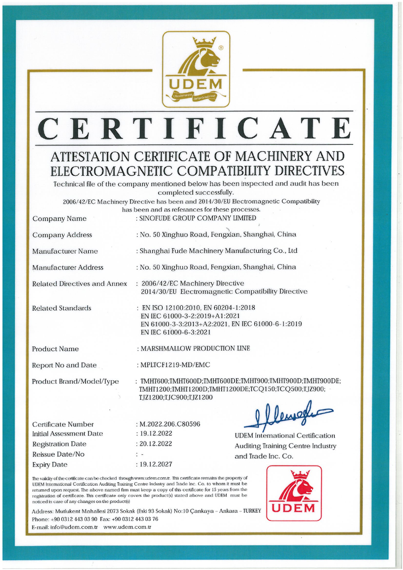
Candy Machine Thumbnail
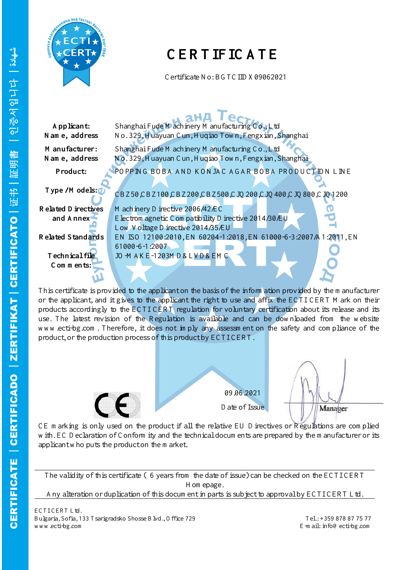
Gummy Line Thumbnail
Marshmallow Line Thumbnail
Popping Boba Line Thumbnail
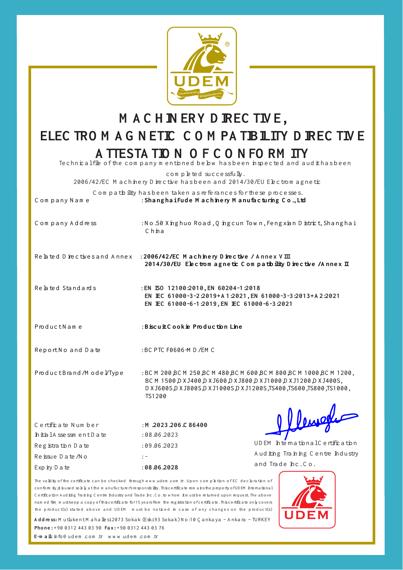
Biscuit Cookie Line Thumbnail
Candy Machine UDEM Certification
Gummy Line ECTI 2021
Marshmallow Line UDEM 2022
Popping Boba Line ECTI 2021
Biscuit Cookie Line UDEM 2023

From Enquiry to Commissioning

01

Send your requirement

Target kg/h, gummy weight and dimensions, gel system, product structure, colours, mould preference, coating, automation level, utilities and factory layout. You get a reply within 24 hours.

02

Engineering review

Engineering review prior to quotation. Cooking, depositing, cooling, demoulding and packaging have to collaborate against your product requirement, and it is this review that prevents a line from being under specified.

03

Written quotation

Written quotation and configuration is the next step. The model, mould system, cooling section and options are fixed here, against the information in the first step.

04

Drawing approval

Drawing approval, and the lead time clock starts at deposit receipt and drawing approval. It does not start at order placement.

05

Manufacture & Acceptance

Manufacture and factory acceptance. 30-45 working days for a single depositing machine, 60-75 working days for a complete line.

06

Installation & Training

Installation, commissioning and operator training against your recipe on your material.

Gummy Depositor Equipment

Designed for industrial-scale accuracy and seamless gummy production.

What to confirm at factory acceptance

A depositing line is production machinery, so acceptance goes beyond watching it run. The items you could add to your acceptance protocol are guarding and interlocks on the mould circuit, hazardous energy controls for cleaning and mould changes, observation of a full mould depositing head cleaning cycle, weighing the full mould depositing head instead of just a single cavity, and observing the mould system change be completed by your operators rather than by the depositing system engineers.

The last one matters more than it sounds. The people who built the equipment will have a changeover time, but you’re likely to have a different changeover time in week three.

Three issues that show up in early operation

The usual production problems in the first few months of a new line get blamed on mechanical failure, but are more likely to be due to a mismatch of product formulation, process setting, and machine parameters. These issues come up in our after sales.

Issue Common symptoms Main causes Recommended solution
Inconsistent gummy weight or uneven depositing Noticeable weight differences within one batch; some cavities under filled while others overflow; appearance varying between runs Incorrect depositing parameters; improper mould and nozzle matching Calibrate servo depositing parameters; optimise temperature control against the formula; adjust nozzle size and depositing speed
Gummy sticking during demoulding Gummies remaining attached to moulds; product surfaces damaged on demoulding Incorrect drying and conditioning time; incorrect formulation adjustment; insufficient sprayed oil Optimise drying temperature, humidity and residence time; adjust demoulding parameters to the formulation; spray a moderate amount of oil in the moulds
Syrup crystallisation or blockage in the depositing system Depositing valves blocking; unexpected production stops; gummy weight drifting after continuous running Incorrect holding temperature; incompatible recipe parameters Adjust syrup holding temperature, pipeline insulation and material circulation design

Getting the right mould and matching process before equipment manufacture is better than waiting. Once production starts, changing either will result in adjustment time that a pre manufacture review would have avoided.

Switching from gelatin to pectin without changing settings

Manufacturers are moving to pectin for vegetarian, vegan, and cleaner label products. Gelatin and pectin as gelling agents are very different and cannot be substituted for each other at the same parameters. If we change one for the other, then parameters of equipment will produce three predictable problems.

Where it shows What happens if settings stay unchanged What to recalibrate
Filling accuracy. Pectin syrup has different viscosity characteristics from gelatin syrup. Filling volume becomes unstable, nozzle flow becomes inconsistent, and product weight variation increases. Depositing speed, valve timing, syrup temperature and pump parameters.
Texture. Pectin needs control of pH, sugar concentration, cooking temperature and the calcium or buffer system. Gummies too soft to hold shape, or excessively firm, or an uneven gel structure. The process recipe and the equipment parameters together, not one or the other.
Production window. Pectin gummies can set faster during processing than gelatin. Material starts setting inside the hopper, depositing valves experience blockage, and production efficiency falls. Hopper temperature control, material residence time and depositing speed.

This is not a SINOFUDE specific observation, since Baker Perkins describes the same pattern from the other side of the industry, saying that pectin relies on pH so poor control gives premature setting or incomplete gel, that its process window is much tighter than gelatin’s, and that its rapid setting after depositing leads to blockages or inconsistent fill unless the depositing system is optimised for it.

Four specification mistakes made before the order

Many production problems for gummy occur before the equipment is purchased, mostly due to incorrect information at the quotation, which leads to a line that cannot satisfy the actual end requirement.

Mistake Result What to specify instead
Sizing on current demand only, with no view of the production plan Future orders cannot be met, machine operating hours run high, labour and maintenance cost climbs Current demand, expected growth, product range expansion and working hours per day
Giving product names without technical detail The depositor, mould system and cooling section may not match the production requirement Gummy weight, shape and size, formula type, gelatin or pectin system, filled or unfilled structure, coating requirement
Designing the line for one product Different shapes, weights, multiple colours, centre filled and functional gummies become difficult to add later Quick mould changeover, multi colour depositing capability, recipe adaptability and future automation upgrades
Quoting on machine specifications alone Installation delays, additional cost and reduced production efficiency Factory layout, ceiling height, utility supply, steam availability, cooling water system, ambient temperature and humidity

When a Starch Mogul Line Is the Better Choice

Starchless depositing is not appropriate for every gummy business, and admitting this is cheaper for both of us than learning it the hard way by commissioning it.

Starch Mogul Process Breakdown

The starch mogul process deposits gummy mass into starch filled moulds and is a traditional high volume method for large scale production of standard gummy. It is a good method for manufacturers producing standard gummies in large volumes of simple shapes.

A starch mogul machine is not an old gummy depositor, and using the two interchangeably is a mistake. The starch circuit performs a function and isn't a waste of money. In a mogul, as CAPOL describes it, the mould is the starch itself and the process starts the product's dehumidification and crystallisation. The starch is heated and dried for reuse. If your products are gummy of standard shapes in high volumes and your factory has a starch conditioning and recovery system, then that circuit is a benefit rather than a cost.

Item Starchless servo depositing Starch mogul depositing
Forming method Direct depositing into reusable silicone or metal moulds without starch Depositing gummy mass into starch filled moulds
Starch handling No starch preparation or recovery system required Requires starch conditioning, printing, recovery and dust management
Product changeover Faster mould and recipe changeover Longer, because the starch system has to be managed as well
Hygiene environment Cleaner production with fewer powder handling areas Additional starch contact and de-starching areas
Functional and vitamin gummies Very suitable where dosing accuracy and clean changeover matter Possible, but less convenient for frequent functional product changes
Shapes and formats Strong flexibility for customised moulds, multi colour and filled products Very strong for traditional high volume gummy formats
Factory footprint Generally more compact Usually larger, because of starch conditioning and recycling equipment

Tabletop Depositor Viability

Equipment search results put a handheld gummy making machine and a full production line on the same page, so the dividing line is worth drawing on engineering principles rather than cost. A table-top gummy depositor and an industrial gummy depositor machine are not the same, nor is a manual gummy depositor. They are different types of purchase rather than variations on a theme. Three criteria will settle where you are.

The Four-Row Read gives you the first question: how many mould cavities do you need filled per cycle, and is that number closer to one board or to twenty. How many operators can you staff, given that this range needs 2 on CLM40 and 4 on every model above it. And how often do you change product, given that a changeover here is a 30 to 120 minute planned event rather than a rinse and refill.

Any change in your answers shifts the trade off from a table-top depositor towards an industrial line. If you can answer one board, one operator, and are flexible with change, a table-top depositor is your better choice. An industrial line is not for you. A bigger machine on a fixed crew would cost you more area, more power, and more time for changeover. The trade off is that a bigger machine buys you moulds per stroke.

Supply Scope Notice

Two things on this page are out of our supply range. Benchtop and small scale gummy making equipment is not what these five models are. Used gummy manufacturing equipment is a market we do not enter. Should you need either, look to a commercial gummy equipment manufacturer.

Gummy Depositor Performance Assessment Tools

Performance & Capacity Evaluation Protocol // V.1.0

Which Depositor Models Fit Your Building

The two constraints a capacity figure never surfaces are floor area and installed power. Enter the space and the supply you actually have, and this checks each of the five models against both.

Mould Changeover Time Budget

Changeover time is a capacity decision rather than a maintenance detail. Pick a model and say how often you change product, and this converts the published changeover figure into hours off the line.

What 0.1 g Means at Your Piece Weight

Depositing weight tolerance is 0.1 g on every model in the range. A fixed gram figure is a different proposition on a 2 g vitamin gummy than on a 12 g centre-filled one. Enter your target piece weight to see the band in percentage terms.

Gummy Depositor Questions Buyers Ask

What does a gummy depositor cost?

The price of a model is determined by size, mould configuration, level of automation, the gel system, filling and coating options, and add-ons needed on either side of a depositor. Quotes are provided for configured lines rather than listed. Equipment for making gummies is not sold at a catalogue price. For context on how the wider market frames it, Junyu publishes tiers of USD 20,000 to 80,000, USD 80,000 to 300,000 and USD 300,000 to 1,000,000 for gummy production equipment by scale, and Ningbo East Sea publishes USD 5,000 to 60,000 for a gummy depositor. Those are their figures, not ours.

How many moulds does each model fill per stroke?

CLM40, CLM80 and CLM150 fill 20 moulds per stroke. CLM300 fills 40 and CLM600 fills 80, which is the step The Four-Row Read starts from.

Can one depositor run both gelatin and pectin?

Yes. Every model in the range is validated for gelatin and pectin gummies. The process settings are not the same: temperature, viscosity, pH, valve timing, pump settings, and cooling and drying settings are all affected by gel system changes and must be revalidated.

What depositing weight tolerance is achievable?

The model data specifies a depositing weight tolerance of 0.1 g on every model. Acceptance should always be confirmed against your target piece weight, recipe and production speed.

How long does a mould change take?

From about 30 minutes on CLM40 to about 120 minutes on CLM600. The total depends on whether the recipe, manifolds, nozzles or colours are changing at the same time.

Can the machine make centre-filled gummies?

Yes. Centre filled production is supported with the appropriate manifold, nozzle and recipe configuration.

What information do you need to prepare a quotation?

Target kg/h, gummy weight and dimensions, formulation and gel system, product structure, colours, mould preference, coating, automation level, utilities and factory layout.

How does starchless depositing compare with a starch mogul line?

Starchless depositing goes directly into reusable silicone or metal moulds without starch preparation or recovery, which eliminates powder handling areas and gives a more compact machine. The mogul process suits large volumes of standard shapes. The comparison table in the previous section covers seven dimensions.

What causes uneven gummy weight on a new line?

Most often incorrect depositing parameters, or improper matching of mould and nozzle, are the problem rather than a mechanical fault. The solution is servo parameter calibration, temperature control adjustment, and change of nozzle size and optimised depositing speed.

Why do gummies stick during demoulding?

Commonly incorrect drying and conditioning time, a formulation adjustment that was not carried through, or insufficient sprayed oil in the moulds.

Which quality standards apply to gummy depositing equipment?

Hygiene and cleanability requirements for food processing machinery in the European Union sit in EN 1672-2:2020, adopted to clarify Machinery Directive 2006/42/EC, with hygienic design principles in ISO 14159 and EHEDG guidance. In the United States, 21 CFR 117.40 covers equipment cleanability, allergen cross contact, food contact surfaces, seams and process instrumentation. Which apply to you depends on your market, and requirements vary by destination.

How many operators does a gummy depositing line need?

2 on CLM40 and 4 on CLM80, CLM150, CLM300 and CLM600. Operator count is typically the running cost that a capacity comparison leaves out.