
Get in Touch with SINOFUDE Company

Toffee and Caramel Production Line from SINOFUDE
A toffee and caramel production line should be scoped from the product state backward, not selected from a generic equipment list. At SINOFUDE, we start the discussion with your recipe family, required format, packaging handoff and factory conditions.
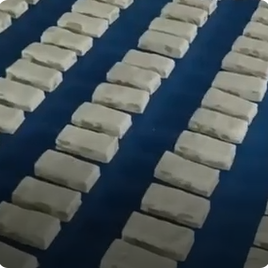
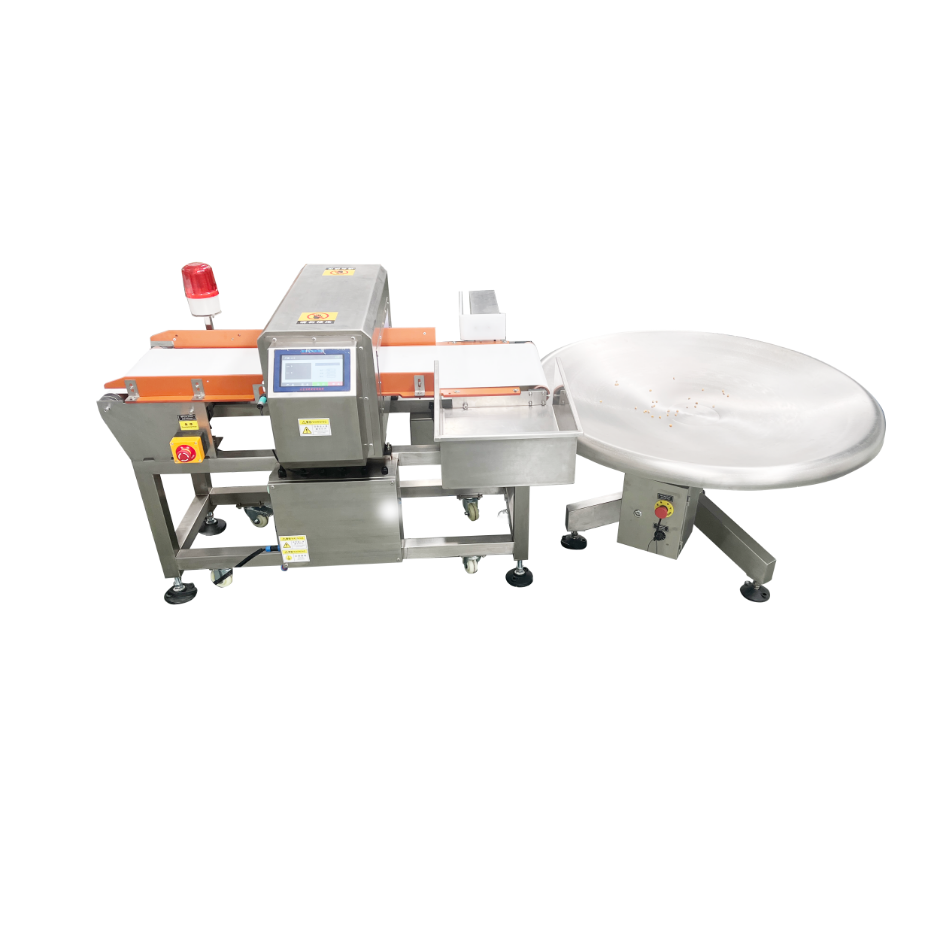
Review the Scoping Inputs
- Toffee, caramel or multiple recipe families
- Final piece, sheet, rope or deposited product format
- Cooling and primary-packaging handoff
- Available space, utilities and destination market
SINOFUDE Manufacturing Context
We are SINOFUDE, founded in 1998 in Shanghai. Our company-wide footprint and processing resources help procurement teams understand who will enter the configuration discussion, while configuration-level evidence remains a separate review.
Three factories
Our company-wide manufacturing footprint
More than 30 acres
Our total factory area
More than 200 employees
Our company-wide team
Since 1998
Our confirmed foundation year
ISO 9001 in 2004
We introduced an ISO 9001 management system in 2004
38 product patents
Our company-wide patent portfolio
Three divisions
Our Confectionery, Baking and Chocolate divisions
Shanghai base
Our location is in Fengxian District
Product Route and Line-Configuration Scope
“A product name does not define the correct cooking and forming route.”
The mass structure can be influenced by multiple factors, including temperature, moisture, formulation, and even cooling. A caramel production line cannot be defined responsibly from the word “caramel” alone.
| Buyer input | Why it changes the route | Review state |
|---|---|---|
| Recipe family | Fat, protein, sugar system and inclusions affect cooking, handling and cleaning questions. | Buyer to provide |
| Target product state | Chew, bite, cold flow and surface stickiness influence forming, cooling and pack timing. | Acceptance criteria required |
| Final format | Sheet, rope, cut piece or deposited shape creates different transfer and interface decisions. | Route to confirm |
| Packaging handoff | Piece condition, spacing, orientation and temperature must suit the downstream packer. | Interface to confirm |
| Changeover profile | Allergens, colors, flavors and inclusions set the cleaning and segregation questions. | Risk review required |
Toffee and Caramel Process Inputs
A useful brief separates the recipe intent from the measurable finished-product condition because texture language alone creates a specification risk. Research on caramel systems is related to the moisture and physical state and is consequently related to the storage behavior and texture, so we ask buyers to define acceptance at the product and pack handoff instead of relying on a flavor name.
Formulation family
- Fat and dairy system
- Protein source
- Sugar and syrup system
- Inclusions, colors and flavors
Final product state
- Texture at agreed test conditions
- Piece geometry and weight target
- Permitted cold flow or deformation
- Surface condition before packing
Changeover and environment
- Allergen sequence
- Cleaning method
- Ambient control assumptions
- Hold time before wrapping
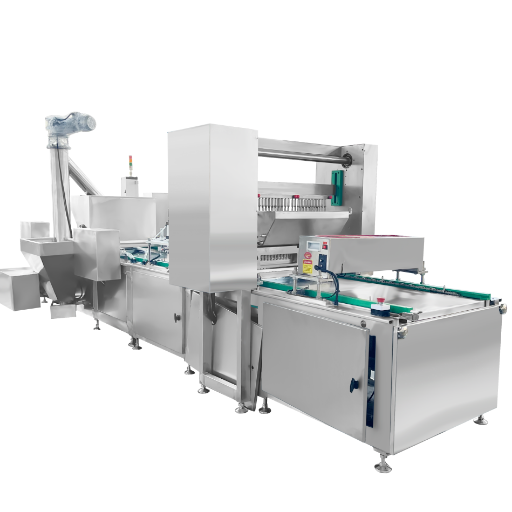
A product name is not an acceptance method
“Soft caramel” has different meanings for R&D, production, quality and packaging. The plan for the sample run should state the sample condition, name the test method, the acceptance range and the person responsible for making the decision before the machine route is considered fixed.
Translate recipe language into controlled inputs
A buyer may request chewy toffee, creamline toffee, a firm toffee candy, small toffee candies or a caramel with a specific consistency. We translate those descriptions into measurable product quality criteria, a controlled batch record, and defined inputs such as glucose, fat system, flavoring and inclusions.
- Use “high-quality” as a goal only after quality attributes and test methods are named.
- Separate recipe-driven molding or depositing needs from the pack format.
- Record each change that could alter toffee production or caramel handling.
“Shared allergen profiles make changeover evidence a purchase requirement, not a post-installation detail.”Process Consultation
Cooking, Forming and Downstream Interface Planning
A candy cooking machine is one stage in a larger material-state journey. “Sticky mass can move the bottleneck downstream from the cooker” because forming, cooling or wrapper infeed can become the limiting interface; unlike a generic equipment list, the differentiator is SINOFUDE’s route review, which connects the proposed scope to product-state and handoff evidence.
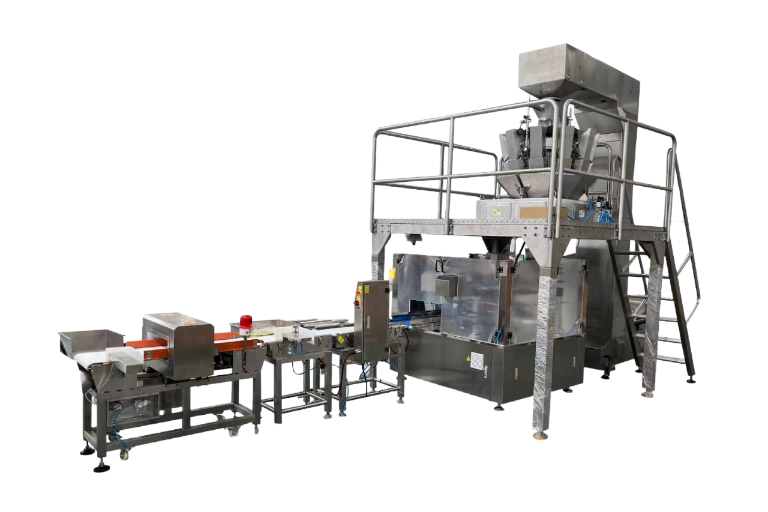
Ingredient feed
Recipe handling, addition sequence, allergen and dust context.
Cooking
Required product state and the measurement plan at discharge.
Forming
Sheeting, rope, cutting or depositing route to be confirmed.
Cooling
Residence, support, release and product-condition questions.
Pack handoff
Temperature, orientation, spacing and accumulation boundary.
Where hidden bottlenecks appear
- A cooker discharge that the chosen forming route cannot accept steadily
- A piece that meets texture expectations but sticks during transfer
- A cooling exit that does not match wrapper infeed condition
- A changeover plan that ignores retained product or allergen boundaries
What we confirm during review
- Which stages are in the proposed SINOFUDE scope
- Which upstream and downstream assets are existing or third-party
- What signals, mechanical interfaces and product states cross each boundary
- What evidence is required before acceptance
Technical Requirement Record
Use one controlled record for every supplier discussion because missing applicability and ownership fields create a procurement risk. The entries below connect SINOFUDE discussions with specific decision fields and regulatory checkpoints, not published specifications for a line.
| Record item | Numeric or controlled reference | Project action |
|---|---|---|
| Foundation of food-safety controls | 21 CFR Part 117 | Confirm applicability to the destination and operating site. |
| Plant sanitation context | 21 CFR 117.35 | Record the buyer’s sanitation program and cleaning responsibilities. |
| Equipment cleanability context | 21 CFR 117.40 | Request configuration-specific construction and access evidence. |
| Electrical equipment boundary | IEC 60204-1 | Confirm the required edition, local deviations and documentation. |
| EU machinery framework transition | Regulation (EU) 2023/1230; applies from 20 January 2027 | Match the project placing-on-market date and destination. |
| Pressure equipment scope check | Directive 2014/68/EU; threshold above 0.5 bar | Determine whether any proposed assembly falls within scope. |
| Hazardous-energy control context | 29 CFR 1910.147 | Map isolation points and site procedures where U.S. rules apply. |
| SINOFUDE company identity | Founded in 1998 | Separate company evidence from configuration evidence. |
Process Safety, Hygienic Design and Jurisdiction Requirements
The risk review belongs upstream of quotation. OSHA notes that fine sugar and candy dust can be explosible under relevant conditions. Ingredient charging, collection, leakage and housekeeping therefore deserve explicit scoping rather than a generic “food factory” assumption.
| Context | Buyer requirement | Evidence or action to request |
|---|---|---|
| Fine combustible material | Identify sugar, starch or other dust release points and site classification. | Configuration risk review, collection boundary and buyer facility controls. |
| Cleanability | Define cleaning method, inspection access and sanitation verification. | Product-contact drawings, access review and agreed inspection criteria. |
| Allergen changeover | List allergen families, production sequence and segregation expectations. | Changeover procedure inputs and buyer validation responsibilities. |
| Hazardous energy | Define isolation, stored energy and maintenance access needs. | Isolation-point review linked to site lockout procedure. |
| Electrical and pressure scope | State destination, supply, local code and pressure boundaries. | Applicable declarations, calculations and technical file items. |
Cleanable by design and by procedure
FDA equipment rules require food-contact equipment to be adequately cleanable and maintained to protect against contamination. The project still needs an agreed cleaning method, access review and validation owner.
Destination rules set the document list
Regulation (EU) 2023/1230 applies from 20 January 2027, so EU projects need date-aware planning rather than treating it as the sole current regime today.
Pressure scope starts with the assembly
The EU Pressure Equipment Directive concerns stationary pressure equipment above 0.5 bar, but applicability must be determined from the actual proposed assembly.
Configuration-Based Quote Path
Useful commercial comparisons will only start once suppliers are quoting for the same boundary. A complete-line quote may conceal omissions for utilities, integration, installation, validation, and local approvals. Therefore the commercial trade-off needs to be evaluated against the responsibility matrix.
Recipe family, format, handoff, site and destination.
Open assumptions become written clarification questions.
Included, excluded and third-party interfaces are recorded.
Tests, drawings and destination documents are identified.
Commercial terms attach to the confirmed scope.
Inputs that change the quote
- Recipe and product-state range
- Required forming and downstream modules
- Controls and third-party integration
- Cleaning and changeover needs
- Destination documentation and site services
Inputs that make quotes comparable
- One agreed line boundary
- One acceptance protocol
- One responsibility matrix
- One list of exclusions and assumptions
- One revision-controlled requirements record
How We Work: Project Responsibility Matrix
A project can look technically aligned while installation, commissioning or training work is still to be done. Use the matrix to define service work and to transform ambiguous service language into firm ownership, dates and acceptance.
| Work package | Buyer input | SINOFUDE proposal | Final status |
|---|---|---|---|
| Product and recipe definition | Supply controlled brief and samples | Review implications for proposed route | Confirm in proposal |
| Factory layout and utilities | Supply verified site data | State equipment-side requirements | Confirm in proposal |
| Upstream and packer interfaces | Identify existing and third-party assets | Define proposed interface boundary | Confirm in proposal |
| Installation and site works | State local labor and access conditions | State offered supervision or work scope | Confirm in proposal |
| Commissioning and sample run | Provide materials, staff and acceptance method | State offered test and support scope | Confirm in proposal |
| Training and after-sales support | Name roles, language and operating pattern | State offered materials and support route | Confirm in proposal |
How We Work: From Product Brief to Clarified Proposal
Project timing should follow the maturity of the inputs, not a generic calendar promise. Each discussion step closes a defined decision before the next commercial or engineering assumption is accepted.
Input collection
Record product, output, handoff, site and destination data.
Route review
Identify formulation, product-state and interface questions.
Scope draft
Map proposed stages, exclusions and open evidence.
Acceptance plan
Name samples, methods, conditions and decision owners.
Proposal clarification
Align technical, responsibility and commercial records.
How We Work: Supplier Evaluation Context
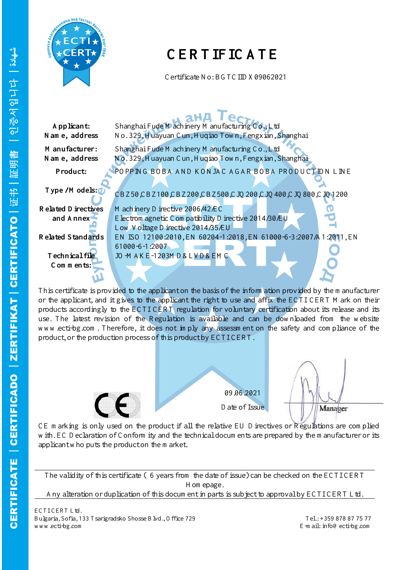
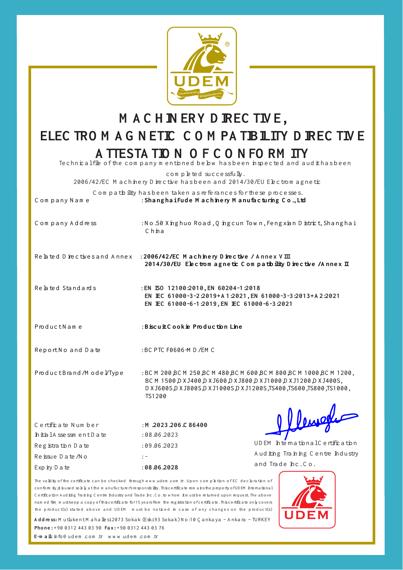
Our company identity helps procurement establish the supplier context, but it is not a substitute for configuration evidence. The risk exists because a company fact and a line-specific claim are not interchangeable, so ask SINOFUDE to connect each material claim to the proposed line, document revision and acceptance step.
Company identity evidence
- Legal supplier and factory identity
- Company management-system records
- Company-wide manufacturing resources
- Document issuer and revision
Configuration evidence
- Equipment and interface list
- Layout and product-flow drawings
- Utility and control boundary
- Included and excluded work
Process and hygiene evidence
- Product-contact construction details
- Cleaning access and method review
- Allergen changeover inputs
- Risk-review actions
Destination evidence
- Applicable safety framework
- Electrical and pressure scope
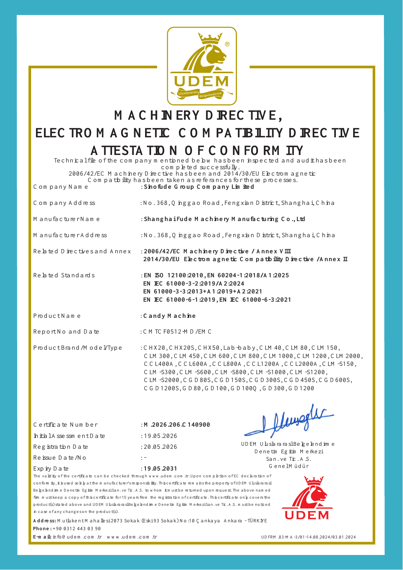
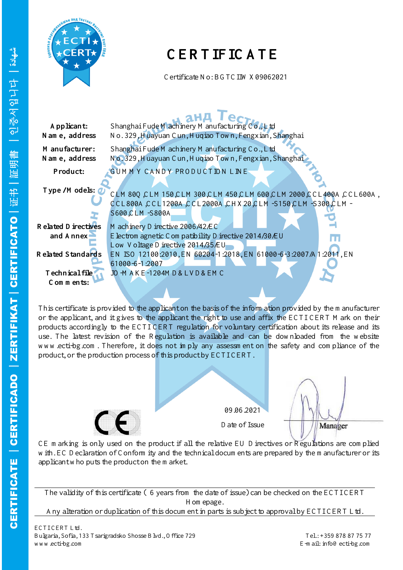
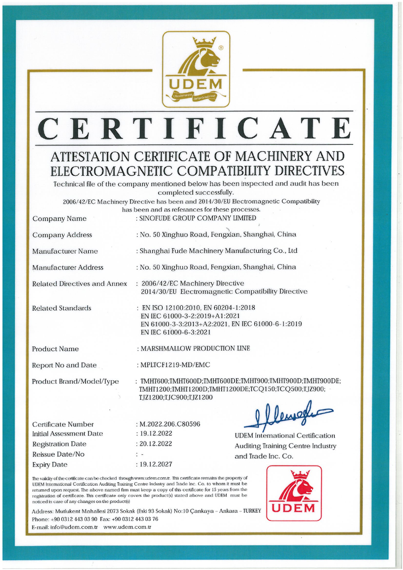
- Required declarations and technical files
- Local-language document needs
Acceptance evidence
- Sample and test conditions
- Measurement method
- Pass range and observation record
- Sign-off responsibility
Service evidence
- Installation work package
- Commissioning inputs
- Training deliverables
- Support and spare-parts route
Engineering & Configuration Tools
FAQ: Line-Scoping Questions
Send the recipe family, target texture or product state, final format, required output context, packaging handoff, changeover profile, factory conditions and destination market. Include samples, drawings and existing equipment details when available.
Sometimes, but only after route and changeover review.
The answer depends on the material state required at cooking discharge and at each downstream handoff. Cooker selection should follow the controlled recipe and acceptance brief rather than a generic machine label.
Capacity is configuration-specific and is not stated on this page. Share the operating pattern, intended products, upstream feed limits and downstream constraint so a proposal can define its basis. The accepted record should also state the recipe, test condition, line boundary and exclusions behind that figure.
Record the product condition, temperature context, piece orientation, spacing, accumulation allowance and packer infeed requirement. The proposed scope should name which supplier owns every mechanical and control interface.
A brochure demonstration is not an acceptance test. Name the sample, preparation, operating condition, measurement method, acceptance range and decision owner, then use the same record for engineering, production, quality and procurement sign-off.
Start with the allergen families, production sequence, cleaning method, inspection access and validation responsibility. Then request configuration-specific product-contact and access evidence from the supplier.
No. Ask for model- and configuration-matched documents.
They follow the confirmed equipment boundary, interfaces, controls, documentation, acceptance plan and service responsibilities. SINOFUDE-specific price, MOQ, payment terms and lead time are confirmed in the proposal, not inferred from this page.
The final proposal should assign each work package between the buyer, SINOFUDE and any third party. Use the responsibility matrix before accepting a schedule or comparing supplier scope.
It can be assessed only from the wrapper infeed, product condition, layout, signal and accumulation requirements. Provide the existing machine drawings, infeed limits and control description so the interface can be defined. The proposal should then assign mechanical changes, signal exchange, guarding, trial material and acceptance responsibility.
Treat recipe development and equipment definition as linked but separate workstreams. Freeze the test samples, expected variation and acceptance method before treating a configuration as final.



