
Get in Touch with SINOFUDE Company

Starch Mogul Production Line for Gummy and Jelly Candy
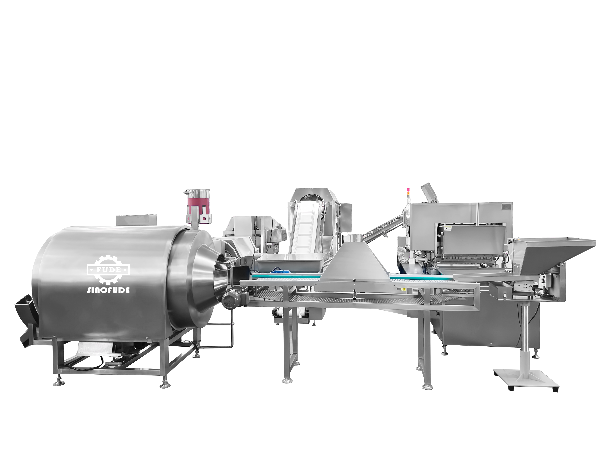
A SINOFUDE starch mogul line prints candy shapes into trays of food-grade corn starch, deposits hot gummy or jelly mass into the cavities, cures the trays and sieves the finished pieces out while the starch goes back into the loop. We build the CLMS series as a complete candy production line, from the cooking system to the optional coating machine, and it sits alongside our gummy production lines for makers who need 3D shapes, layered pieces and frequent shape changes.
- Four CLMS models from a 40–50 kg/h lab unit to 500–600 kg/h
- Gelatin and pectin recipes
- Standard lines built in approximately 60 days
- Factory acceptance test before shipment
Get a Starch Mogul Line Quote
We reply to your enquiry within one business day.
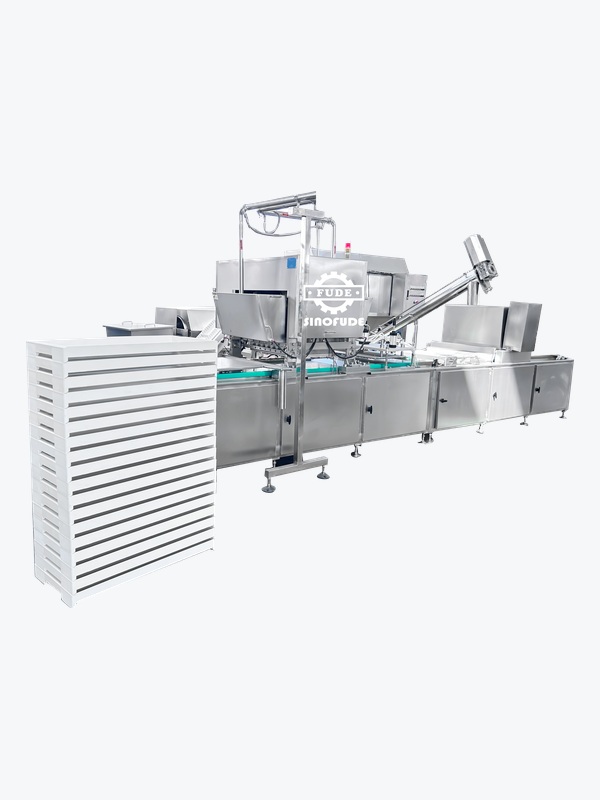
SINOFUDE CLMS starch mogul line side view with stacked PVC starch trays, enclosed impression printing and depositing section and stainless cabinets
CLMS starch mogul line with tray stacks, printing and depositing section
Output range
40–50 kg/h lab unit to 500–600 kg/h
Manufacturing time
Standard lines in approximately 60 days
On-site installation
5–7 days for a standard line
Before shipment
Factory acceptance test at the SINOFUDE factory
Enquiry reply
Within one business day
Starch Mogul Line Capabilities, Automation and System Composition
The starch mogul earns its space on shapes that solid molds handle poorly: 2D and 3D relief, single-color, dual-color and multi-layer pieces made by multi-nozzle depositing, plus center-filled gummies on all four CLMS models. The SINOFUDE CLMS starch mogul system runs every tray through the same cycle, and to change a shape, one needs to swap the printing tooling instead of building a mold set.
System Modules
Fixed scraper cooker, high-speed shearing machine, syrup storage tank, VFD-controlled lobe pump, warming and cooling tank and its own electric control cabinet. This kitchen system prepares the gelatin or pectin mass before it reaches the depositor.
A semi-automatic or full-automatic starch mold depositing machine, an automatic starch feeding machine and standard PVC production trays. The servo-driven depositor meters hot mass into every starch cavity.
On CLMS150, CLMS300 and CLMS600, tray feeding, starch filling, impression printing, depositing, stacking, destacking and demolding run automatically. CLMS50 trays are loaded, stacked and unloaded by hand.
Multiple vacuum dedusting machines, powder conveying and a full-loop starch reclaim unit with multi-stage sieving and thermal tempering. The starch conditioning section below sets out how the loop is controlled.
An optional oil or sugar coating machine after demolding. The finishing section explains what each coating does to the candy surface.
PLC and HMI with multiple frequency converters, storing recipes that hold the starch moisture target, depositing temperature and line speed. The central control cabinet includes a safety interlock protection circuit.
The CLMS Tray Cycle
Trays and starch
Trays and starch
empty PVC trays enter a circulation station and corn starch is loaded into each. Each tray is filled with starch and leveled to one bed thickness so that the bed is uniform for impression printing.
Impression printing
printing tooling presses negative candy shapes into the flat starch bed to form sharp-edged cavities. A new shape requires only new printing tooling, with no mold set to take apart.
Depositing
A servo-driven depositor meters hot gummy syrup into each starch cavity. Multi-nozzle heads deposit single-color, dual-color and layered pieces, and the center-fill option adds a filling to each deposit.
Stacking
filled trays are stacked layer by layer and moved into the separate curing room by trolley or conveyor.
Curing
stacked trays stay in a room held at controlled temperature and relative humidity while the mass gels and the starch draws moisture from each piece. The cited technical background on conventional starch molding explains that the starch cavities cool the deposited mass and absorb water from it 4. This is general process evidence, not a guaranteed CLMS cycle time; curing time follows piece size, recipe, solids, starch condition and target texture.
Destacking
after curing, the stacks return to the forming line and are separated tray by tray.
Demolding and sieving
each tray passes over a vibrating sieve that separates the finished gummy candies from loose starch.
Starch reclaim and conditioning
spent starch drops into the closed reclaim line for grading sieves, foreign-object screening and thermal tempering while vacuum units extract fine dust. The starch is recycled to the filling station for reuse.
Post-treatment
pieces move to the optional oil or sugar coating machine and then to packing.
“Swapping the printing tooling is the quick part of a shape change on a mogul. Validation is what takes time, because the candy formula and the condition of the starch in the loop decide when the new shape runs to specification.”
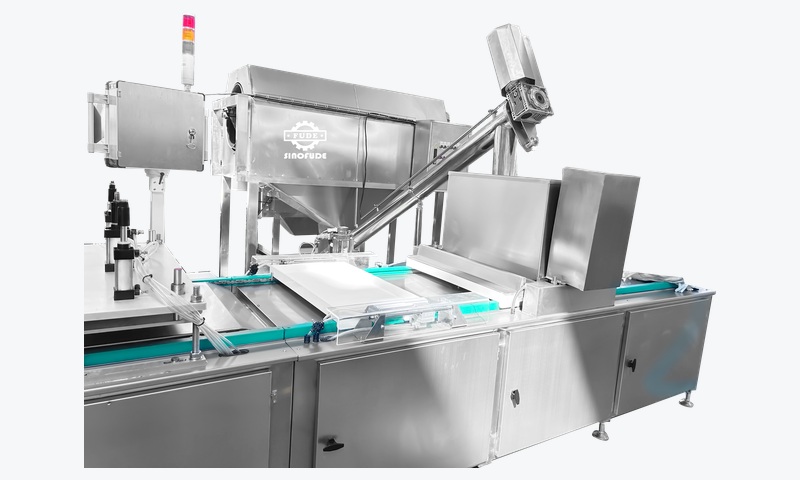
Starch filling and levelling station
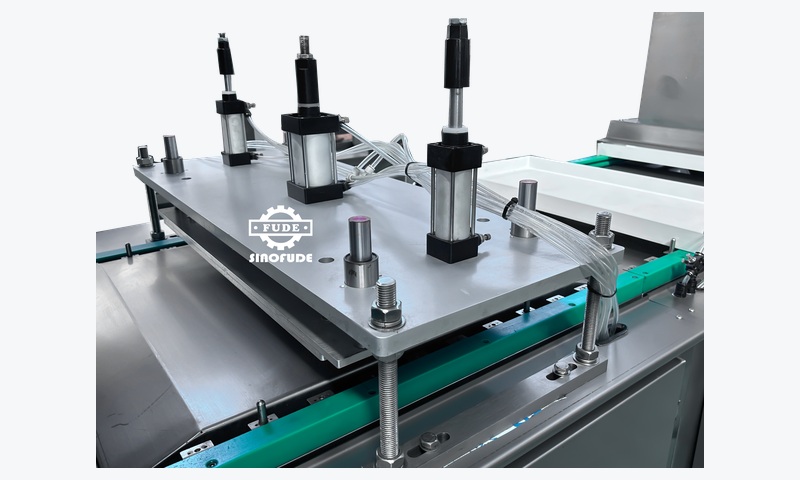
Impression printing station
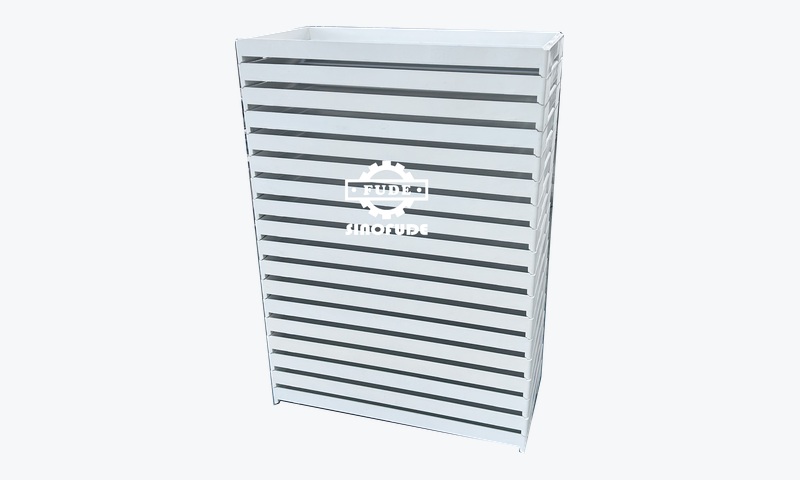
PVC starch trays
Gummy And Jelly Candy Recipes For A Starch Mogul Line
Jellybean centers, candy corn, starch gums, and gummies are some of the products from starch molding. Hot candy liquor is deposited into cavities printed in dry granular starch.5 On the CLMS mogul gummy machine we set up gelatin, pectin and compound gummy formulations, and each card below shows the CLMS settings and what SINOFUDE adjusts for that recipe.
Gelatin gummies
Recipe base
Gelatin-based gummy mass
CLMS configuration
All four CLMS models
What we adjust
Depositing temperature and starch moisture target, stored as a PLC recipe
Pectin fruit jellies
Recipe base
Pectin-based jelly mass
CLMS configuration
All four CLMS models
What we adjust
A separate PLC recipe, validated against your formula and the starch condition in the loop
Compound gummy formulas
Recipe base
Gelatin and pectin compound formulas
CLMS configuration
Trials on CLMS50 at 40–50 kg/h, production on CLMS150 at 150 kg/h and up
What we adjust
Stored recipe settings per formula
Sugar-free and low-sugar gummies
Recipe base
Sugar-free or low-sugar formulas
CLMS configuration
Set up per formula in the quotation
What we adjust
Targeted formula changes plus fine-tuning of the starch conditioning parameters
Center-filled gummies
Recipe base
Gummy shell with a center filling
CLMS configuration
Center-fill option on all four CLMS models
What we adjust
Depositor nozzle setup for shell and filling
Multi-color and layered pieces
Recipe base
Two or more colored or flavored masses
CLMS configuration
Multi-nozzle depositing
What we adjust
Nozzle setup and deposit sequence for each layer
Why the Starch Bed Suits Soft Recipes
During curing in molding starch, a dry skin forms on the surface of all pieces, creating a barrier that prevents sticking and holds soft-center pieces together.5
However, if the dry skin forms too fast it causes the surface to harden and inhibits the loss of moisture from the center.
The starch-moisture target and curing-room climate vary by recipe to control moisture loss.
Another recipe
Send the recipe base, target piece weight and daily output with your enquiry, and SINOFUDE confirms the CLMS setup in the quotation.
Get a Starch Mogul Line QuoteDemolding from the Starch Bed, Sieving and Candy Coating
After curing, the candy piece is sieved out of the molding starch, and what happens to its surface determines how the piece behaves in the package. 5 On a SINOFUDE CLMS line, destacking, demolding, and coating are done as one finishing sequence after the depositor.
| Step | What it does | CLMS module | Scope |
|---|---|---|---|
| Destacking | Separates cured stacks tray by tray | Automatic destacking device | CLMS150, CLMS300 and CLMS600; by hand on CLMS50 |
| Demolding and vibration sieving | Separates solid finished candies from spent starch, which falls into the reclaim line | High-efficiency vibration sieve | Standard |
| Oil coating | Leaves an anti-stick surface on each piece before packing | Optional oil coating machine | Optional |
| Sugar coating | Adds a sugar surface for texture and appearance | Optional sugar coating machine | Optional |
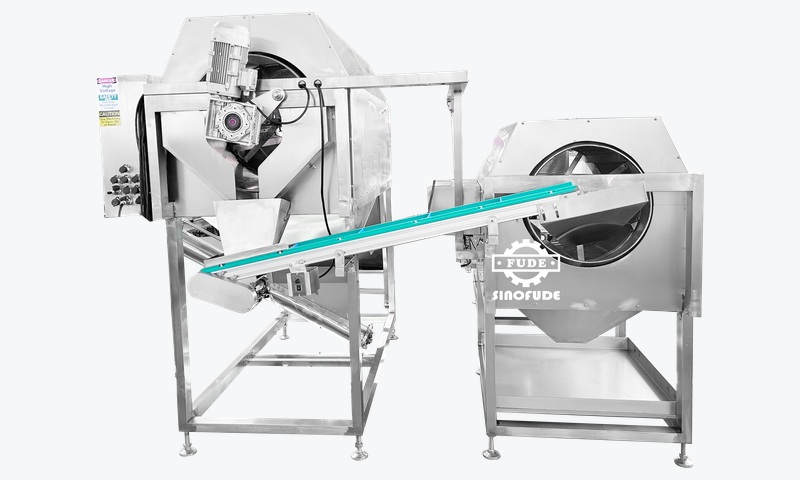
Coating drum section with inclined belt and depositor head
What the Coating Drum Does and Does Not Do
The optional CLMS rotating-drum module applies an edible-oil coating after destarching. The oil type, dosage and surface result are set during finished-recipe trials.
The optional sugar-coating module is specified based on the texture and appearance. The adhering method, sanding formulation and storage conditions are checked during recipe trials.
Tell us the surface finish you need and we incorporate the right coating module in the quotation:
get a starch mogul line quote
Equipment Overview
CLMS Starch Mogul Production Line Specifications by Model
The CLMS series includes a lab unit and high-volume mogul starch molding machines. All four models use the same tray cycle.
The table lists SINOFUDE’s model-level reference ratings. NIST conversion factors are used for US-unit conversions.3
These are not independent test results. Final achievable throughput, utilities and configuration are confirmed against your recipe, piece weight, tray specification and site supply in the written quotation.
Get a Starch Mogul Line Quote
CLMS Model Selector
Enter your daily output, shifts and hours per shift. The selector returns the hourly rate you need and the CLMS model rated for it, and routes outputs above 500 kg/h to a quotation.
| Specification | CLMS50 | CLMS150 | CLMS300 | CLMS600 |
|---|---|---|---|---|
| Rated capacity | 40–50 kg/h (88–110 lb/h) | 150 kg/h (331 lb/h) | 300 kg/h (661 lb/h) | 500–600 kg/h (1,102–1,323 lb/h) |
| Automation grade | Semi-automatic | Full-automatic | Full-automatic | Full-automatic |
| Tray handling | Manual loading, stacking and destacking | Automatic tray circulation | Automatic tray circulation | Automatic tray circulation |
| Installed power | 10 kW | 18 kW | 28 kW | 35 kW |
| Compressed air pressure | 0.5–0.8 MPa (72.5–116 psi) | 0.5–0.8 MPa (72.5–116 psi) | 0.5–0.8 MPa (72.5–116 psi) | 0.5–0.8 MPa (72.5–116 psi) |
| Air consumption | 0.3 m³/min (10.6 cfm) | 0.45 m³/min (15.9 cfm) | 0.5 m³/min (17.7 cfm) | 0.6 m³/min (21.2 cfm) |
| Power supply | 220–380 V, 50/60 Hz, customizable | 220–380 V, 50/60 Hz, customizable | 220–380 V, 50/60 Hz, customizable | 220–380 V, 50/60 Hz, customizable |
| Recommended operators | 1–2 | 1–2 | 2–3 | 3–4 |
| Recipes | Gelatin, pectin | Gelatin, pectin | Gelatin, pectin | Gelatin, pectin |
| Center-fill | Optional | Optional | Optional | Optional |
| Model | Rated capacity | Tray handling | Operators | Installed power | Intended use |
|---|---|---|---|---|---|
| CLMS50 | 40–50 kg/h | Manual | 1–2 | 10 kW | Lab-scale formulation work and small trial batches, not continuous 24-hour production |
| CLMS150 | 150 kg/h | Automatic | 1–2 | 18 kW | Continuous commercial production; the usual step up from CLMS50 trials |
| CLMS300 | 300 kg/h | Automatic | 2–3 | 28 kW | Continuous commercial production at medium volume |
| CLMS600 | 500–600 kg/h | Automatic | 3–4 | 35 kW | High-volume commercial production |
■ Rated Capacity vs. Actual Throughput
Rated capacity is SINOFUDE’s reference design output for each model. Actual throughput depends on single-piece net weight, recipe, required cure time and the PVC tray specifications.
Sizing a line on rated capacity alone is a mistake for heavy pieces or slow-curing recipes because it creates a throughput risk: cure time and tray specifications determine actual throughput, and a higher rated capacity does not necessarily mean more candy out of your hall.
■ Production Scaling Strategy
A small mogul is not always the right low-volume production answer: CLMS50 is a trial unit, and a plant that must run simple shapes at low volume every day belongs on a starchless depositor, as the comparison section explains.
SINOFUDE customers perform new-formula trials and small-batch verifications on CLMS50 and then scale up to CLMS150 or CLMS300.
Starch Mogul Line Price Factors & Build Time
There is no fixed price list for a starch mogul line: price depends on product, capacity, automation, contact materials, heating and cooling, controls, molds, packaging, certification and service scope. Your figure comes back in a written quotation, and payment terms are set per project in the formal quotation and sales contract.
What Moves Your Price
Model & rated capacity
A larger model carries more trays, a longer tray path and more installed power.
How to reduce itSize the line on your daily output with the model selector instead of buying the largest model.
Automation grade
Full-automatic tray circulation adds stacking, destacking and tray transfer mechanisms.
How to reduce itDevelop recipes on the semi-automatic CLMS50 before committing to a full-automatic line.
Cooking system scope
The kitchen system adds cookers, shearing, syrup tanks and pumps.
How to reduce itThe CLMS build is modular, so a cooking section you already run can stay in the layout.
Printing tooling & shapes
Each new shape needs its own printing tooling.
How to reduce itPlan shape launches together so tooling is ordered in one batch.
Dedusting & reclaim
More stations and a larger reclaim loop add equipment.
How to reduce itReserve dedusting space early in the layout so ducting runs stay short.
Oil or sugar coating
An optional machine after demolding.
How to reduce itLeave it out if your product ships uncoated.
Voltage customization
A non-standard supply changes the electrical build.
How to reduce itState your supply voltage and frequency in the enquiry.
Curing room & climate
Curing room capacity follows single-piece weight, curing residence time and tray count, not rated kg/h.
How to reduce itShare piece weight and target texture early so the layout proposal sizes the room once.
BUILD TIME AND INSTALLATION
approx. 60 days
Manufacturing
Standard CLMS line; customized layouts add design time.
Before shipment
Factory Test (FAT)
The complete line tested at the SINOFUDE factory.
Added separately
Sea Freight
Transit to your port, quoted with the shipment.
5–7 days
Installation
Installation; commissioning and operator training follow.
NOTE: Standard CLMS production lines are manufactured in approximately 60 days; customized layouts add design time. On-site installation of a standard CLMS line takes 5–7 days.
CHECK ON A USED MOGUL
- Enclosed dedusting at printing, depositing and demolding
- Automatic starch reclaim with sieving and tempering
- Recipe storage on the PLC
- A source for spare parts
- Installation and training
WHAT A CLMS ORDER INCLUDES
- Vacuum dedusting at all three stations
- Closed-loop reclaim with multi-stage sieving and thermal tempering
- PLC-HMI recipes for starch moisture target, depositing temp and line speed
- Spare parts supply and remote online technical support after handover
- On-site installation, commissioning and hands-on training
Starch Conditioning, Dust Control and Hygiene Design
Starch condition dictates whether a mogul line runs clean. Poorly conditioned starch appears as sticking, surface cracking, blurred shape outlines and microbial risk in the loop. SINOFUDE builds the CLMS series with a closed-loop starch reclaim system and dedusting units, keeping starch controlled inside the line rather than loose in the hall.
The Starch Window: 6–9% Working Moisture
The Starch Window is SINOFUDE's documented starting range for CLMS process setup: 6–9%. It is not a universal starch-molding limit; recipe trials and site conditions determine the validated production target.
- Below 6%: poor impression printing quality and a high risk of candy surface cracking after demolding.
- 6–9%: the starting working window for CLMS process setup.
- Above 9%: severe surface sticking, slow curing and a potential microbial growth risk inside the starch circulation loop.
The PLC monitors starch moisture and temperature continuously, and you set alarm thresholds for deviations. SINOFUDE's recommended starting hall condition is 25 °C with relative humidity below 45%; the commissioned setpoints follow the recipe and site.
Moisture absorption of molding starch controls shape and drying, which is why the starch moisture target is stored with every recipe.
Dust Control Where Starch Is Loose
The hazards associated with dry, uncontained starch arise during handling rather than molding itself. The CLMS series controls dust where starch is loose. Many believe that the mogul is the dust source; however, the transfer points are places where dedusting deserves to be implemented.
- Multiple vacuum dedusting machines serve the impression-printing, depositing and demolding stations.
- A closed reclaim line with multi-stage grading sieves and foreign-object screening.
- Thermal tempering before returning starch to the filling station.
A vacuum dedusting system is required on every mogul line; its scope is set in the layout and quotation.
Drum sieves on the starch reclaim line
System Integrated Component
Hygiene Design Points Your Food Safety Plan Will Check
In the USA, 21 CFR 117.40 (a)(1) states that plant equipment used in the manufacture of food must be adequately cleanable and maintained, and 117.40(d) extends the same requirement to conveying and automated systems.1 These are CLMS design inputs for your team's validation against the requirement; they do not establish compliance for a specific installation:
- Product-contact parts in 304 or 316L stainless steel.
- Standard PVC production trays.
- Partial CIP cleaning of the cooking and syrup-transfer piping.
- Multi-level sieving and foreign-object screening inside the reclaim loop.
Mechanical parts in contact with starch need periodic inspection and deep cleaning; reclaim sieves and filters need scheduled maintenance as well.
The complete line passes a factory acceptance test at the SINOFUDE factory before shipment. We supply the commercial and technical shipping documents agreed in the contract, including packing lists.
Starch Window Check
Enter your starch moisture readings, hall humidity and hall temperature to see where they sit against The Starch Window and the recommended hall condition.
CLMS Starch Mogul Line
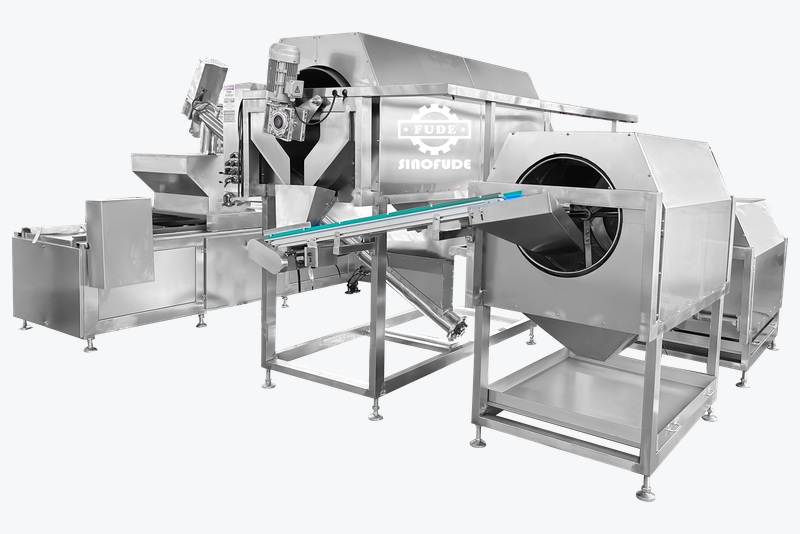
Sinofude Factory Layout
Step 01
Brief
Send your recipe type, piece shapes and target daily output. We reply to your enquiry within one business day.
Step 02
Written Quotation
The quotation states the model, modules, utilities and site requirements, with payment terms set in the quotation and sales contract.
Step 03
Contract & Layout Proposal
After the order is placed, we prepare a plant-layout proposal that reserves space for starch circulation, dedusting and the curing room.
Step 04
Manufacturing
The line is built at the SINOFUDE factory; a standard CLMS line takes approximately 60 days.
Step 05
Factory Acceptance Test
The complete line is run and checked at the SINOFUDE factory before it ships.
Step 06
Installation & Training
On-site installation of a standard CLMS line takes 5–7 days. Commissioning on your recipe follows; your operators then receive hands-on training.
Final Step
Warranty Terms & Support
Warranty terms are set in your sales contract. Spare parts supply and remote online technical support continue after handover.
Site Requirements
| Requirement | Specification | Why It Matters |
|---|---|---|
Power Supply |
220–380 V, 50/60 Hz, customizable to your country | Sets the electrical build of the control cabinet |
Compressed Air |
0.5–0.8 MPa (72.5–116 psi); 0.3–0.6 m³/min (10.6–21.2 cfm) by model | Drives the pneumatic actuators on the line |
Process Water & Steam |
Prepared on site | Heats the cooking system and melts the syrup |
Production Hall |
25 °C, relative humidity below 45% | Keeps the starch loop inside The Starch Window |
Floor Area |
A reserved starch circulation zone | Starch filling, printing, sieving and reclaim need their own zone |
Curing Room |
A separate room, sized in the layout proposal | Capacity follows single-piece weight, curing residence time and tray count, not rated kg/h |
Dust Control |
Space and budget for vacuum dedusting | Dedusting is part of every mogul line |
Starch Dust In Hall |
U.S. OSHA 8-hour time-weighted-average permissible exposure limit for starch: 15 mg/m³ total dust and 5 mg/m³ respirable fraction | NIOSH notes that starch may form an explosive mixture with air. Your workplace exposure assessment and site-specific combustible-dust engineering must cover the dedusting areas. |
CLMS Utility Sheet
Pick a model, the number of lines and your production hours to total installed power, compressed air in m³/min and cfm, and recommended operators.
CLMS Starch Mogul Line Station Gallery and Plant Facts
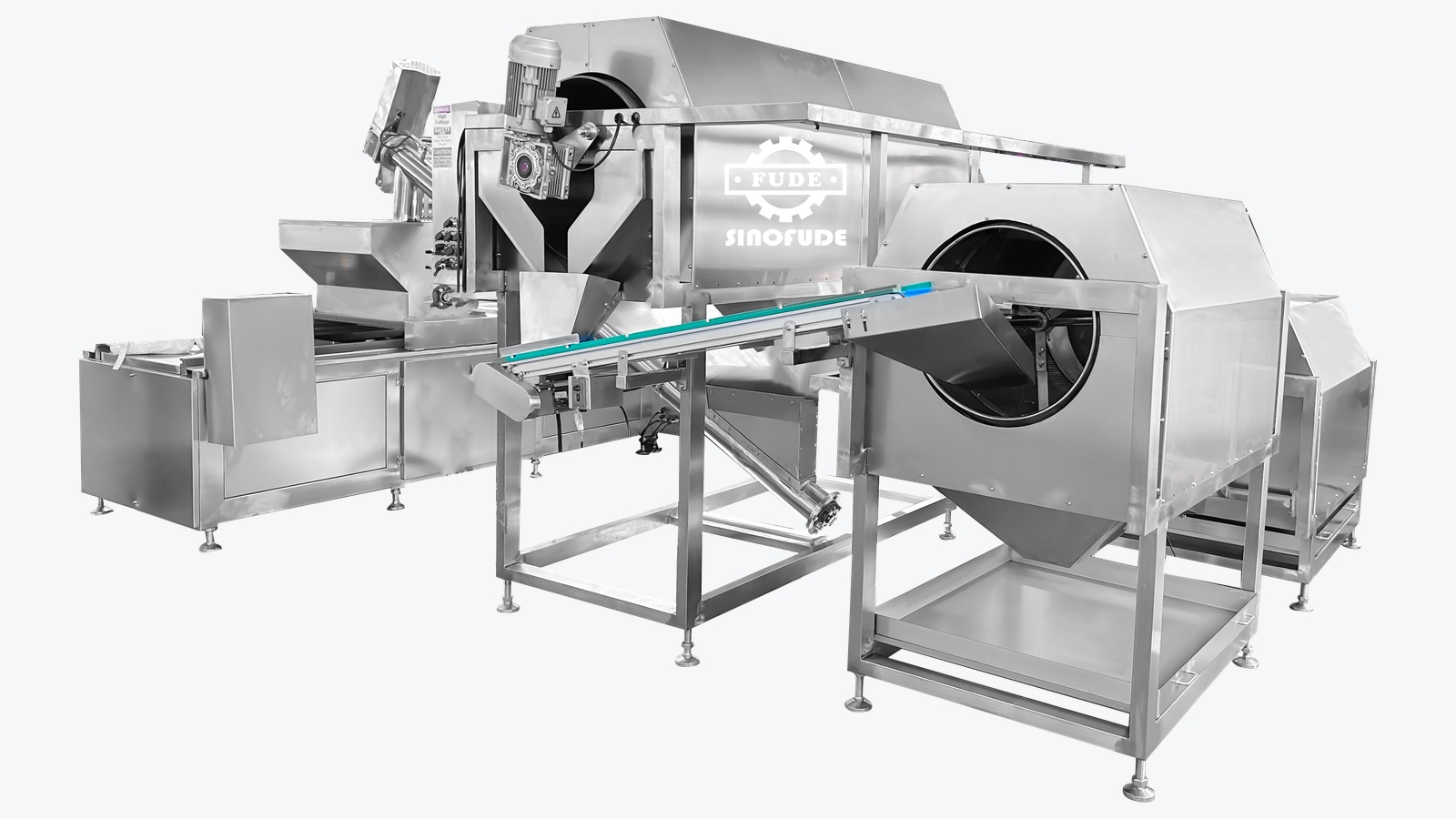
Drum sieve and tray section
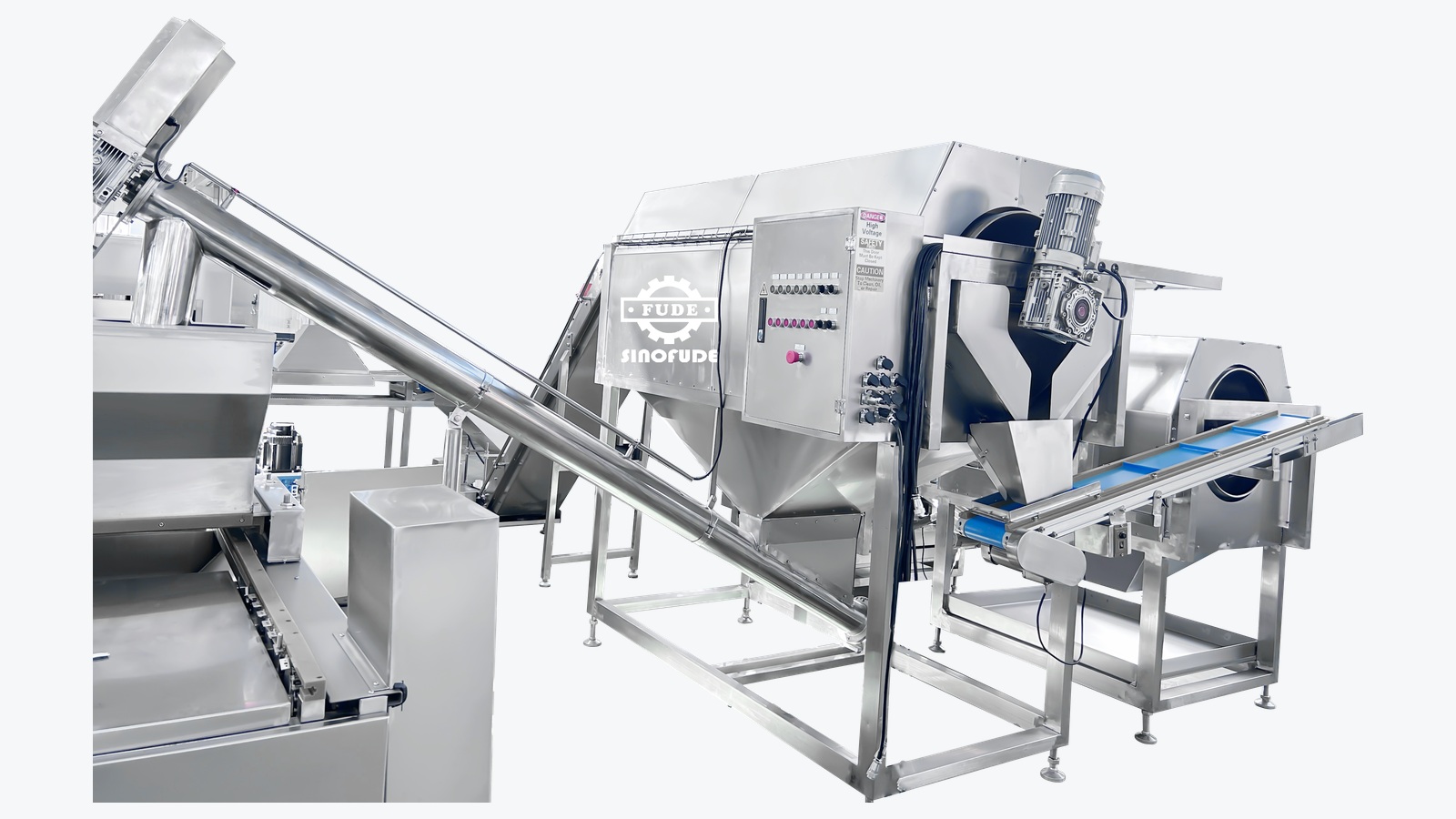
Starch lift, drum sieve and control panel
SINOFUDE Plant Facts
SINOFUDE was founded in 1998 in Fengxian District, Shanghai, and now runs three factories totalling more than 30 acres with more than 200 employees. Its Confectionery, Baking and Chocolate machinery divisions work alongside in-house laser cutting, welding and CNC processing.
Where a CLMS Line Fits
Large shape portfolios
Confectionery makers with many SKUs, 3D relief and frequent pattern changes order new printing tooling instead of a complete solid mold set per shape.
Novelty shapes at volume
Fine-detail, multi-color and multi-layer jelly products run at commercial volume on CLMS150, CLMS300 and CLMS600.
Recipe development
CLMS50 runs new-formula trials and small-batch verification before production moves to CLMS150 or CLMS300.
Compare CLMS models side by side, or check out all SINOFUDE machines.
request a quote for a starch mogul line.
Starch Mogul vs Starchless Depositing: Choosing a Molding Route
A starch mogul is not always the better route and two processes are not interchangeable on different products. The long multi-stage process of printing, depositing, stacking, curing, destacking, sieving and reconditioning starch buys you shape flexibility and inexpensive shape changes, but costs you floor space, a curing room and a starch loop to maintain.
| Item | SINOFUDE CLMS starch mogul line | SINOFUDE starch-free gummy depositor line |
|---|---|---|
| Mould medium | Food-grade corn starch in PVC trays, reused through the loop | Solid silicone or metal mold sets |
| Shape detail | 2D and 3D relief with fine surface detail | Simple geometry; deep relief patterns are limited |
| Tooling per new shape | One set of printing tooling | One complete mold set |
| Shape changeover | Swap the printing tooling and adjust starch parameters | Disassemble, replace and validate the mold set |
| Starch handling | Vacuum dedusting at three stations and a reclaim loop | No starch loop |
| Floor space | A starch circulation zone and a separate curing room | Neither |
| Cleaning focus | Starch loop sanitation, sieve and filter checks | Mold CIP cleaning and nozzle maintenance |
| Recipes | Gelatin, pectin, compound; sugar-free after parameter tuning | Gelatin, pectin, sugar-free |
| Situation | Why it works against a mogul | What to do instead |
|---|---|---|
| Few SKUs and simple shapes with rare pattern changes | Cheap shape changes are the main trade-off a mogul buys you, and this range will not use them | A SINOFUDE starch-free depositing line |
| No floor area for a starch circulation zone and a curing room | The starch loop and the curing room are part of the process, not add-ons | Starchless depositing into solid molds |
| Recipes that cannot share a recirculating starch medium | A shared starch loop carries the risk of cross-contamination and hygiene problems between recipes | Starchless depositing with solid molds |
| Required output above the CLMS600 rated capacity of 500–600 kg/h | Above the largest standard model | Send your target output for a quotation |
Process Research
"The cited technical background on conventional starch molding says the starch cavities cool the deposited mass and absorb water from it. Published process research reports that starch-molded gums can require 24 to 72 hours or longer to dry."
These are general process observations, not a guaranteed SINOFUDE cycle time. Actual setting and drying depend on formulation, solids, piece dimensions, starch condition and room climate.
Strategic Conclusion
A mogul for a two-shape range is an error, and a starchless line for a hundred-shape novelty range is an error too.
Making other confections? See how we build marshmallow lines, or compare our hard candy and lollipop production lines.
Starch Mogul Line Efficiency Assessment Tools
CLMS Starch Mogul Model Selector
Enter what the line is for and how much candy you need per day. The selector turns your daily kilograms into a required hourly rate and matches it to the rated capacity of the four CLMS starch mogul models.
Starch Window Check
Compare your moulding starch moisture and hall conditions with the CLMS operating settings: a starch working moisture of 6–9%, a production hall at 25 °C and relative humidity below 45%.
CLMS Site Utility Sheet
Choose a CLMS model, the number of lines and your production hours. The sheet adds up installed power, compressed air and recommended operators, converts air figures to psi and cfm, and shows the running hours your daily output needs at rated capacity.
Starch Mogul Line FAQs
Why are gummies made in starch molds?
Printed starch holds any shape the printing tooling can press, and the starch draws water out of the deposited mass while it sets.4 A new shape needs only new printing tooling, so one line runs many shapes, and the same starch is sieved, conditioned and reused.
What is a starch mogul?
A starch mogul machine is the candy machine that fills trays with starch, prints cavities into it, deposits hot candy mass and later separates the cured candy from the starch. The CLMS line adds the cooking system, tray circulation, starch reclaim, dedusting and optional coating around that machine.
What are starch molds?
Starch molds are the cavities pressed into a tray of dry corn starch. Hot candy is deposited into them, and after curing the tray is emptied and the starch returns to the loop.
What starch moisture does the CLMS line run at?
SINOFUDE uses 6–9% as the documented starting range for CLMS process setup, the range we call The Starch Window. It is not a universal limit: recipe trials and site conditions set the validated target. Below the starting range, printing quality can drop and cracking risk can rise after demolding; above it, pieces can stick, curing can slow and microbial risk can rise in the loop.
Can the CLMS line make sugar-free gummies?
Yes. Sugar-free gummies need targeted formula changes plus careful fine-tuning of the starch conditioning parameters for that recipe.
Can it run pectin-based, gelatin-free gummies?
Yes. All four CLMS models run gelatin and pectin formulas, and a pectin recipe is stored as its own PLC recipe.
Can it make multi-color, layered or center-filled gummies?
Yes. Multi-nozzle depositing produces single-color, dual-color and layered pieces, and center-fill is an option on all four models.
Does a starch mogul line need dedusting and starch reclaim?
Yes. A complete vacuum dedusting system is required on a mogul line, and the CLMS closed-loop reclaim sieves, screens and tempers the starch before it returns to the trays. On CLMS50 the reclaim workflow is semi-manual.
What is the difference between CLMS50 and CLMS150?
CLMS50 is a semi-automatic lab-scale unit for R&D and small trial runs, with manual tray handling. CLMS150 is a full-automatic production line built for continuous 150 kg/h manufacturing.
How much power and compressed air does each model need?
Installed power is 10, 18, 28 and 35 kW for CLMS50, CLMS150, CLMS300 and CLMS600. All four run on 0.5–0.8 MPa compressed air, consuming 0.3, 0.45, 0.5 and 0.6 m³/min.
How long does a shape change take?
Swapping the printing tooling takes a short time. Full production validation then depends on the candy formula and the starch condition in the loop.
What are the key maintenance items?
Periodic starch sieve inspection, dedusting filter element replacement, printing tooling wear checks, depositor nozzle cleaning and daily checks on pneumatic components.
How much does a starch mogul line cost?
Price depends on product, capacity, automation, contact materials, heating and cooling, controls, molds, packaging, certification and service scope. You receive a written quotation, and payment terms are set in the quotation and sales contract.
How long from order to installation?
Standard CLMS lines are manufactured in approximately 60 days, sea freight to your port is added, and on-site installation of a standard line takes 5–7 days.
What support comes after the order?
A plant-layout proposal, a factory acceptance test at the SINOFUDE factory, on-site installation with commissioning, and hands-on training for your operators. Warranty terms are set in your sales contract, and spare parts supply and remote online technical support continue after handover.



