
Get in Touch with SINOFUDE Company

Nutraceutical & Vitamin Gummy Line
Gummy Manufacturing Equipment Built Around Dosing Accuracy, Process Control and Clean Changeover
Vitamin and nutraceutical gummies have production-line requirements that differ from standard candy, including tighter mixing and temperature control, dosing uniformity, and rigorous equipment cleaning and changeover. Gummy manufacturing equipment is an integrated processing system for the production of gummy supplements, also described in buyer specifications as a gummy machine, gummy-making equipment or gummy making equipment; it cooks, mixes, doses, deposits, cools, demoulds and coats gelatin, pectin or other functional formulations at repeatable commercial settings.
SINOFUDE’s nutraceutical gummy manufacturing equipment features a starchless servo-depositing system that integrates color, flavor, acid and active-ingredient batch mixing, depositing, cooling, demoulding and coating; the system is adaptable for vitamin, mineral, botanical, collagen and other functional gummy products.
Request a Line Configuration Quote
🔒 Your formulation and drawing details are handled in confidence throughout the quotation process.
Standard production lines scheduled at approximately 60 days
Liquid active dosing accuracy up to ±0.1%
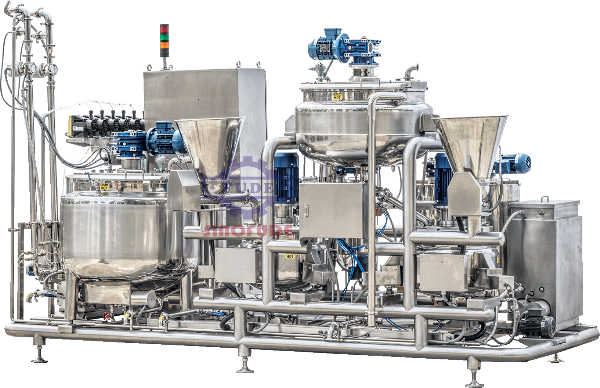
Starchless servo-depositing platform
Equipment designed to support 21 CFR Part 111
Model range
CLM40 to CLM600, ~40 kg/h to ~600 kg/h nominal output
Depositing tolerance
±0.1 g held across the full CLM range
Standard lead time
Approximately 60 days, plus 5–7 days on-site installation
Forming platform
Starchless servo-depositing, no starch-contact loop
Active dosing accuracy
Liquid dosing system accuracy up to ±0.1%
Records support
FAT/SAT criteria, operating and control-parameter records
Gummy Manufacturing Process: Cooking to Coating in One Flow
A slight variation in color or flavor may compromise product quality in standard confectionery. For a functional nutraceutical gummy, variation in an active premix may adversely affect the intended dose in each piece; therefore, precision and repeatable control are required across the production process.
SINOFUDE has constructed confectionery, chocolate and bakery processing lines for over 30 years across its Confectionery, Baking and Chocolate Divisions; the same cooking, dosing and depositing engineering applies directly to functional nutraceutical gummy lines; minor active components must be dosed repeatably even at a very small proportion of the batch, while heat-sensitive actives require the syrup temperature, ingredient-addition location and residence time to be considered together.
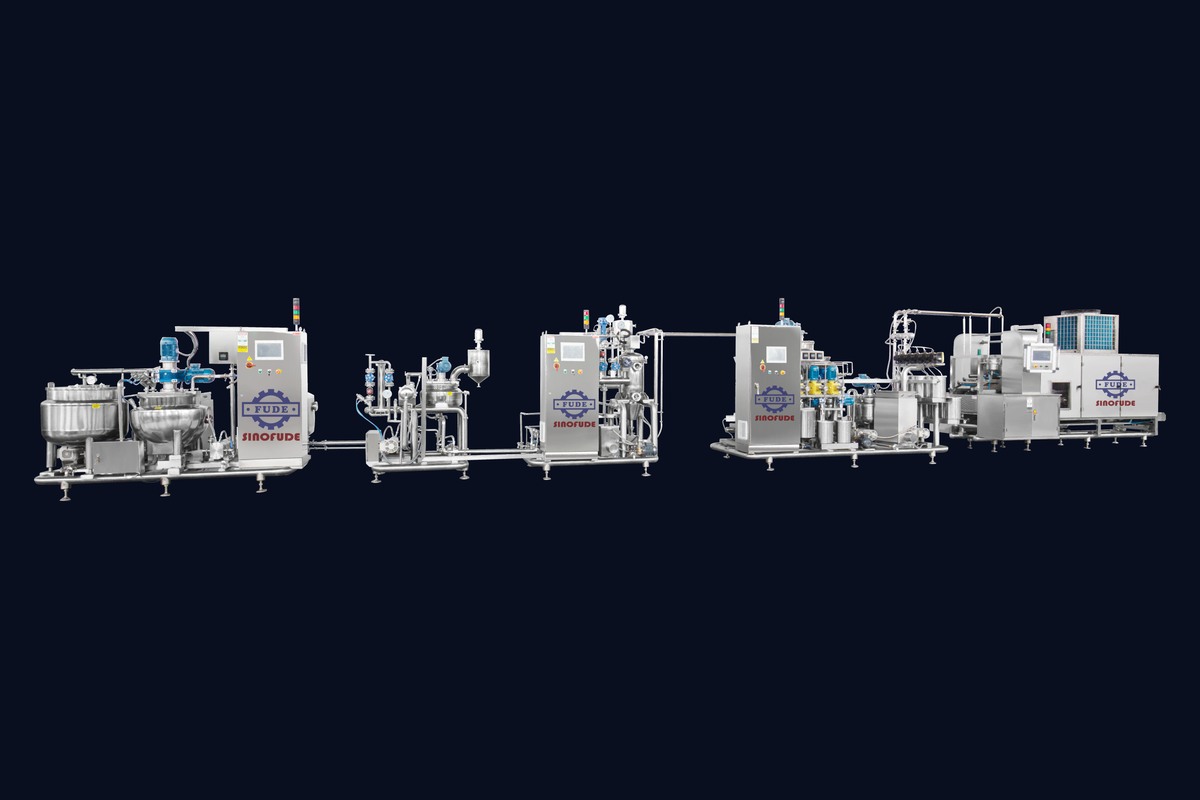
Cooking & Batch Mixing
Cooking machinery brings the gummy base used for gummy candy to the required solids and process endpoint for controlled candy production, using parameters matched to gelatin, pectin or the selected gelling system. For vitamin and functional gummies, batch-type mixing is employed when small ingredients need to be added accurately. Each syrup batch is weighed and then minor ingredients are dosed against a batch weight, which, compared to continuous-flow, is less affected by changes in syrup temperature, pressure, pump performance or viscosity.
Active Dosing & Servo Depositing
Liquid colors, flavors, acids and active ingredients are added via the dosing system, which can infuse a validated liquid premix into the weighed batch. For powder ingredients, a servo-driven screw feeder is provided as needed. The customizable gummy candy equipment pairs servo depositors and molds with reusable silicone gummy molds or metal candy molds at the specified piece weight; controlled depositing helps ensure uniform one-color, multi-color and center-filled formats.
SourceCooling & Demoulding
Gummies are cooled and set under recipe-specific conditions, then automatically demoulded. Since syrup is deposited at final moisture using a starchless process, there is no separate starch-drying stage to manage.
Coating
Oil, sanding sugar or other coating is applied where needed before the product moves to conditioning, drying and packaging.
Equipment on a SINOFUDE Nutraceutical Gummy Line
- Cooking system matched to gelatin, pectin or the selected gelling system
- Batch mixing and weighing tanks with load cells for color, flavor, acid and active ingredient dosing
- Automatic valves, heating, PLC control and HMI recipe system
- Optional servo-driven screw feeder for powder ingredients
- Servo depositor for reusable silicone or metal molds, supporting single-color, multi-color and center-filled products
- Cooling tunnel, automatic demoulding station and oil/sanding-sugar coating drums
Mould Options and Product Formats
Silicone moulds are useful for prototyping while metal moulds are more appropriate for mass production.
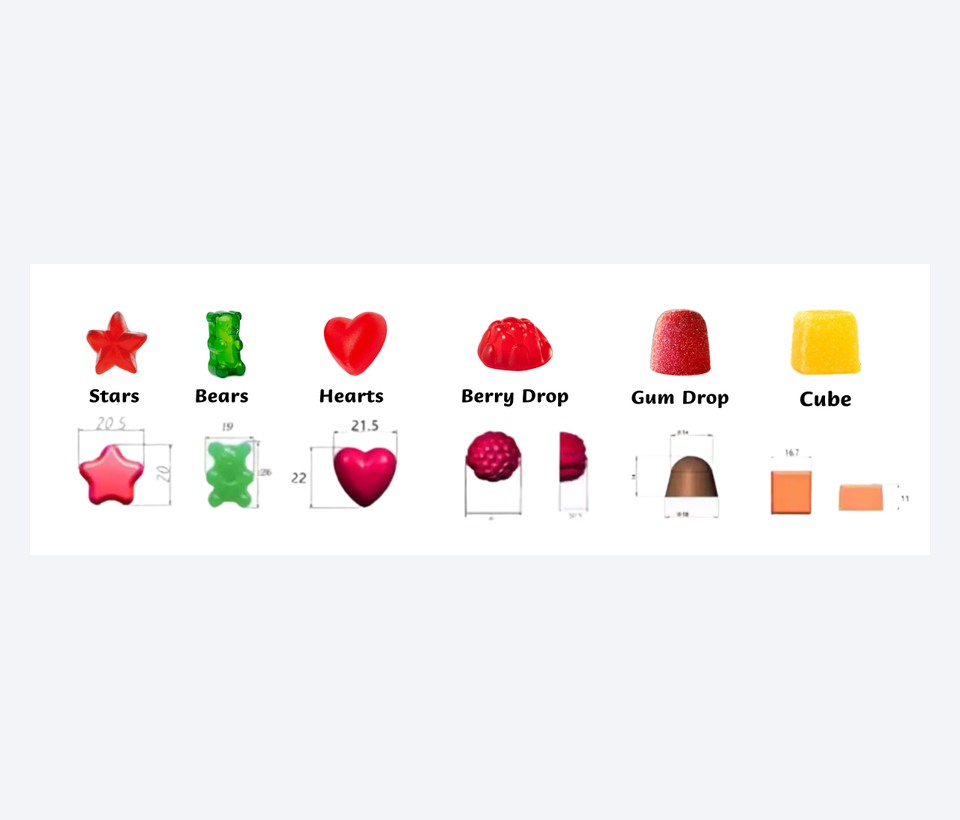
With the correct manifold and nozzle arrangement, the starchless depositor can form one-colour, two-colour, multi-colour and centre-filled jelly pieces, gummy bears and gummy worms. This means one production line can create gummies across several product families; whether a buyer describes the target as a premium gummy or high-quality gummies, the result still depends on validated formulation and process control rather than the label.
Functional Gummy Products This Platform Is Configured For
- Vitamin and mineral gummies
- Botanical and herbal-extract gummies
- Collagen and beauty-nutrition gummies
- Centre-filled functional gummies with a liquid or active-carrying core
- Multi-colour and multi-component gummy formats
Gelatin, pectin and sugar-free product families can all be produced on one line.
System Process
Gelatin, Pectin and Sugar-Free Support
The same starchless line can be configured for both gelatin and pectin gummies; however, the two recipes cannot simply use the same settings. Source Switching between the formulation systems is a process-development step, not just a setting change on the depositor.
Gel basis
Protein-based
Application fit
Traditional and functional gummies; generally more forgiving and give a more elastic texture
Process consideration
Gelatin-based compositions can be harder to release from starchless moulds and may need a longer removal time before further processing
Equipment implication
Use separate validated recipe parameters; stable holding temperature and short transfer paths help when gelatin and pectin run on the same line
Gel basis
Plant-based polysaccharide
Application fit
Vegetarian and vegan positioning; setting is triggered by pH rather than cooling, with a tighter process window than gelatin
Process consideration
Pectin begins to set quickly once deposited, which is only an advantage if the depositing system is well optimised; poor control can lead to blockages or inconsistent fill
Equipment implication
Recalibrate pump stroke and depositing timing per recipe; coordinate the cooking endpoint with cooling/drying
Sugar-Free / Reduced-Sugar
Sugar-free and reduced-sugar gummies can be done on the same depositing line, but they need their own process development.
Changing the sweetener or bulking system can affect viscosity, solids, water activity, the setting and drying behavior; therefore, SINOFUDE reviews the target formulation and piece specification before confirming the final equipment configuration.
Active-Dosing Formulation
Finer is not always better. Suspended active powders behave differently by particle size. Very fine powder can thicken the mass or form agglomerates. Coarser powder can settle or feel gritty in the finished piece.
Send us the active form (liquid, powder, oil-based or pre-dispersed premix) and the approximate addition percentage so the dosing and mixing configuration can be matched to it, rather than assuming any particle size or load works unmodified.
Coating Options: Oil and Sanding Sugar Finishes
Coating is an inline process that is applied after cooling and demoulding to give the product its desired feel. Source
| Coating | What it does | Finish target |
|---|---|---|
| Oil coating | Applies a thin oil layer to prevent sticking and give a smooth surface feel | Standard finish for gelatin and pectin gummies moving to packaging |
| Sugar sanding | Applies a sugar or sanding-sugar layer for a textured, non-sticky surface | Sour or textured product formats |
Recipe Configuration
The coating stage is configured for a given piece and throughput, with drum speed, airflow and dwell time adjusted to the recipe rather than run through a generic fixed cycle.
For a contract manufacturer developing multiple SKUs with different weights, a setting tuned for a 2 g gummy will not behave the same way for a 4 g piece.
Unlike a fixed speed drum, the coating stage is confirmed to be set per recipe at Factory Acceptance Test on a SINOFUDE line.
Downstream Packaging
Packaging machines downstream of the depositor often encounter under-coated gummies (that is, gummies with insufficient coating). By the time a piece exits the cooling tunnel, its surface should be tack-free.
Tacky surfaces will cause handling failures while gummies cool or sit in the packaging hopper. Humid conditions make the problem worse.
Mould Material
Mould material is chosen alongside the coating process.
Silicone moulds support rapid product development and easier shape changes. Metal moulds suit long-term industrial runs of a fixed shape.
CLM Model Range: Capacity, Footprint and Depositing Tolerance
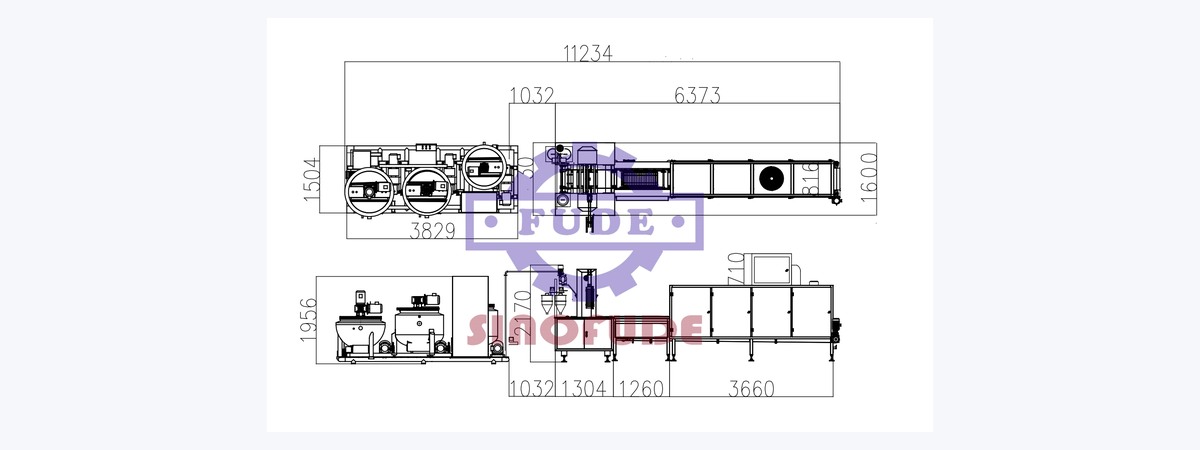
Whether the buyer needs small-scale output or a high-capacity line for larger manufacturing facilities, production capacity is important but isn’t the only deciding factor in model selection. Other factors include the target dose per unit, gummy weight tolerance, active mixing batch size, SKU count, mould changeover rate and downstream cooling or conditioning capacity.
When considering gummy making machines, the more pertinent question isn’t whether it achieves a given headline speed. Rather, the focus is on whether the line is capable of running the recipe along with the temperature and timing for depositor, mold (mould) release, and cooling as a unified and controlled system.
| Model | Nominal output* | Moulds / stroke | Footprint (L×W) | Installed power | Operators | Depositing tolerance |
|---|---|---|---|---|---|---|
| CLM40 | ~40 kg/h | 20 | 9 × 1.6 m | 78 kW | 2 | ±0.1 g |
| CLM80 | ~80 kg/h | 20 | 10 × 1.6 m | 100 kW | 4 | ±0.1 g |
| CLM150 | ~150 kg/h | 20 | 15 × 1.6 m | 150 kW | 4 | ±0.1 g |
| CLM300 | ~300 kg/h | 40 | 15 × 3 m | 300 kW | 4 | ±0.1 g |
| CLM600 | ~600 kg/h | 80 | 20 × 5.8 m | 400 kW | 4 | ±0.1 g |
| Range summary | ~40–600 kg/h | 20–80 | 9 × 1.6 to 20 × 5.8 m | 78–400 kW | 2–4 | ±0.1 g |
Requesting a Quote: What to Send and What to Expect
This concern comes directly from buyers in this category. They report one recurring barrier: buyers can find machines that operate at high speeds, but struggle to find a manufacturer with a low MOQ or a reasonably priced formulation-development path.
A complete gummy-line quotation must specify model(s), quantities, capacity basis, materials, component brands, power and utility requirements, dimensions, line layout, moulds, change parts, packaging, documents, tests, installation, training, spare parts, warranty, delivery, Incoterms and payment.
It must also specify what you need to provide on site.
Price depends on model selection, automation level, mould material, customization and options such as coating and centre filling. There is no fixed price list for a configured line. Your project-specific price comes back in a written quotation.
Configuration Factors
Target output and model
Effect on configurationDetermines which CLM model and how many mould cavities per stroke
What to tell us
Required output per hour and working hours per day, including expected growth
Active form & addition
Effect on configurationDetermines dosing system configuration and whether a powder feeder is needed
What to tell us
Liquid, powder, oil-based or pre-dispersed premix, plus approximate addition percentage
Gel system & structure
Effect on configurationSets cooking, mixing and depositing parameters
What to tell us
Gelatin, pectin or another formulation; one-colour, multi-colour or centre-filled
Mould material & SKU
Effect on configurationAffects changeover speed and tooling cost
What to tell us
Mould material, shape range, expected SKU count and changeover target
Performance Inputs for a Payback Review
Build the payback case from your sellable kilograms produced per shift, labor hours, starch purchasing and recovery, cleaning downtime, changeover time, reject rate and energy consumption. A SINOFUDE quotation provides the selected model and relevant technical specifications so your finance team can compare starchless and mogul routes using verified plant costs instead of generic cash-flow estimates. This is a performance-level review, not a financial forecast.
Standard Production Schedule
Standard production
Approximately 60 days
Manufacturing of the configured line
On-site installation
5–7 days
Installation and commissioning at your facility
Customized projects
Additional design time
Non-standard configurations require additional design work before the 60-day production schedule begins
Warranty, Upgrades, Spare Parts & Support
Payment terms are confirmed in the formal quotation and sales contract for each project, including deposit, milestone or balance payments, currency and payment documents. Incoterm is agreed per contract; we provide commercial and technical shipping documents within the agreed scope, while you or your customs broker confirm destination import permits, duties and compliance.
Warranty duration, covered parts, exclusions, response process and labor or travel responsibility are confirmed in the sales contract for each project. The line can be upgraded or modified after installation; its modular design supports capacity expansion, servo-system retrofits and control-system updates as production needs evolve.
Spare-parts supply is part of the after-sales service, and we recommend agreeing a startup kit for wear and critical parts while confirming destination-country availability for electrical and automation components. Remote online technical support is available; for dependable diagnosis and reliability planning, provide the machine serial number, alarm history, photos, video, operating settings and recent changes.
GMP-Oriented Equipment Design Under 21 CFR Part 111
A production line is just one step towards creating a compliant GMP factory and is not sufficient. Under 21 CFR Part 111, the dietary-supplement manufacturer establishes the production and process control system and the specifications for identity, purity, strength and composition (§111.55–111.70); that responsibility stays with the manufacturer’s own quality system and is not something equipment can substitute for.
The equipment is built to satisfy the design-and-construction requirements that Part 111 establishes for equipment itself: appropriately designed and constructed for its intended use, adequately cleanable, corrosion-resistant, made of nontoxic materials, with seams smoothly bonded to minimise accumulation of residue (§111.27), and designed and selected so dietary-supplement specifications can be consistently met and so it is capable of operating within the process’s operating limits (§111.30(a), (b)).
Part 111 also requires that automated equipment be routinely calibrated and that changes to production be reviewed and approved by quality control personnel (§111.30(c), (d)); those are ongoing operating practices carried out by whoever runs the equipment, not a one-time property built into the machine, so SINOFUDE designs in the calibration points, access controls and change-approval hooks that make that ongoing practice possible, while your quality team is the one who actually calibrates, reviews and approves on a running basis.
Buying GMP-oriented equipment does not automatically transfer compliance responsibility to the supplier. The structural reason is that Part 111 divides the obligation: equipment must be engineered to meet section 111.27 and 111.30, while your quality team alone owns the section 111.55–111.70 specification and production-control system. Treating equipment ownership as proof of compliance is a mistake that creates real audit risk.
The complaint “Pumps are breaking, temp probes are malfunctioning, and my nozzles are clogging” was voiced by a gummy-line operator on an industry discussion forum and is one reason Factory Acceptance Test and Site Acceptance Test criteria, plus routine calibration and inspection of dosing and depositing components, are written into every SINOFUDE quotation rather than left to be discovered after installation.
Technical Specifications
Process Control & Instrumentation Details
How Process Values Are Controlled on the Line
- Batch weight and minor-ingredient dosing are verified against the recipe at the mixing stage
- Active dosing is monitored through the batch-weight-based dosing system rather than continuous-flow estimation alone
- Depositing weight is checked against the target piece weight during the run
- Equipment is tested at Factory Acceptance Test (FAT) before shipment, with Site Acceptance Test (SAT) criteria agreed before installation testing
Process Control & Instrumentation
- Load-cell weighing on batch mixing tanks
- PLC control with HMI recipe storage for repeatable process parameters
- Automatic valves and heating with calibration and inspection provisions per equipment design
ISO 9001 Certified: SINOFUDE adopted the ISO 9001 management system in 2004, and it applies across the company’s Confectionery, Baking and Chocolate Divisions; specific certification documents for a given project are confirmed at the quotation stage. Protective packing, machine identification, packing lists and delivery documents are prepared for each shipment, and commercial and technical shipping documents are provided within the agreed scope.
Documentation We Provide and What Your Quality Team Adds
The machine supplier and the supplement manufacturer have different responsibilities. SINOFUDE provides the equipment and control documents needed for installation, operation and maintenance; your team then uses those documents as part of its own qualification, validation and quality system.
01
Approved equipment specification and process flow, including the selected model and major options
02
Electrical and utility requirements, equipment layout and installation information
03
Operating manuals and cleaning/maintenance instructions for the supplied equipment
04
Recipe and control-parameter lists that can be incorporated into your site operating procedures
05
Material and component records required by the agreed purchase specification
06
Agreed upon Factory Acceptance Test (FAT) and Site Acceptance Test (SAT) criteria prior to the execution of tests
07
Requirement for calibration/verification of weighing, dosing and other measurement points of critical importance, covered by the supply scope
Nutraceutical Gummy Line: Equipment and Product Range
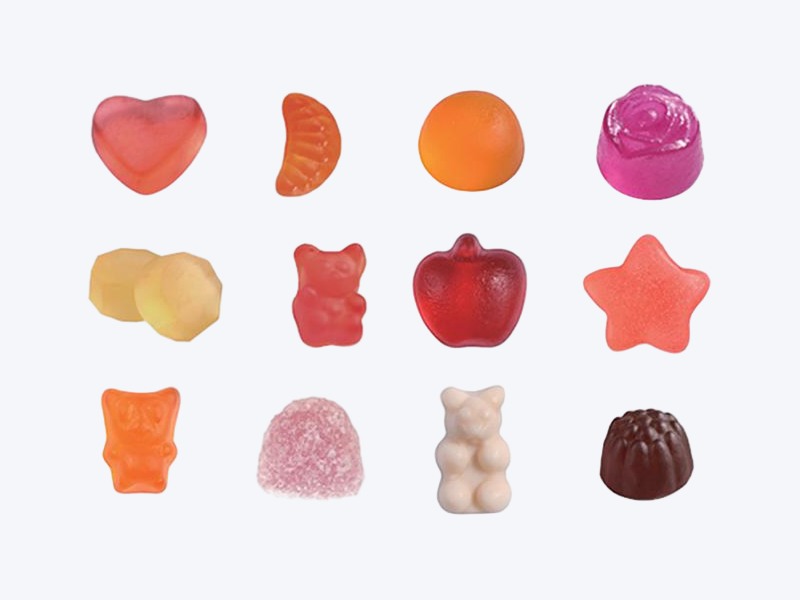
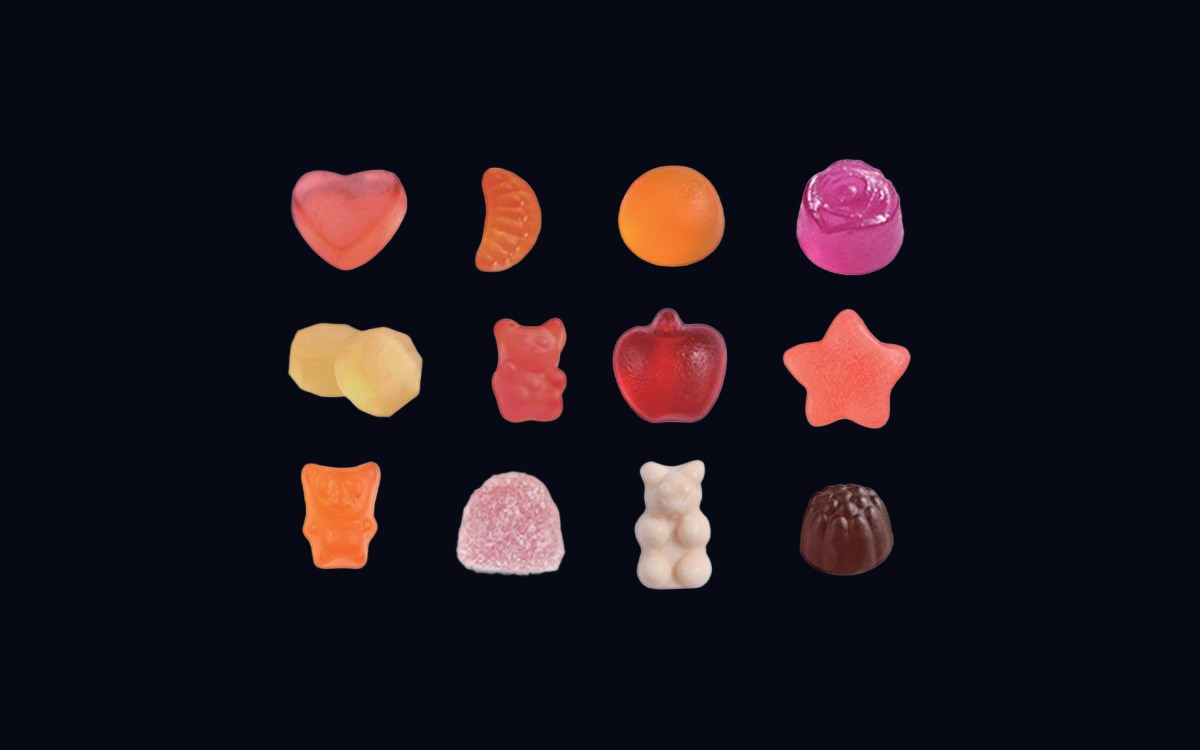
Multi-shape, multi-colour gummy pieces including hearts, fruit shapes, bears, stars and a centre-filled piece produced on a SINOFUDE starchless depositing line
Gummy shapes and formats producible on a starchless line, including single-colour, multi-colour and centre-filled pieces.
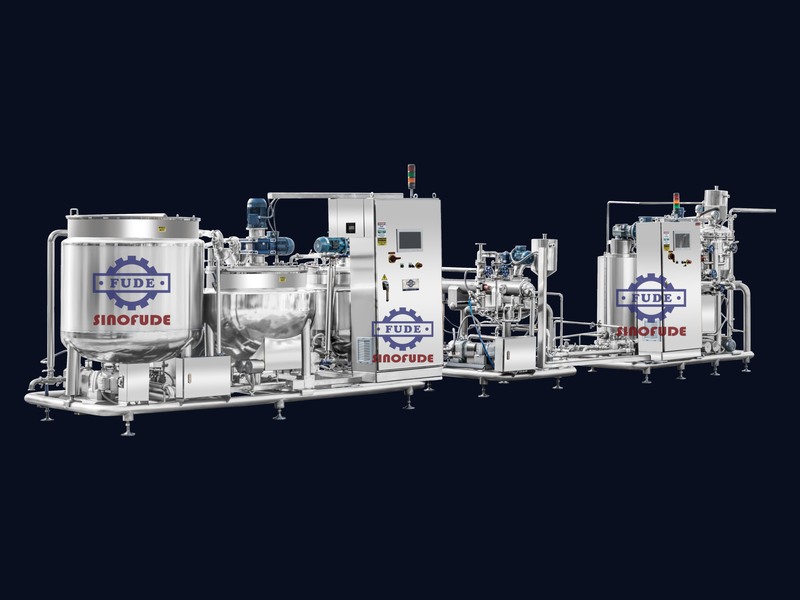
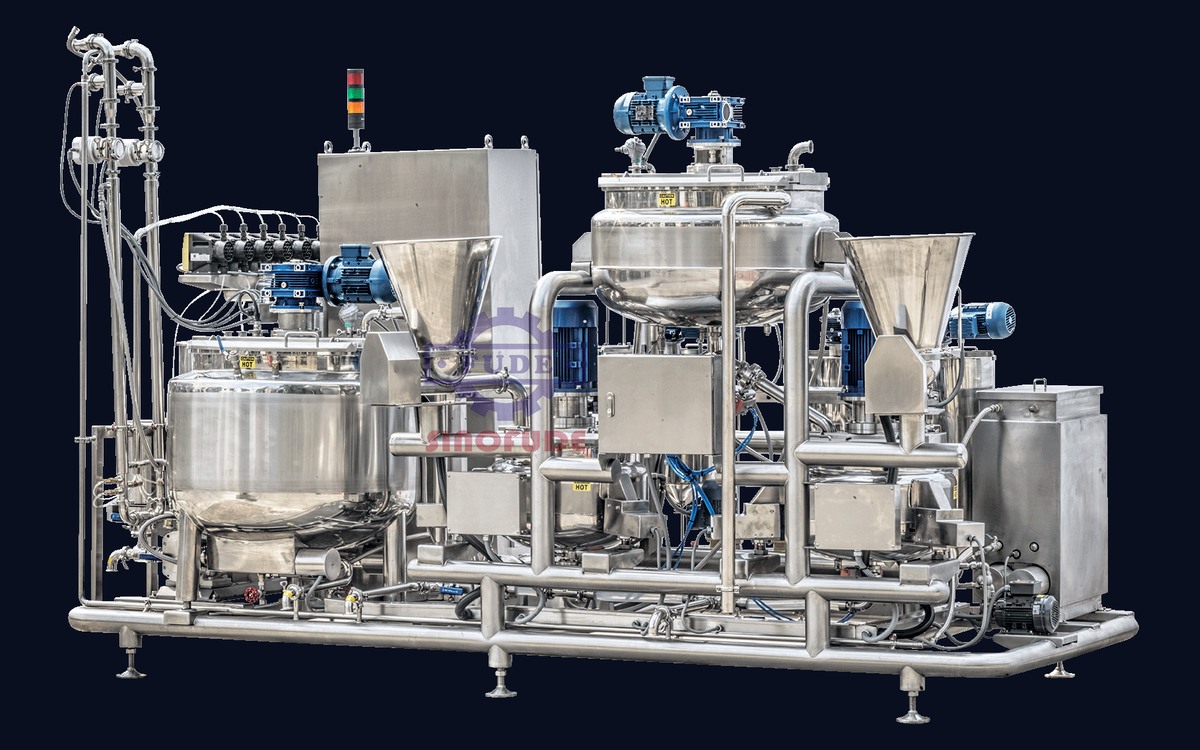
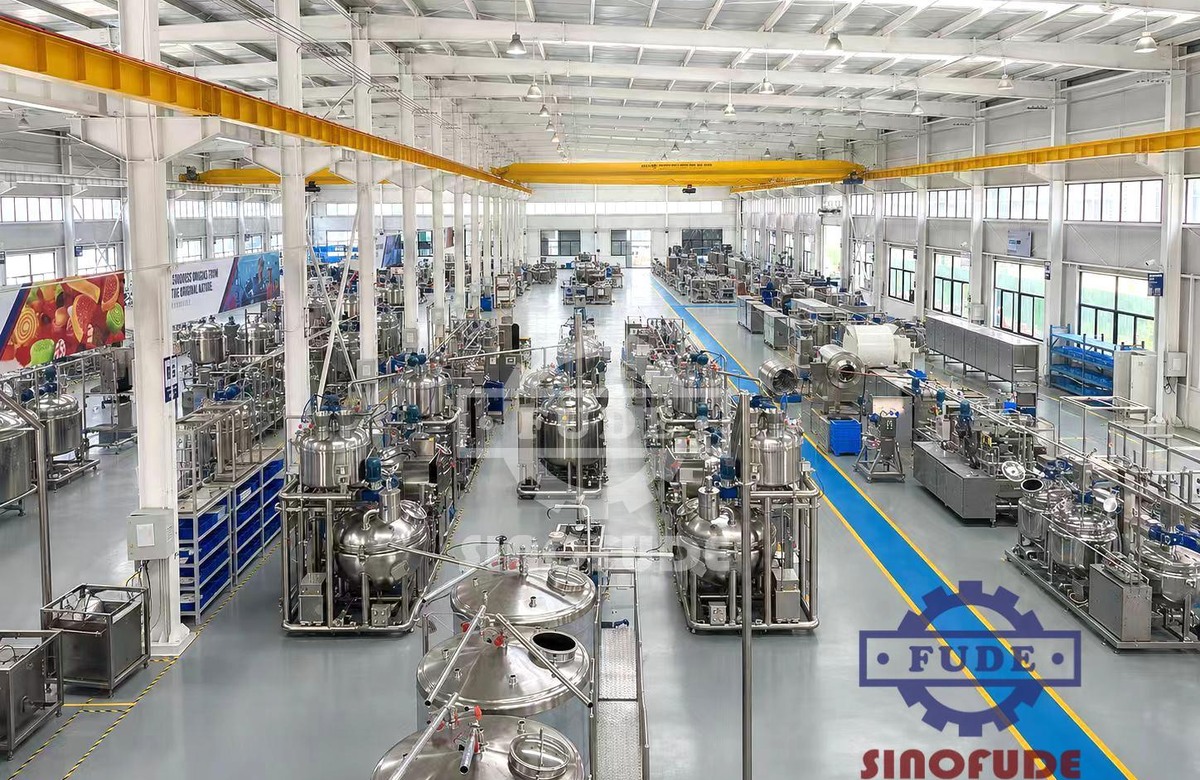
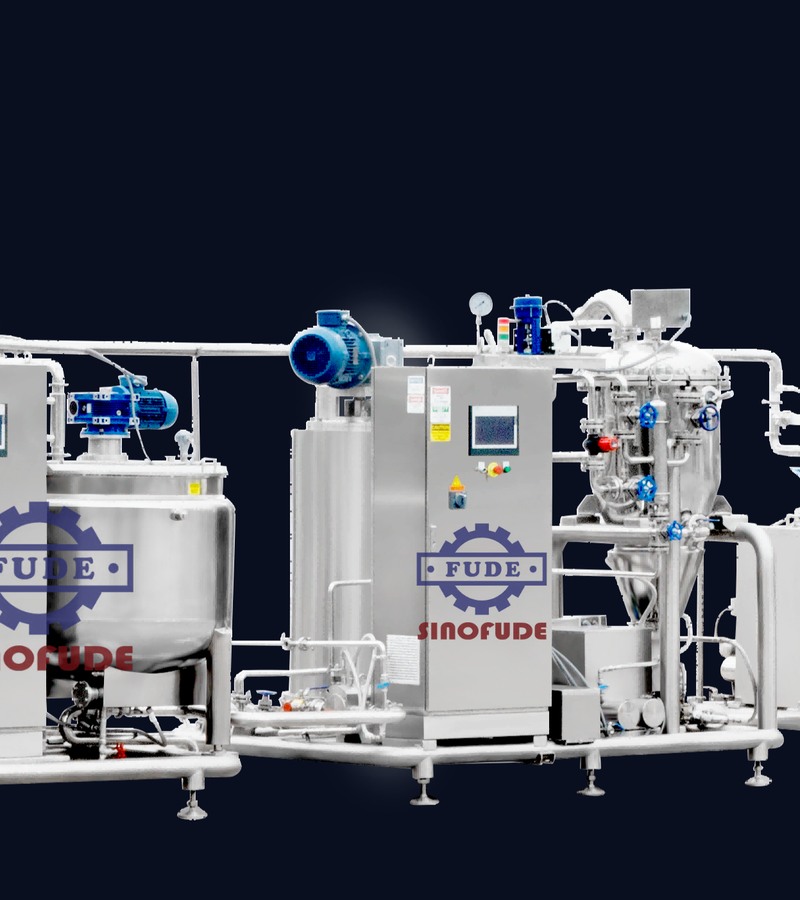
Stainless steel batch mixing and CFA colour, flavour, acid dosing tanks with load-cell weighing on a SINOFUDE gummy production line
Batch mixing and CFA (colour/flavour/acid) dosing tanks with load-cell weighing, used to add minor and active ingredients against a known batch weight. Source
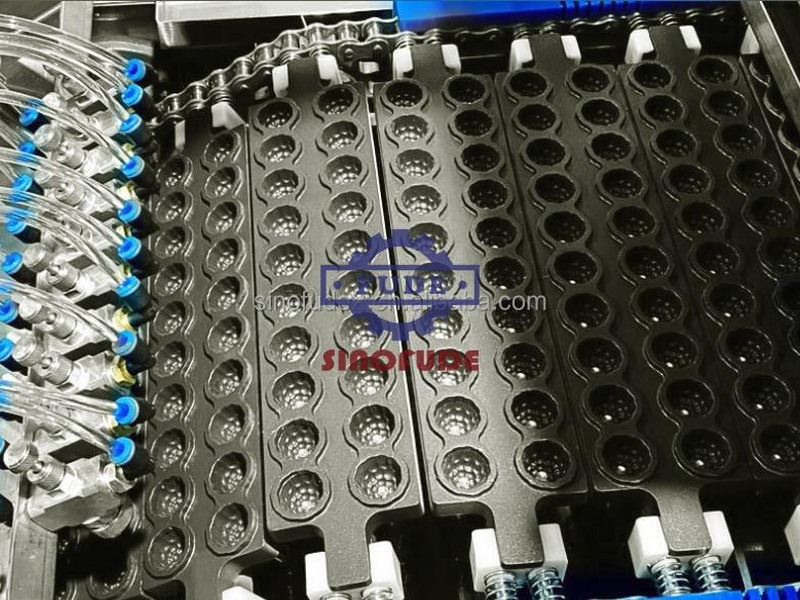
Servo depositing nozzles positioned above a metal mould tray on a SINOFUDE gummy depositing line
Servo depositing nozzles positioned above a metal mould tray during a mould changeover.
This Equipment Is Built for Four Buyer Profiles
Vitamin & Mineral Supplement Brands
Lines configured for accurate small-ingredient dosing and consistent piece weight where every gummy carries a declared dose.
Botanical & Herbal Supplement Brands
Batch dosing and temperature control suited to heat-sensitive plant-based actives.
Collagen & Beauty-Nutrition Brands
Recipe and mould flexibility for premium, high-clarity functional formats.
Contract Manufacturers (CMOs)
Fast recipe and mould changeover for facilities running multiple SKUs and multiple brand formulations on one line.
System Tools
Nutraceutical Gummy Line Engineering Tools
CLM Line Capacity & Model Selector
Turn your daily production target into the hourly rate the line must cover. The selector uses the published CLM40, CLM80, CLM150, CLM300 and CLM600 nominal capacities; recipe, piece weight and downstream cooling still need engineering confirmation.
Compare CLM Gummy Line Models
Compare two published CLM configurations without hiding the trade-offs between nominal output, mould count, footprint, connected power and operator count.
Vitamin Gummy RFQ Readiness Planner
Complete the nine input groups that determine a useful gummy-line quotation. The tool shows what is still missing and prepares a plain-text brief you can send to engineering.
Frequently Asked Questions
SolutionHow is vitamin gummy manufacturing equipment different from a standard candy line?
Compared with a standard candy line, vitamin gummy equipment needs more control over small-ingredient dosing, mixing uniformity, temperature exposure, depositing weight, recipe changeover and cleaning. It also links these stages through one controlled process so recipe changes can be qualified across the complete line.
Can the same line make pectin and gelatin gummies?
Yes. The same line can be used for both, but gelatin and pectin need different process settings. Cooking, pH and solids, holding temperature, depositing timing and cooling or drying should be adjusted as a complete recipe rather than left on gelatin settings.
How are vitamins and other actives dosed?
For applications that require accurate small additions, each syrup batch is weighed and liquid actives are added through a controlled dosing system. Powder ingredients can be handled with an optional servo screw feeder. The final arrangement depends on active form, addition rate, heat sensitivity and required batch traceability.
What dosing accuracy is available?
The referenced liquid dosing accuracy is up to ±0.1%. That is the accuracy of the dosing system itself, not a guarantee of the final active content in every gummy; final uniformity also depends on raw materials, premix preparation, mixing, thermal exposure, depositing weight control and your own laboratory checks.
Is the line GMP compliant?
The equipment is designed to support GMP-oriented production under 21 CFR 111.27 and 111.30, hygienic construction, calibratable automated controls and cleaning access. Establishing your production and process control system and specifications under 21 CFR 111.55–111.70, and the resulting facility-level GMP compliance, belongs to your own quality and validation system.
Can the line make sugar-free gummies?
Yes, the line can be configured for sugar-free or reduced-sugar gummies. Because these formulations can behave differently in viscosity, solids, setting and drying, we recommend reviewing the recipe before final equipment sizing. That review establishes the cooking endpoint, depositing window, cooling conditions and downstream conditioning plan for the chosen sweetener system.
What should we send for a quotation?
Please provide the product type, gel system, active form and dosage, gummy weight and shape, required capacity, colour or filling requirements, cleaning method, utilities and factory layout. Include expected daily hours, number of product families, changeover frequency and any validation or documentation requirements from your quality team.
What is the best machine for making gummies?
There is no single best machine independent of your product. The right CLM model depends on target output, active-mixing batch size, number of SKUs and mould-changeover frequency, not capacity alone. We size the model against your product brief rather than recommending a default.
How much does a gummy production line cost?
Price follows model selection, automation level, mould material and option modules such as coating and centre-fill capability; industry-typical figures published elsewhere vary widely by scope and are not a reliable substitute for a written quotation against your specific configuration. The written quote therefore defines both included modules and excluded site responsibilities.
Why is equipment selection so important in gummy manufacturing?
For a nutraceutical gummy, variation in an active premix can affect the intended dose per piece, not just appearance, so the mixing, dosing and depositing sections need tighter and more repeatable control than standard confectionery equipment provides. Selection also determines whether the gummy production process can maintain those controls through each planned recipe and production changeover, support consistent gummy production in every batch, and ensure uniform piece weight.
Why is the cooling tunnel important?
Because a starchless process deposits syrup at final moisture, the cooling tunnel is where the gummy sets; controlled cooling matched to the recipe allows the line to omit a separate starch-drying stage. Its residence time and temperature profile therefore have to match the gel system, piece size and production rate so the gummies solidify before automatic demoulding.
How long does it take to install a gummy production line?
Standard production lines are scheduled at approximately 60 days, with on-site installation typically taking 5–7 days. Customized projects require additional design time before that production schedule begins. Commissioning scope and timing are confirmed in the project quotation before production starts.
How does moving from lab-scale to commercial-scale pectin production change the process?
A pectin recipe that runs cleanly on a bench sample does not always translate directly to the longer hold time, transfer distance and pressure of a commercial depositor. Viscosity and settling behavior that appeared stable in a small sample can become unstable in the larger mass held in the line. Rather than assuming lab results will hold true, we review the target formulation and piece specification before confirming the equipment layout.
Which documents should a supplement manufacturer prepare and request?
Before contracting with a supplier, ask for the approved equipment specification and process flow, electrical and utility requirements, operating and cleaning manuals, recipe and control-parameter lists, material and component documentation, Factory Acceptance Test and Site Acceptance Test criteria, and calibration or verification requirements for weighing and dosing points. If your quality team has a URS, DQ/IQ/OQ format or audit checklist, share it at the quotation stage.



