
Get in Touch with SINOFUDE Company

Industrial Hard Candy Machine and Production Line Solutions
A Hard Candy Machine should be selected around the candy, the forming route and the complete production line, not a catalog capacity alone. SINOFUDE configures deposited and die-formed hard candy lines from product requirements through cooking, forming, cooling and acceptance planning.
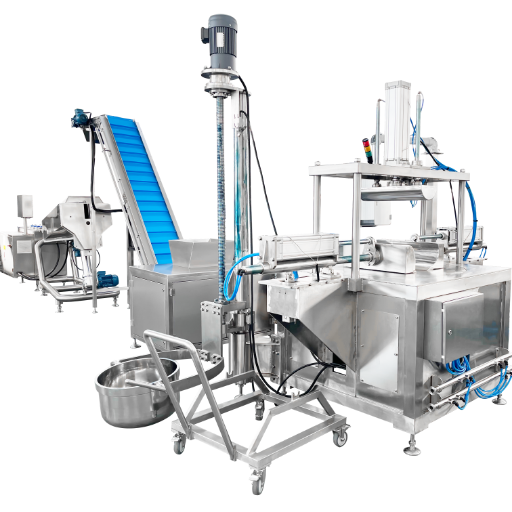
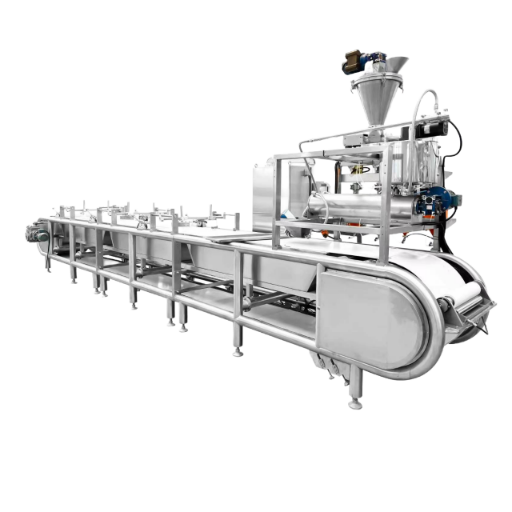
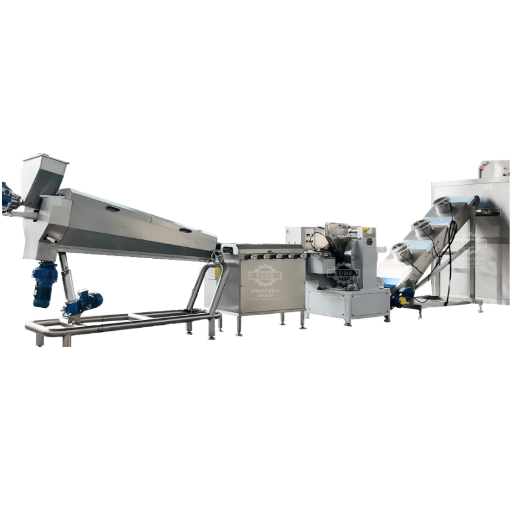
Deposited line references
150–1,200 kg/h
Die-formed line references
150–1,000 kg/h
Engineering Review
Model-specific utility and layout review
Project Scope
FAT, installation and SAT scoping
Hard Candy Production System Selection
The fastest way to narrow a hard candy making machine is to define the product before discussing a model. The risk is that a catalog kg/h figure hides recipe, filling, cooling or packaging constraints. For the candy maker, SINOFUDE turns the production idea into testable equipment requirements.
Define the candy mass
- Sugar or sugar-free formulation
- Single mass, two color or center filled
- Heat-sensitive flavors, acids and colors
- Target final moisture and shelf behavior
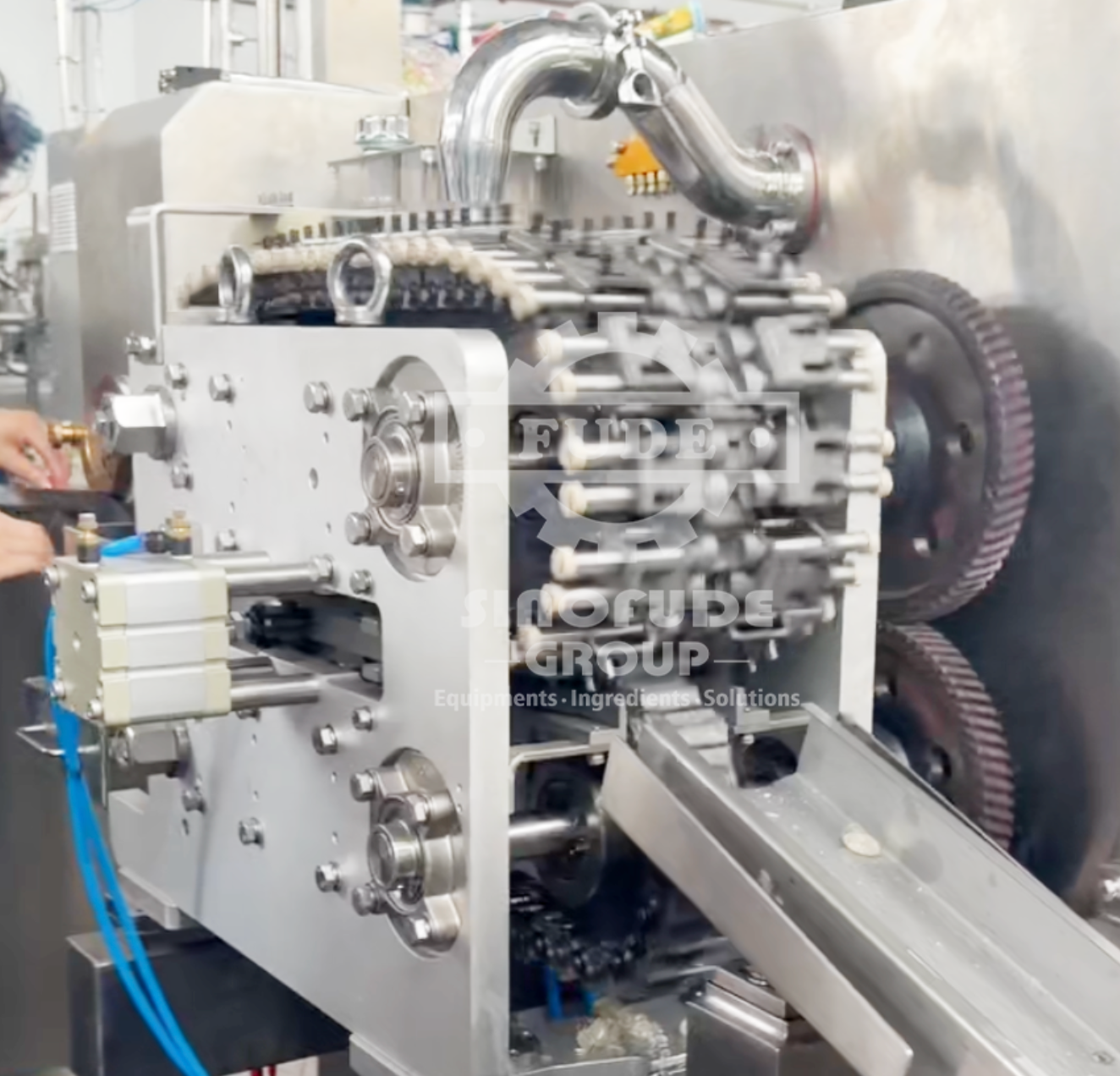
Depositing, Die Forming and Drop Roller Routes
Because there are differences in the problems that depositing and die forming solve, there isn’t a standout option of their respective processes. A candy drop roller is in a different category and should not be considered as a replacement for a complete industrial machinery line.
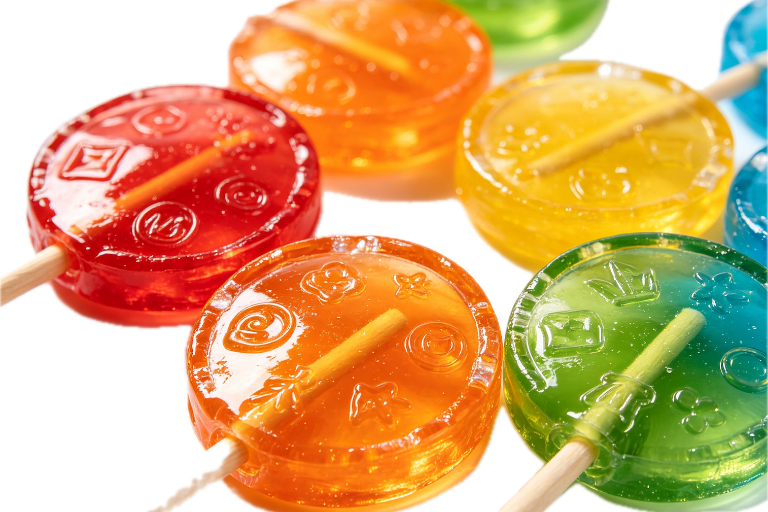
Hard Candy Route Selection Matrix
| ROUTE | BEST-FIT STARTING POINT | IMPORTANT STRENGTHS | QUESTIONS BEFORE SELECTION |
|---|---|---|---|
| Deposited hard candy | Precise cavities, smooth shapes, multi-color or filled concepts | Flexible depositor-head options and mould-based format control | Mass viscosity, filling behavior, nozzle/head selection, mould count, cooling and demoulding |
| Die-formed hard candy | High-volume solid or center-filled pieces formed from a sized candy rope | Continuous batch rolling, rope sizing and chain-die forming | Rope stability, center-fill ratio, die set, piece geometry, cooling and wrapping handoff |
| Candy drop roller | Product development, artisan production or lower-output traditional drops | Direct rotary impression for suitable candy masses | Roll design, feed consistency, cooling, manual handling and whether the scale matches the business case |
PROCESS REALITY
Route reality: depositing is not always the right answer, and the forming route can constrain future formats. A common assumption is that the three route labels are interchangeable, but a drop roller is not a substitute for a complete industrial line. The wrong choice can lock future formats; where to look instead is the tradeoff between product flexibility, forming continuity, changeover scope and target output.
Depositing route decision
With this method, choose cavity-defined geometry, layered masses, or center filling as your product concept. In this case, a hard candy depositor needs to be confirmed with its head, nozzles, manifold, mould and cooling design based on the recipe.
- Do not accept a universal accuracy claim.
- Set a product-specific sampling and weight-tolerance method.
Die-forming route decision
With this method, choose stable rope formation and a continuous chain former that fit your candy design. A hard candy die forming machine needs to be confirmed with a batch roller, rope sizer, die set, and cooling as one integrated system.
- Check rope temperature and feed stability.
- Match piece rate to downstream cooling and wrapping.
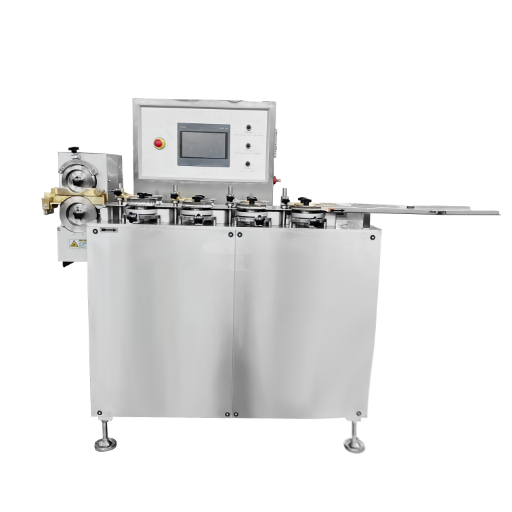
Complete Hard Candy Production Line Modules
This machine is just one station in a hard candy production line, and the total output is limited by the slowest stable interface in cooking, forming, cooling, and packing.
Ingredient weighing and controlled addition
Dissolution, cooking and vacuum control
Color, flavor, acid and mass preparation
Depositing or batch roll, rope size and die form
Product set, release and stable transfer
Inspection, buffering and wrapping interface
Hidden Hard Candy Line Bottleneck Map
Cooker
Can it supply stable candy mass at the required solids and temperature?
Former
Can the selected head or die make the planned geometry without unstable rejects?
Cooling
Can the product set and release under the actual room temperature and humidity?
Packing
Can transfer and wrapping accept the piece rate without queues or damage?
Quote-Stage Machine Configurations and Technical Data
The following references come from SINOFUDE’s supplied hard-candy product documents. The risk of selecting by capacity alone exists because 150 kg/h can describe a rated model rather than accepted saleable product. Confirm each model against the final product brief, utility schedule and acceptance plan.
| Model | Rated capacity | Depositing speed | Compressed air | Connected power | Reference length |
|---|---|---|---|---|---|
| CGD150S | 150 kg/h | 55–60 strokes/min | 0.2 m³/min at 0.4–0.6 MPa | 18 kW, 380 V | 15 m |
| CGD300S | 300 kg/h | 55–60 strokes/min | 0.2 m³/min at 0.4–0.6 MPa | 27 kW, 380 V | 16 m |
| CGD450S | 450 kg/h | 55–60 strokes/min | 0.25 m³/min at 0.4–0.6 MPa | 34 kW, 380 V | 17 m |
| CGD600S | 600 kg/h | 55–60 strokes/min | 0.3 m³/min at 0.4–0.6 MPa | 42 kW, 380 V | 17 m |
| CGD1200S | 1,200 kg/h | 55–60 strokes/min | 0.45 m³/min at 0.4–0.6 MPa | 68 kW, 380 V | 19 m |
- Two vessels, about 60 L each
- Batch operation
- Confirm for selected auxiliaries
- Order-specific
- Integrated layout review
| Model | Rated capacity | Steam reference | Connected power | Reference length | Approximate weight |
|---|---|---|---|---|---|
| CYT200 | 150–200 kg/h | 0.5–0.8 MPa; 200 kg/h | 18 kW, 380 V, 50 Hz | 16 m | 4,500 kg |
| CYT400 | 300–400 kg/h | 0.5–0.8 MPa; 300 kg/h | 30 kW, 380 V, 50 Hz | 22 m | 8,000 kg |
| CYT1000 | Up to 1,000 kg/h | 0.5–0.8 MPa; 1,000 kg/h | 80 kW, 380 V, 50 Hz | 25–40 m | 15,000 kg |
Candy Formats, Fillings and Recipe Requirements
Hard candies change with formulation, thermal history and final moisture, so the same machine setting cannot be assumed across every SKU. The product brief should connect recipe behavior to the chosen SINOFUDE forming route and cooling plan for each hard candy.
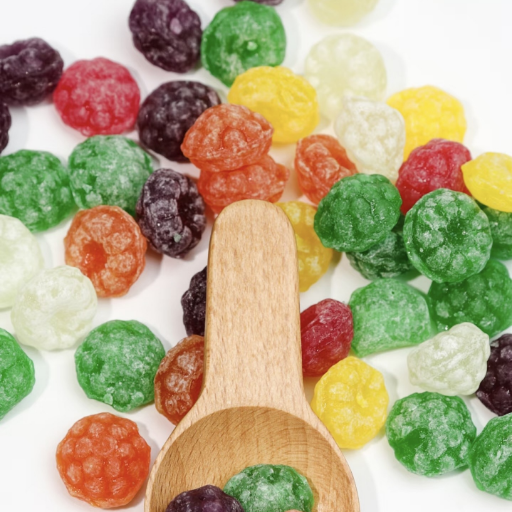
Solid candy
- Piece weight and geometry
- Transparency or opacity target
- Flavor and acid addition point
- Wrapper and discharge orientation

Center-filled candy
- Shell and center mass compatibility
- Filling viscosity and temperature
- Target fill ratio and sealing behavior
- Sampling method for distribution
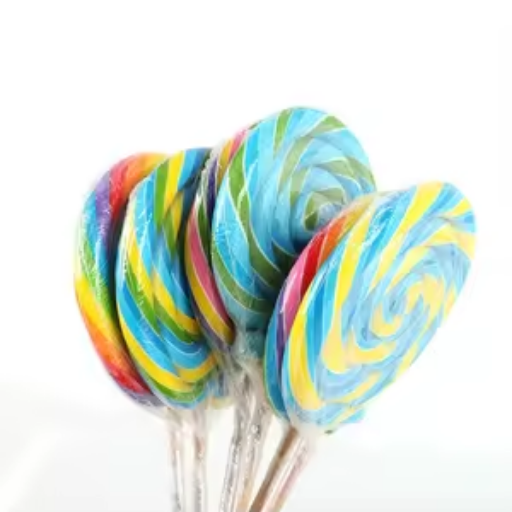
Multi-color or layered candy
- Number of masses and dosing paths
- Color separation expectation
- Head, manifold and nozzle arrangement
- Cleaning and product-loss implications
Site Utilities, Layout and Environmental Inputs
A hard candy forming machine cannot be engineered in isolation from the room and utilities. The risk of delay is driven by missing site data, so the buyer and SINOFUDE should confirm the production layout before it is frozen.
Utility schedule
- Electrical voltage, frequency and available connected load
- Steam pressure, quality and available consumption
- Compressed-air pressure, quality and flow
- Chilled-water temperature, flow and return conditions
- Process water, drainage and ventilation
Layout and room schedule
- Available length, width and clear height
- Columns, doors, service corridors and floor loading
- Raw-material and finished-product traffic
- Cleaning access, product-contact stainless steel grades and maintenance removal paths
- Cooling-room temperature and humidity capability
Changeover, Hygiene and Production Risk Controls
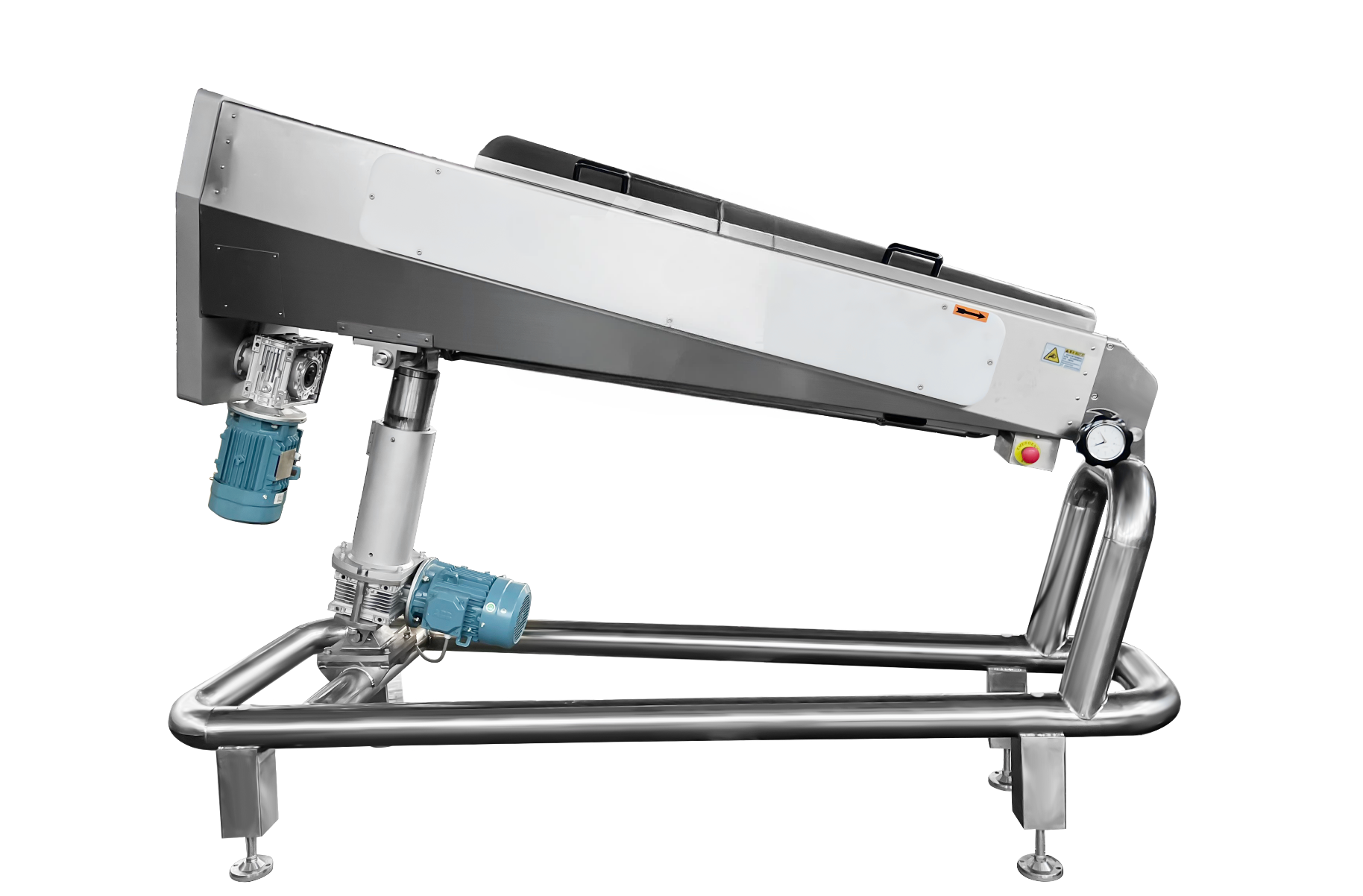
The most critical factor in changeover time is the actual work that must be done to change the parts and settings, along with the cleaning. A mold only estimate can miss nozzles, manifolds, pistons, ropes, dies, cooling, and the verification of allergens.
Changeover Parts and Settings Matrix
| Product change | Mechanical items to review | Process settings to review | Cleaning and release evidence |
|---|---|---|---|
| Shape or piece weight | Mold/mould, die, nozzle or depositing-head components | Deposit volume, rope size, former timing and cooling residence | First-piece dimensions and weight sample |
| Color or flavor | Dosing path, hopper and product-contact route | Addition point, mixing and carryover allowance | Visual inspection and defined line-clearance check |
| Center filling | Center-fill pumps, manifolds, nozzles or rope-center system | Shell-to-center ratio, mass temperatures and synchronization | Cut-section sampling and seal-integrity check |
| Allergen profile | All accessible shared product-contact parts | Production sequence and cleaning method | Documented verification under the buyer’s food-safety plan |
Allergen cross-contact
Shared equipment may require product sequencing, physical separation, cleaning between runs and verification under the site food-safety plan.
- Define the allergen matrix before line design.
- Agree access and inspection points.
- Keep verification ownership with the plant’s qualified food-safety team.
Sugar dust screening
OSHA includes sugar and candy among materials associated with combustible-dust hazards.
- Review dust generation and collection points.
- Assess housekeeping and ignition controls.
- Complete a site-specific hazard analysis.
How We Work: Project Delivery, Installation and Commissioning
Splitting factory and site acceptance into separate criteria for project milestones increases project control. FAT can confirm that a machine performs the agreed upon functions prior to shipment, and SAT can confirm that the installed line performs the agreed to functions in site-specific conditions.
| Milestone | SINOFUDE and buyer define | Evidence to retain |
|---|---|---|
| Technical confirmation | Product, route, capacity basis, line scope, utilities, layout and interfaces | Signed specification, layout and scope matrix |
| Design review | Safety interfaces, access, change parts, control philosophy and upstream/downstream handoffs | Approved drawings and open-item register |
| FAT | Test material, functions, sampling method, acceptance criteria and deviation handling | FAT protocol, data, photographs and punch list |
| Shipment and site readiness | Preservation, lifting, foundations, utilities and installation responsibility | Packing list, readiness checklist and interface sign-off |
| SAT and training | Installed tests, product campaign, operator training and final acceptance | SAT protocol, training record and closeout list |
SINOFUDE Manufacturing and Quality Foundation
SINOFUDE was founded in 1998 in Fengxian District, Shanghai, and has developed into three factories with more than 30 acres and more than 200 employees. The business focuses on confectionery, baking and chocolate equipment divisions.
1998
Founded in Shanghai
Product and process development is supported from the Fengxian District base.
3
Three factories
The combined manufacturing footprint covers more than 30 acres.
200+
More than 200 employees
Sales, technical and manufacturing teams support international projects.
38
38 product patents
Product innovation is part of the company’s equipment-development program.
MANUFACTURING & COMPLIANCE
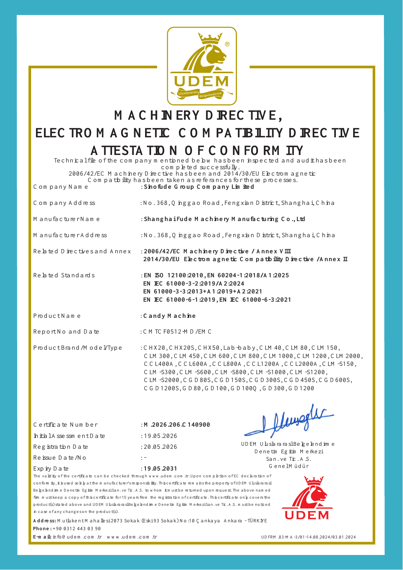
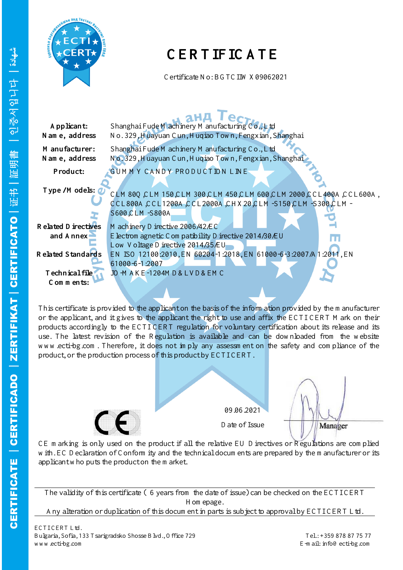
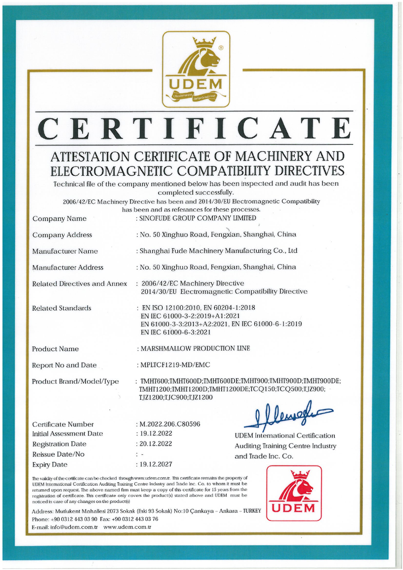
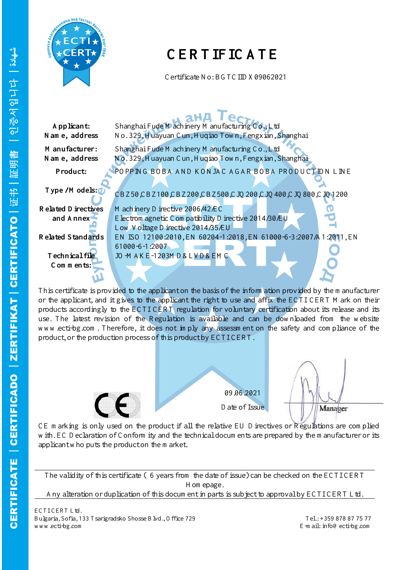
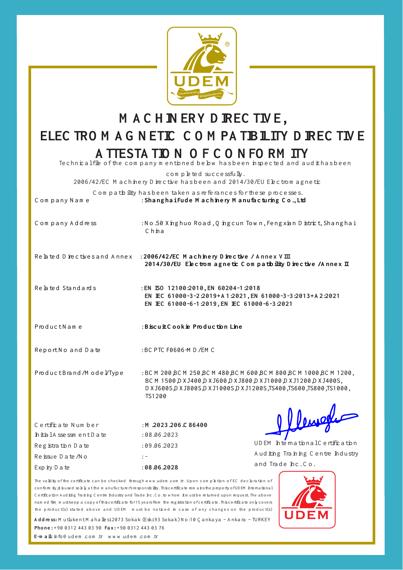
SINOFUDE introduced an ISO 9001 management system in 2004 and uses high-power laser cutting, laser welding, friction welding, CNC sawing, wire cutting, CNC machining centers, lathes, drilling and CNC gantry milling in component production. Model-specific CE marking or UL certification files should be requested for the exact equipment in the quotation.
Request a Quote: Hard Candy Line Scoping Worksheet
An almost complete supplier-ready brief reduces the number of interface changes and eases comparison of quotes. Please fill in the following before selecting the final machine.
01 Product Definition
- Product names and reference samples
- Sugar or sugar-free recipes
- Solid, filled, layered or multi-color formats
- Piece shape, weight and tolerance
02 Production & Process
- Target accepted output by SKU
- Shift pattern and annual production plan
- Preferred deposited or die-formed route
- Changeover frequency and allergen matrix
- Cooking equipment included or existing
- Cooling system and room conditions
03 Facility & Execution
- Wrapping or packaging interface
- Voltage and frequency
- Steam, compressed air and chilled water
- Available layout and floor loading
- FAT recipe and sampling method
- Installation, SAT and training responsibilities
Hard Candy Engineering Planning Tools
SYSTEM RESOURCES
FAQ: Hard Candy Machine
Both deposited and die-formed systems can support center-filled concepts when the masses, temperatures, filling system and sealing behavior are compatible. Send product samples and the target fill ratio for route review.
Compare capacity at the same recipe, piece weight, product format, quality criteria and downstream scope. Use rated kg/h for screening, then define accepted output through an agreed test method.
No. A candy drop roller is a rotary forming option commonly associated with development, artisan or lower-output work, while an industrial die-forming line includes batch rolling, rope sizing, chain forming and continuous cooling.
The final schedule may include electricity, steam, compressed air, chilled water, process water, drainage and ventilation. Requirements depend on the cooker, former, cooling system, line size and local voltage.
FAT checks agreed functions before shipment under a defined factory protocol. SAT checks the installed equipment and interfaces at the buyer’s site under a separately agreed protocol.
Provide the recipe family, samples, piece weight, format, target accepted output, utilities, layout, line boundary, changeover plan and acceptance expectations. More complete inputs reduce assumptions and make quotations easier to compare.
- SINOFUDE, supplied technical document, “Hard Candy Machine,” used for model, module, utility and operating references.
- Baker Perkins, Hard Candy, deposited-candy route context.
- Latini, Hard Candy Equipment, Industrial Module Architecture and Lab Drop-Roller Distinction.
- OSHA, Combustible Dust Advance Notice of Proposed Rulemaking, The Hazard of sugar and candy dust in context.
- FDA, Appendix 9: Allergen Cross-Contact Prevention, shared-equipment control context.
- Peer-reviewed hard candy production and quality review, Context of formulation and process variation.
- Chocotech, Hard Candy, general hard-candy process-control context.
- US4517205A, shell/core co-depositing prior art; no SINOFUDE patent linkage is claimed.



