
Get in Touch with SINOFUDE Company

Turnkey Projects & Engineering
Turnkey Food Production Lines and Engineering
Transition from product definition briefs to integrated production lines for confectionery, chocolate, and bakery products with SINOFUDE. We integrate process flow with automation controls, packaging, and testing.
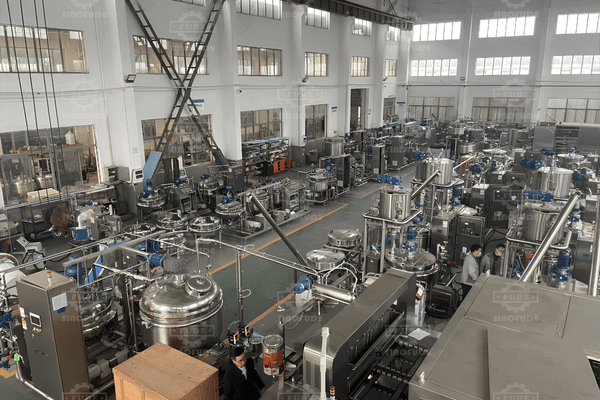
Define the Line Before Selecting Equipment
Eight-Input Project Definition Gate
This is SINOFUDE’s commercial reference framework. The design and scope of the facilities will depend on the product and the country.
1. Product and recipe
Describe ingredients, process limits, allergens, and any recipe information that can be shared.
2. Target throughput
State output by hour or shift, expected production volume, and changeover pattern.
3. Finished format
Define size, weight, shape, coating, filling, and acceptable variation.
4. Final packaging
Identify the packaging endpoint, pack format, and third-party equipment interfaces.
5. Plant space
Provide layout drawings, clear heights, access routes, and expansion constraints.
6. Utilities
List available power, water, air, steam, cooling, drainage, and exhaust conditions.
7. Destination market
Identify where the line will operate and where the food products will be sold.
8. Acceptance method
Define the product, duration, measurements, and records expected at acceptance.
Engineering Scope from Process Flow to Factory Layout
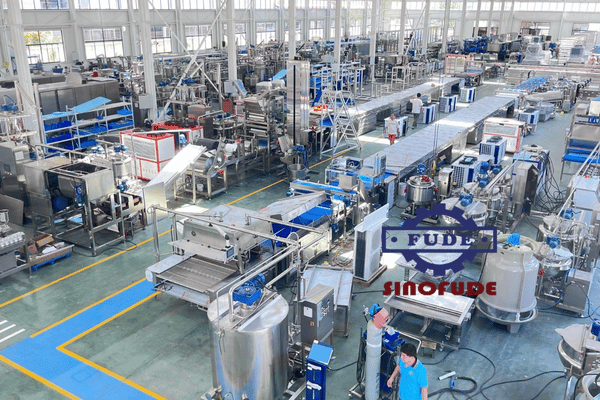
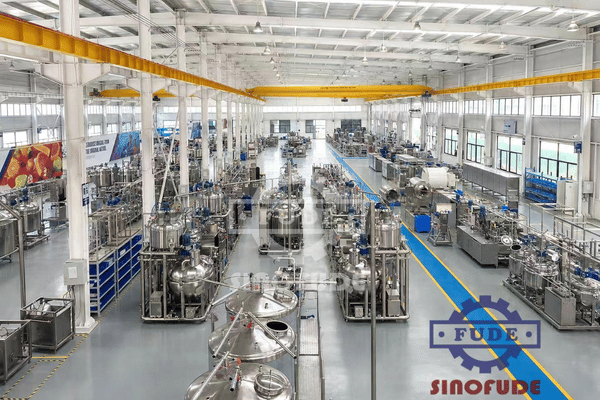
Food processing line design connects raw-material receiving and loading areas while preserving space for personnel movement, equipment movement, sanitation, and maintenance.
- Balance equipment rates to protect throughput and product quality.
- Map utilities, drains, exhaust, controls, and third-party connections.
- Plan cleaning and maintenance access around the selected process.
- Document exclusions such as building work, permits, and buyer-installed services.
Unresolved utility or control interfaces create delay risk because they change the equipment boundary and site work. In a food processing plant, SINOFUDE reviews the processing sequence, and the local professionals and the plant owner define the building and jurisdictional limits. Ask an engineer about the interface risk.
Design rule: sanitation access, guarding, and safe maintenance access must be reviewed together. Improving one does not cancel the others.
When a food processing plant is being reviewed, the local professionals and the plant owner define building and jurisdictional limits, and SINOFUDE reviews the processing sequence and alignment. Ask an engineer about a difficult interface.
VISUAL DATA // 100% SCALE
SYS.REF // FAM. 01-06
Notice: These production-line families are not interchangeable. The wrong processing route can create compatibility issues between forming, cooling, handling, and final packaging.
Choose the Right SINOFUDE Production-Line Family
Processing solutions should be integrated within a product family and defined by project limits.
| Gummy and jelly
Cooking, depositing, conditioning, finishing, and packaging interfaces.
| Hard candy and lollipop
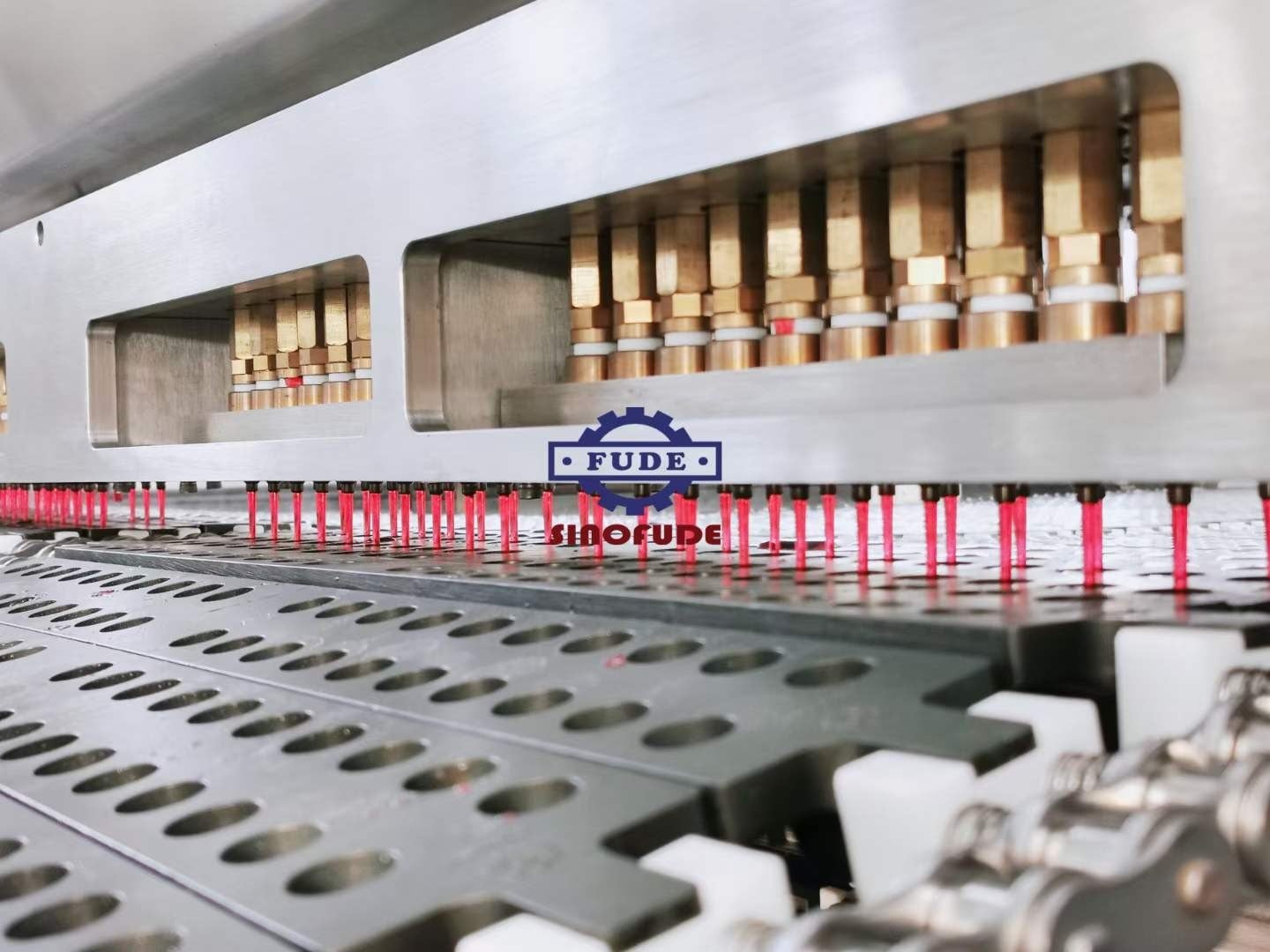
Forming or depositing routes aligned with the required product format.
| Chocolate
Chocolate production and forming stages integrated with cooling and packing.
| Biscuit and bakery
Mixing-to-baking line planning with downstream handling interfaces.
| Marshmallow and fondant
Process selection based on texture, forming, and finishing requirements.
| Popping boba
A dedicated route defined around formulation, forming, handling, and packing.
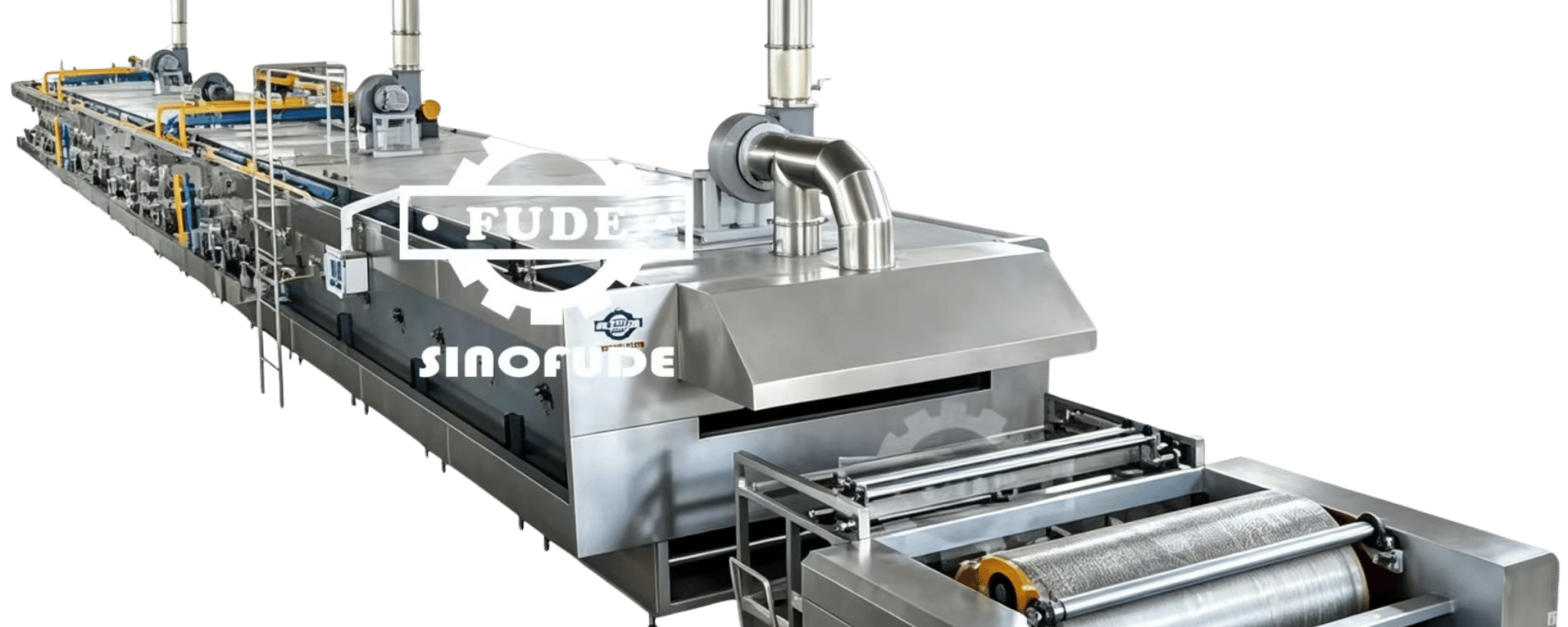
A line is a coordinated system
The integrated equipment arrangement described in US Patent 8,757,997 illustrates why a production line must be assessed as connected processing stages rather than as isolated machines. It does not define SINOFUDE model performance or the scope of a customer project.
One Project Route, Clear Responsibility at Every Stage
A turnkey project still needs named owners for supplier, buyer, and local responsibilities. Those responsibilities are fixed during proposal preparation; facility conditions, applicable regulations, and client acceptance criteria sit outside SINOFUDE’s unilateral control and affect the completion schedule.
- SINOFUDE defines its engineering and factory-test scope.
- The buyer defines the product, production conditions, and site readiness.
- The agreed evidence list can cover ISO 9001 quality-system context, calibration records, temperature and humidity conditions, monitoring results, and corrective actions.
Scope-to-Acceptance Responsibility Map
VISUAL // DATA LINK
| Stage | SINOFUDE | Buyer | Joint or local party |
|---|---|---|---|
| Requirements | Review process and equipment scope | Provide product, capacity, site, and market inputs | Confirm local constraints |
| Design review | Present line flow and documented interfaces | Approve product and operating assumptions | Resolve building, utility, and regulatory interfaces |
| Factory acceptance | Execute the agreed factory test scope | Witness or review agreed evidence | Confirm deviations and actions |
| Site commissioning | Provide support stated in the contract | Prepare site, utilities, materials, and operators | Coordinate installation and local safety controls |
| Site acceptance | Demonstrate agreed line functions | Confirm product and operating evidence | Close documented actions |
When Turnkey Is the Wrong Buying Route
Turnkey does not mean every buyer should purchase a complete line. The trade-off is coordination versus flexibility: choose it when a defined product has several process, control, packaging, and acceptance interfaces; otherwise, a machine-level quotation is the better choice. The wrong choice adds coordination cost without resolving an undefined product.
01
You need one standard machine
Use the relevant product page and request a machine-level quotation.
02
The product or pack is undefined
Complete the product and capacity brief before requesting a fixed total.
03
Site responsibilities are unresolved
Confirm utilities, building work, local rules, and third-party ownership first.
Capacity, Cost and Compliance Need Their Own Decisions
Engineering compliance interfaces
Product jurisdiction, hygienic design, machinery safety, wastewater, emissions, and verification needs can change the line layout and project boundary. Confirm each requirement for the destination and selected equipment rather than treating “food grade” as one universal approval.
Compliance is not one label applied to an entire project. The trade-off is between a convenient general statement and evidence that actually matches the quoted equipment. Review the assembled line and each quoted model against the destination, contractual document register, and agreed acceptance plan rather than substituting a general project statement for model-level evidence.
Engineering Compliance Interfaces
Line Capacity & Cost Planner
Organize products, shifts, throughput, packaging, and site inputs before comparing configurations.
Certification & Compliance
Check quality-system context, food-contact materials, model-specific certificates, and available documents.
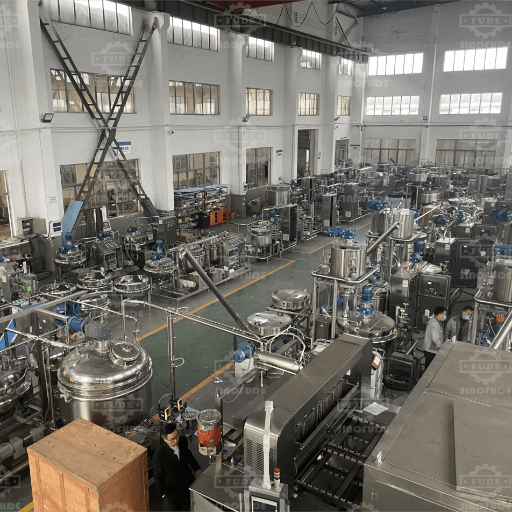
SINOFUDE Project Capability and Manufacturing Footprint
SINOFUDE brings established company, product-family, and manufacturing resources to the project-definition conversation. The evidence below describes company and manufacturing footprint only; it does not state line performance, throughput, price, lead time, utilities, tolerances, certifications, or model specifications.
SYS.01
Established organization
Founded in 1998, SINOFUDE operates 3 factories covering more than 30 acres.
SYS.02
People, divisions, and management system
More than 200 employees work across SINOFUDE’s 3 divisions. In 2004, SINOFUDE introduced an ISO 9001 management system. SINOFUDE holds 38 product patents.
SYS.03
Line-family coverage
Its line families include confectionery, chocolate, and bakery.
SYS.04
Fabrication resources
High-power laser cutting, laser welding, friction welding, and tube welding are among the manufacturing equipment SINOFUDE uses. CNC sawing, CNC wire cutting, a CNC machining center, a CNC inclined-rail lathe, CNC drilling, and CNC gantry milling are also among the manufacturing equipment SINOFUDE uses.
Company and Manufacturing Footprint Evidence
This table records company and manufacturing footprint evidence only. It is not a statement of line performance, throughput, price, lead time, utilities, tolerances, certifications, or model specifications.
| Evidence item | Confirmed company fact | Scope |
|---|---|---|
| Brand founding year | 1998 | Company history |
| Factories | 3 | Manufacturing footprint |
| Total area | More than 30 acres | Manufacturing footprint |
| Employees | More than 200 employees | Company organization |
| ISO 9001 management-system introduction | 2004 | Management-system history |
| Product patents | 38 | Company intellectual property |
| Divisions | 3 | Company organization |
PLANNING RESOURCES
Project Engineering Tools
Access planning resources for throughput calculations, responsibility mapping, and site readiness.
PROJECT INITIATION
Prepare a Quote-Ready Project Brief
The eight inputs establish the first project boundary. The factory test and site test prove different conditions and need separate definitions. SINOFUDE requests samples or working drawings when the product or interface cannot be assessed from the brief, then defines the additional detail needed for a response.
Start with the project facts
01
Product
02
Throughput
03
Format
04
Packaging
05
Layout
06
Utilities
07
Destination
08
Acceptance
KNOWLEDGE BASE // SYSTEM LOG
Frequently Asked Questions
01
What does a turnkey food production line include?
Only the signed scope decides. It may connect process design, equipment, automation, packaging interfaces, testing, commissioning support, training, and handover.
03
Can SINOFUDE integrate packaging or third-party equipment?
Yes, subject to an interface review. Control signals, product transfers, utilities, modification ownership, and acceptance criteria must be documented.
05
Which documents should be confirmed before shipment?
Confirm the contractual document register. Drawings, manuals, parts information, test records, training records, and model-specific declarations may be included when stated.
02
What information is needed before capacity is calculated?
Provide the recipe boundary, product format, target output, shift plan, changeovers, expected downtime, packaging endpoint, and site utilities. Include seasonal peaks, the smallest and largest product formats, cleaning assumptions, and the longest planned production run. Those details help distinguish nominal machine speed from a usable line-capacity target.
04
How are factory and site acceptance tests defined?
The factory test covers agreed functions under documented factory conditions. Site acceptance occurs after the buyer prepares utilities, materials, operators, upstream and downstream equipment, and any locally supplied safety measures; it then checks the functions and evidence named in the contract.
06
How do I verify which certificates apply?
Match each document to the quoted model and manufacturer. For management-system context, use the official ISO 9001 page; for equipment coverage, check the standard edition, destination, issuing body, validity, and whether the document covers a component, one machine, or the assembled line. The Certification & Compliance page provides the correct verification route, but the project document register remains controlling.



