Get in Touch with SINOFUDE Company

Contact Form 使用中

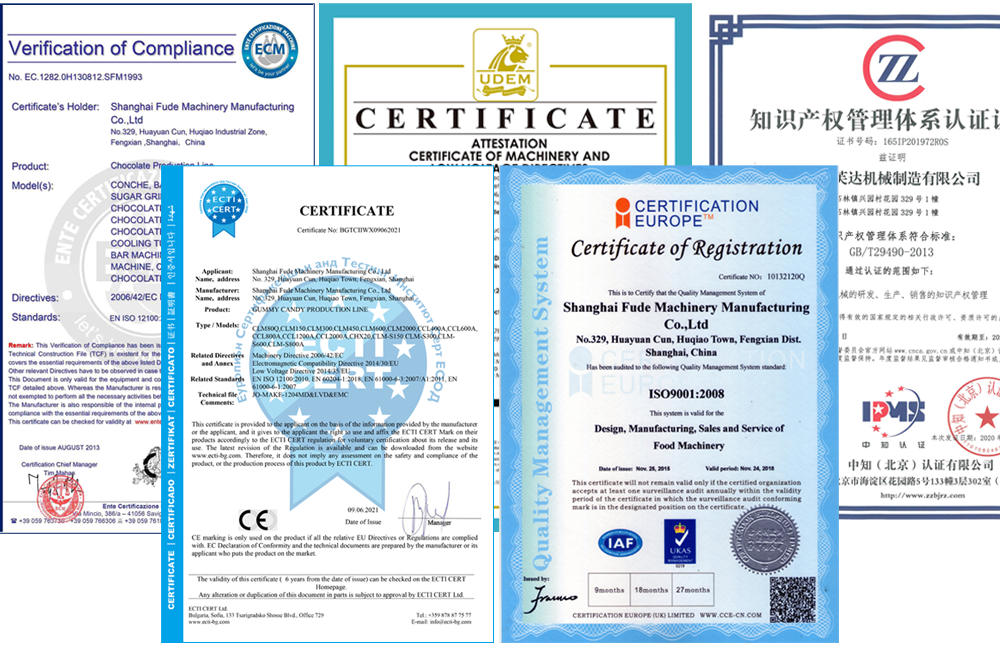
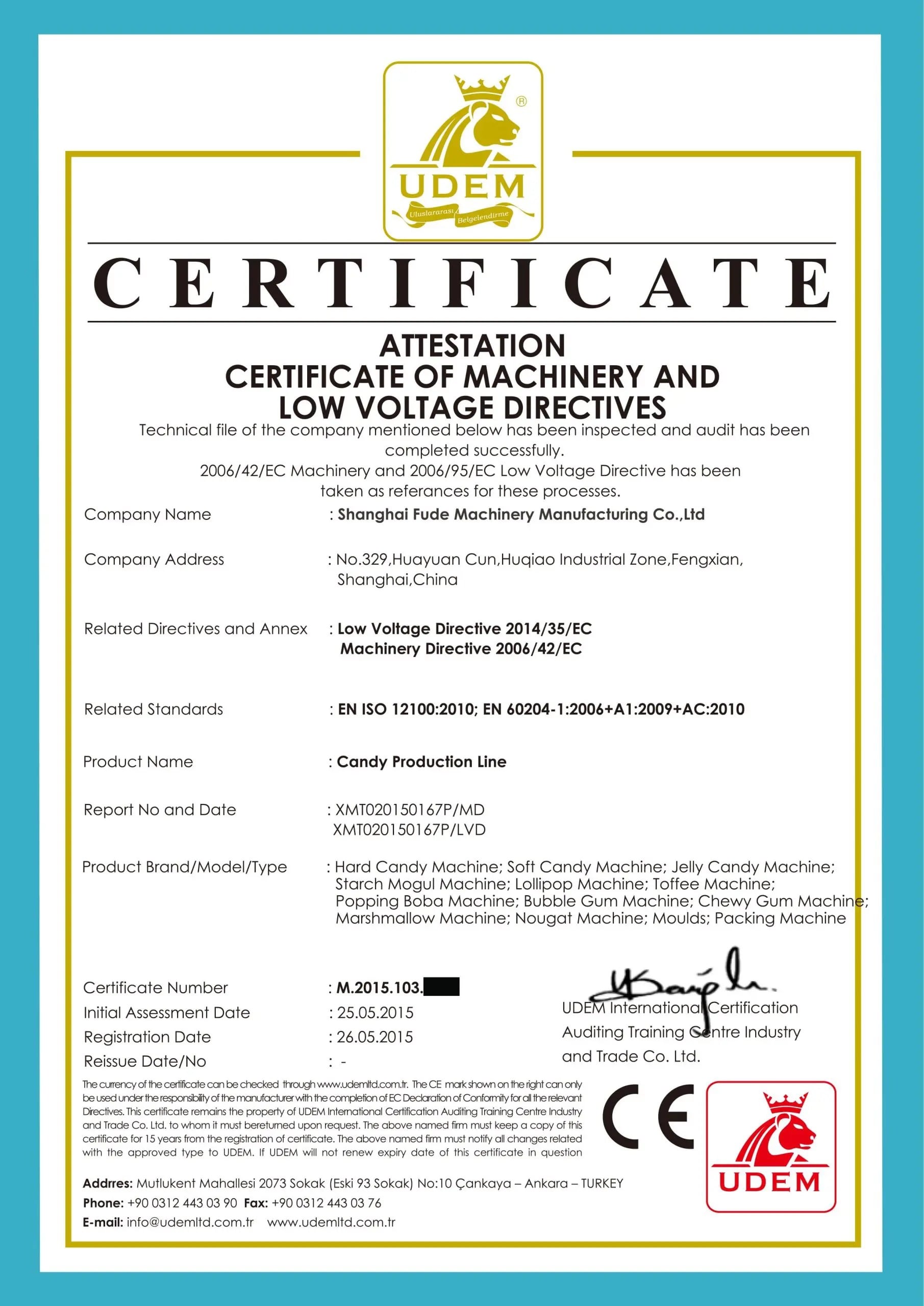
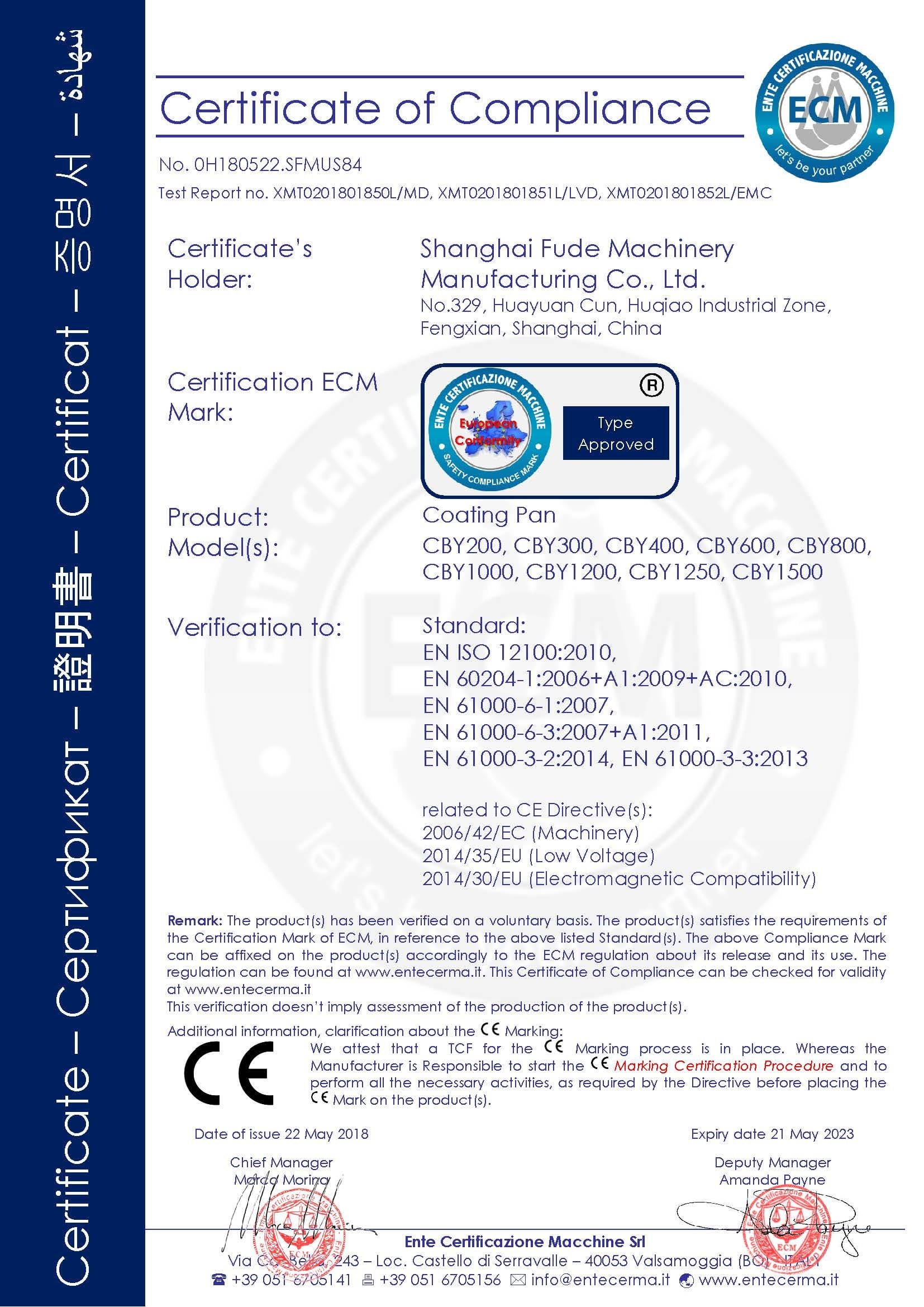
ENGINEERING COMPLIANCE

Certification & Compliance for SINOFUDE Food Production Lines

Certification & Compliance starts with the production line you plan to install: its destination, equipment configuration, food-contact parts and supply boundary. SINOFUDE brings confectionery, chocolate and bakery machinery into that discussion so your engineering, purchasing and quality teams can define the documents needed for the project.

  • 01Machine and line scope
  • 02Electrical evaluation route
  • 03Food-contact conditions
  • 04Document handover planning

Industries We Serve: Production Scope

Request a review of your production scope. →

Confectionery

DIV.01

We supply confectionery production lines.

Bakery

DIV.02

We supply bakery production lines.

Chocolate

DIV.03

We supply chocolate production lines.

Compliance Support for Configured Production Lines

A UL 508A control-panel approval is not a substitute for assessing the equipment it controls. Start the equipment discussion at the supply boundary and identify integration risks, rather than assuming that approved components settle the status of the assembled line.

How gummy candy manufacturing equipment works and integration points

Standalone machinery

Identify the machine model, intended task, operating limits and supplied accessories. The review must include the equipment as delivered, with its controls, protective measures and instructions, rather than an isolated component list.

Partly completed machinery

Clarify what remains to be integrated before the equipment can perform its intended application. Determine the appropriate incorporation documents and assembly instructions, and identify who will complete the final machinery assessment.

Integrated production lines

Show how individual machines connect mechanically, electrically and through controls. Interfaces, shared emergency functions and modifications need a line-level decision even when individual candy machines arrive with their own documents.

Destination and project timing

For EU projects, Directive 2006/42/EC remains applicable until 19 January 2027; Regulation (EU) 2023/1230 mainly applies from 20 January 2027, with certain provisions applying earlier. Establish the relevant placing-on-the-market or putting-into-service event and applicable transition provisions when planning the project, rather than choosing a route from the order date alone.

  • European Union: determine the applicable legislation, machinery classification, assessment procedure and declaration route.
  • United States or Canada: identify the installation jurisdiction, required approval route and the equipment object to be evaluated.
  • Other destinations: include local electrical, machinery, language and food-production requirements in the enquiry.

Equipment detail that affects the review

Candy manufacturing equipment can combine a cooker, depositor, conveyors and a cooling tunnel, with automation linking their operation. Describe the actual arrangement and controls in the project brief so the review follows the equipment interfaces, including any units supplied by other companies.

  • For a gummy production line, identify the mold handling arrangement, deposit system and cleaning access.
  • For hard candy making equipment, distinguish the forming equipment, cooling arrangement and downstream handling.
  • For candy and confectionery formats such as lollipop, toffee or hard candies, state the process and changeover requirements rather than relying on a broad candy machine label.

Food-Contact Materials and Cleaning Access

A general food-grade label does not necessarily establish suitability for every food and cleaning condition; it cannot replace a review of the actual use. The food-contact review connects each part to its material, supplier records, intended exposure and maintenance requirements, including the small seals and coatings that are easy to miss in a machine-level description.

Food, time, temperature and reuse

Describe the food or ingredient, contact duration, operating and cleaning temperatures, repeated-use conditions and cleaning chemistry. A component suitable for one exposure needs a fresh review when that exposure changes; a stainless-steel grade alone does not resolve every material or surface question.

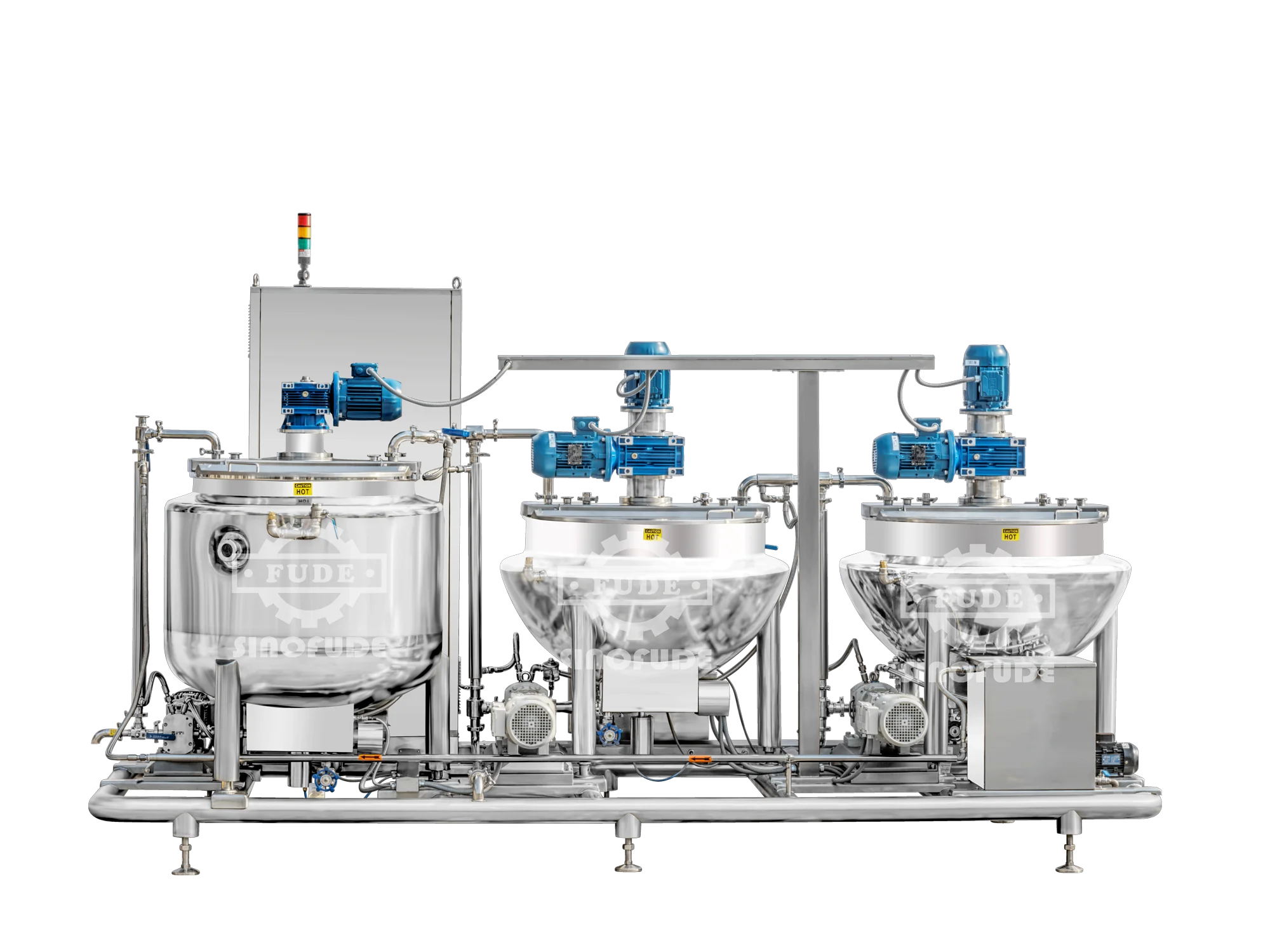
Cleaning access and food-contact materials in gummy machine

Contact-part review schedule

Parts to identify in the configured equipment
01

Cooker vessel

ConnectContact material, fabrication and process conditions

ReviewInclude hot product and the proposed cleaning cycle.

Mixing elements

ConnectWetted surfaces, joints and removal method

ReviewCheck the access available behind and beneath the element.

Transfer pipes

ConnectMaterial, connections and line layout

ReviewIdentify where product or rinse liquid could remain.

06

Sensor contact surfaces

ConnectProbe, fitting and seal materials

ReviewInclude the connection as well as the exposed sensor tip.

Product-adjacent areas

ConnectLubrication points, guards and maintenance access

ReviewIdentify contamination routes into exposed food.

02

Hoses

ConnectSupplier, construction and stated use conditions

ReviewMatch food, temperature, pressure and cleaning exposure.

Pump contact parts

ConnectWetted components and seal arrangement

ReviewInclude the cleaning and inspection method.

03

Valve seats

ConnectContact compound and supplier identity

ReviewConsider wear and replacement with the specified material.

Static gaskets

ConnectCompound identification and contact conditions

ReviewReview compression, crevices and access during maintenance.

Moving seals

ConnectMaterial and operating arrangement

ReviewAddress leakage paths and inspection needs.

04

Depositing nozzles

ConnectMaterial, flow path and dismantling sequence

ReviewCheck passages that are concealed during normal operation.

Molds and trays

ConnectMaterial, release treatment and repeated-use conditions

ReviewConnect the food exposure to cleaning and handling.

05

Conveyor belts

ConnectContact layer and supplier specification

ReviewReview joints, edges and access beneath the belt.

Scrapers and guides

ConnectPolymer or metal identity and wear points

ReviewInclude replacement criteria and contact locations.

Coatings

ConnectCoating system, substrate and intended food use

ReviewReview condition and damage rather than colour alone.

Material documentation by destination

For EU food-contact materials, Regulation (EC) No 1935/2004 sets the general framework, while Regulation (EC) No 2023/2006 addresses good manufacturing practice for those materials and articles. Specific measures, including Regulation (EU) No 10/2011 for plastics, add requirements within their scope; national provisions also matter where specific EU measures are absent.

  • Plastic contact parts: check the applicable declaration, supporting information and restrictions against the intended food, contact time and temperature.
  • Supplier changes: compare the replacement material and supporting records before treating it as equivalent.
  • United States: identify the applicable basis for the substance and use; where an effective FDA food-contact notification is relied upon, check the listed manufacturer or supplier as well as the substance and conditions.

Cleaning access belongs in the layout

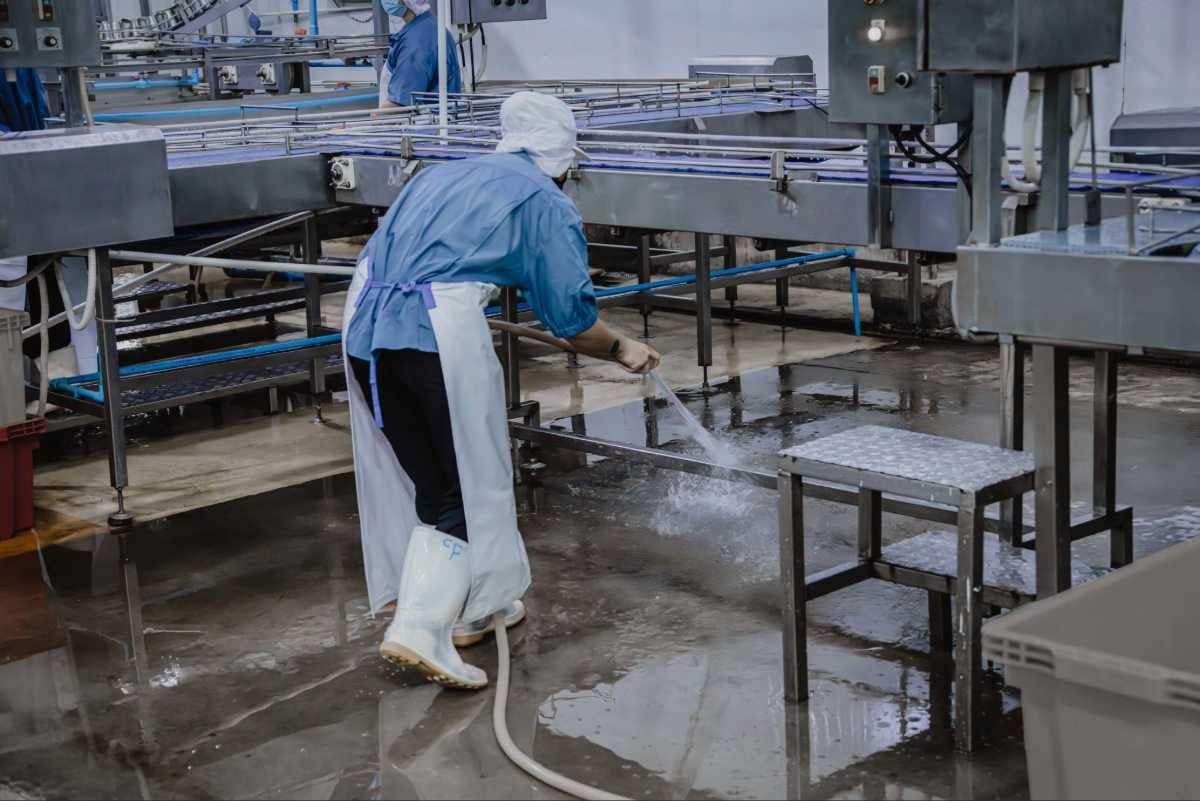
Specify how operators will reach the product path, remove parts where needed and inspect the cleaned surfaces. Include residues from ingredients such as glucose syrup, cleaning-agent removal and the drying method in the discussion, rather than treating a clean-looking exterior as the acceptance criterion.

Fabrication and Hygienic Design Review

We use high-power laser cutting for component fabrication. Our machining and joining methods support the equipment build, while hygienic design review concentrates on the finished geometry, connections and access that your cleaning process will encounter.

Joining methods

Laser weldFriction weldTube weld

Review the resulting joint location and surface, including whether it leaves a residue trap or blocks access. The welding method is one input; the completed contact surface is the object to inspect.

Cutting & Prep

CNC sawingCNC wire cutting

Prepared parts must fit their intended assembly and contact conditions. Identify exposed edges and joints on the finished equipment so fabrication detail can be considered together with the cleaning plan.

Fabrication and Hygienic Design Equipment Engineering

Component Machining

CNC centresInclined-bed lathes

Drawings establish the component features required by the assembly. Agree the features that need dimensional inspection and the associated acceptance record during the technical review.

Drilling & Milling

Drilling machinesGantry milling

Consider hole positions, mounting interfaces and accessible surfaces together. A fit that works mechanically still needs review where its fasteners, gaps or surrounding space affect cleaning.

From a fabrication method to an inspectable requirement

Under the US food-plant requirements in 21 CFR 117.40, equipment must be adequately cleanable and installed to permit cleaning and maintenance, including adjacent spaces. Food-contact materials must withstand their intended environment, and seams must minimise accumulation of food particles and other matter.

Welds and seams
Identify contact joints that need a specified finish or inspection method.
Connections & seals
Check whether the arrangement creates inaccessible product retention.
Frames and covers
Review access around and beneath the machine in its installed position.
Wet-cleaned areas
Identify drainage paths and the route for removing cleaning liquid.
Dry-cleaned areas
Specify access and residue-removal methods suited to the product and environment.

Set the cleaning method before signing off the layout. Access to a seal, a joint or the underside of a conveyor is much easier to discuss on a drawing than after adjacent equipment is installed.

SINOFUDE Engineering

The EHEDG catalogue separates design principles (GL8), hygienic welding (GL9), cleaning validation (GL45) and cleaning-in-place installations (GL50). Use that separation when defining design-review and acceptance tasks, so a general material description does not stand in for a cleaning assessment.

Configuration and Document Matching

The Line-to-Document Match Sheet connects your proposed equipment with the file set being discussed. Use the project index below first, then review each document through its own route; changing a control component or supplier can affect more than the drawing revision.

Project index for the document checklist

Project field
Record for the review
Mismatch to resolve
Responsible legal entity
Brand name, legal entity and roles of manufacturer, supplier and integrator
Different organisations appearing without a clear relationship
Equipment identity
Machine model and serial or batch identification where applicable
A document describing a different product or assembly
Configuration
Included units, options, controls and protective arrangements
Documents that precede a material design change
Destination
Country, installation location and relevant local review contacts
An approval route intended for another market
Electrical conditions
Site supply, connection requirements and agreed panel scope
Site conditions absent from the equipment review
Food-contact parts
Part identities, materials, supplier and intended exposure
A general material statement unrelated to the actual part
Supply boundary
Included equipment, other suppliers and final integration tasks
Responsibility for interfaces left unassigned
Document revision
File title, identifier, revision and applicable equipment
Drawing, manual and declaration referring to different configurations


CLM150A configuration reference

Our published CLM150A gummy-line specification records the values below. Use this model-specific reference to connect a proposed configuration to its utility schedule, layout and acceptance records.

Parameter
Published CLM150A value
Record to match before acceptance
Production capacity
Up to 150 kg/h
Agreed product, recipe and output-test conditions
Whole-line length
8–10 m
Approved layout with the included units and access space
Electric power needed
12–40 kW
Selected configuration and electrical load schedule
Compressed-air consumption
0.5 m³/min
Utility schedule and supply connection information
Compressed-air pressure
0.4–0.6 MPa
Pneumatic circuit and operating-pressure requirements
Gross weight
Approximately 4,500 kg
Final shipping list and handling plan for the supplied assembly

Match these figures to the selected build and the released project documents. A specification table identifies operating and installation inputs; the applicable conformity records still need their own equipment identity, scope and revision checks.

  • Air pressure specifies a supply condition; flow specifies the quantity required per unit time, so both belong in the utility schedule.
  • A power requirement in kW is a rate, not an energy-use total; operating duration and actual load are needed for an energy estimate.

Model identity changes the document match

Our CLM150 and CLM150A product records describe different configurations. Compare the model designation with the layout and electrical schedule before assigning a file set to your project.

Review field
CLM150
CLM150A
Document decision
Line length
16 m
8–10 m
Match the layout to the selected equipment and supply boundary.
Power requirement
70 kW
12–40 kW
Use the load schedule for the selected configuration.
Compressed-air pressure
0.4–0.6 MPa
0.4–0.6 MPa
A shared pressure range does not identify the model or establish matching air consumption.

A shorter published line length does not define your installed access envelope: adjacent equipment and cleaning access still belong on the layout. Select the record that matches your model and configuration, then resolve any project-specific changes before releasing the document set.

Separate routes for separate documents

Compare document review routes to separate shared identity fields from the scope of each record.

Management-system certificate

Match the legal organisation, site, certified activities, standard edition and certificate status. Check with the issuing body or an appropriate accredited-certification database; ISO develops standards and does not issue certification itself.

Machinery declaration

Match the supplied machinery, applicable legislation, declaration type and responsible signatory. Establish whether the supply is complete or partly completed machinery before treating a document as the route for the finished installation.

Product or field evaluation

Match the evaluation body, product category, model or unit, marking and use conditions. A panel file and a machine file answer different questions; unit-specific evaluation records need to stay linked to that unit.

Food-contact record

Match the part or substance, supplier identity, regulatory basis and intended exposure. Changes in food type, temperature, contact time or cleaning conditions can require a different suitability review.

Pricing Scope and Document Schedule

Separate the machine price from evaluation activities, document preparation and site work when comparing proposals. An equipment quotation becomes easier to evaluate when each party can see which tasks are included, which require a separate appointment and which depend on the installation conditions. If a quotation names UL 508A panel work, keep machine-level evaluation and site acceptance visible as separate scope items.

Candy machinery equipment and configuration scope
01

Equipment and configuration

  • Process equipment and automation included in the supply
  • Selected contact materials and specified finishes
  • Control-panel and electrical requirements
  • Interfaces with existing or third-party machinery
02

Assessment and delivery activities

  • External assessment, testing or inspection scope
  • Document language and agreed handover format
  • Changes identified during the technical review
  • Site attendance, commissioning and repeat visits
  • Document release and project milestones

Document release and project milestones

Milestone
Agree before moving ahead
01 Enquiry review
Destination, process, supply boundary and the receiving team's document requirements
02 Configuration agreement
Equipment list, interfaces, acceptance criteria and assessment responsibilities
03 Design review
Drawing revisions, contact-part requirements and outstanding technical decisions
04 Assessment planning
Evaluator scope, required preparation, access and timing dependencies
05 Factory acceptance
Agreed tests, document checks, open items and closure responsibility
06 Shipment and site handover
Document release status, installation tasks and the conditions for site acceptance

Quality Records and Destination Requirements

Organise the handover around the decision each record supports. Management-system status, machinery conformity, electrical evaluation and food-contact suitability address different objects, so the purchasing file should keep their identities and scope visible.

PROJECT DIAGNOSTICS
  • Material records: connect the relevant material or article to its manufacturing and use requirements.
  • Equipment review: agree the access, surfaces and maintenance points to examine.
  • Plant operation: define cleaning procedures, operating conditions and verification responsibilities for the installed process.
  • Action check: Check the fields for each documentation route before requesting the project file set.

GMP requirements in the right scope

For a GMP candy production line enquiry, identify which equipment, material and plant-operating requirements your quality team needs addressed. Food-contact material manufacturing rules, equipment cleanability and the food producer's operating controls should be specified separately, because these requirements are not interchangeable and do not form a universal GMP machine badge.

ISO 9001 and the organisation

ISO 9001 concerns quality-management systems. For a supplier review, examine the certificate's organisation, sites, activity scope, edition and current status; it cannot replace the safety assessment of an individual candy making machine.

CE and the machinery supply

A request for a CE certified candy machine should lead to a discussion of the applicable machinery, declaration and assessment route. Third-party certification is not always required: the applicable legislation and machinery category determine the assessment procedure.

UL and control-panel scope

UL explains that its industrial control-panel certification does not cover the equipment or loads controlled by the panel. Specify whether your project needs a panel evaluation, an equipment evaluation or another applicable route, with the corresponding configuration and conditions.

CSA and field evaluation

CSA's field-evaluation service evaluates a particular product against applicable requirements, with tests depending on the product and installation location. Its Canadian electrical special-inspection route uses SPE-1000. Discuss acceptance with the relevant local authority and evaluator; a successful evaluation leads to a serialized label on the evaluated product.

How We Work: Project Brief To Handover

Bring the receiving engineering and quality teams into the document discussion before the equipment configuration is fixed. The sequence below turns the enquiry into assigned decisions and review points, including those involving your integrator, evaluator or installation contractor.

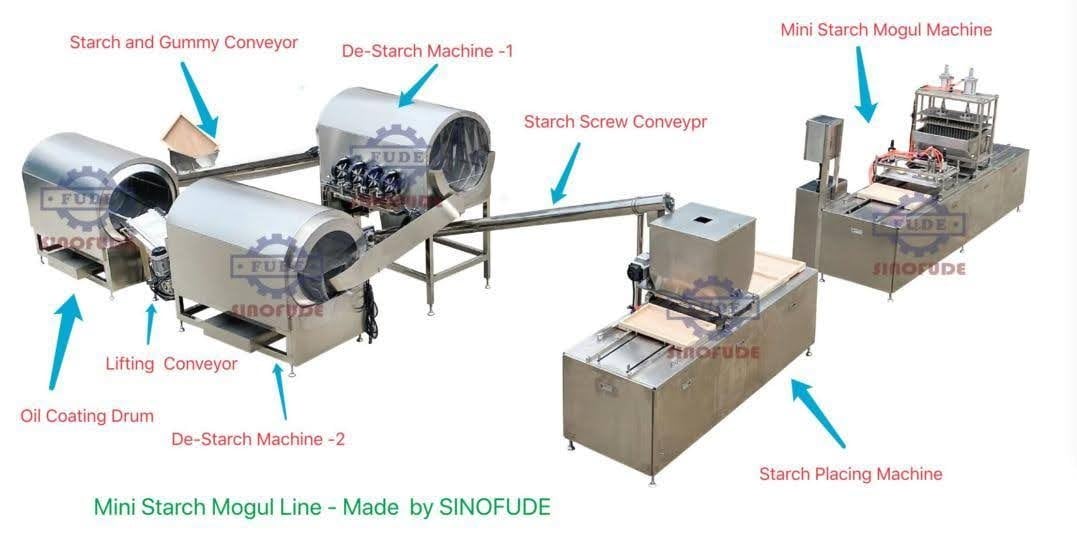
Starch mogul gummy production line engineering review
  1. 01

    Describe the production task

    Send the product type, process arrangement, desired output, changeover needs and destination, together with the equipment you already operate. State whether the enquiry concerns a new line, an extension or replacement machinery.

  2. 02

    Set the supply boundary

    Identify the SINOFUDE supply, equipment from other companies and the final integration responsibility. For each interface, assign the mechanical, electrical, controls and document decisions.

  3. 03

    Agree the review inputs

    Identify site utilities, food-contact conditions, cleaning method, required documents and the people who will review them. Where a local evaluator is involved, establish its information needs early enough to influence the configuration.

  4. 04

    Resolve configuration questions

    Compare the equipment list, drawings and component choices before the build proceeds beyond the relevant decision point. Record changes so the document set follows the equipment actually being supplied.

  5. 05

    Define acceptance activities

    Agree what factory and site acceptance will examine, who attends, which records are required and how open items are closed. Keep performance acceptance and statutory conformity responsibilities distinct in the project plan.

  6. 06

    Check the handover set

    Match released files to the supplied units and revisions, with outstanding installation or integration actions assigned to an owner. Site acceptance then addresses the installed arrangement and the agreed operating conditions.

Make open items actionable

For each unresolved point, record the affected unit, required decision, responsible party and the project milestone it affects. This keeps a missing drawing, an evaluator's question and a site-access issue from disappearing into the same general “documents pending” note.

Calculate your document preparation progress from the items your team has prepared, with unresolved tasks kept visible.

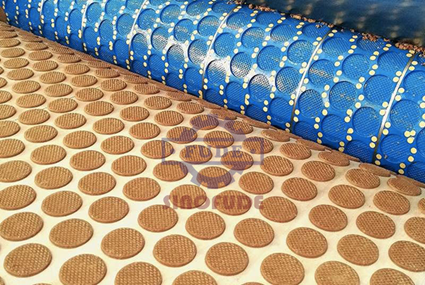
Equipment Gallery: Biscuit Forming

Review the product path

In a bakery equipment discussion, connect the forming surfaces, product conveyor and accessible surrounding areas to the cleaning method. Layout and changeover questions should be reviewed alongside the intended food-contact conditions, so the project file describes the actual production task.

  • Identify the surfaces that contact dough or finished product.
  • Describe access for cleaning, inspection and replacement.
  • Include adjacent equipment in the layout review.
Biscuit forming equipment from SINOFUDE's bakery range
VISUAL REF // FORMING ROLLER

Scope Changes That Need a New Review

Keep a change visible even when it looks like a small purchase substitution. The important question is whether it alters the evaluated equipment, intended use, material exposure or installation assumptions.

Change Trigger
Review before acceptance
A different motor, drive or protective component
Electrical drawings, component conditions and the assessment scope
A new machine added to an existing line
Interfaces, shared controls and final integration responsibilities
A replacement gasket or contact coating
Material identity, supplier records and intended exposure
A new food or cleaning process
Contact conditions, access, compatibility and cleaning verification
A different destination or installation site
Local requirements, electrical conditions and evaluator acceptance
Scaling production or changing the layout
Operating limits, access, integration and relevant document revisions

Project Compliance & Documentation Tools

Access our dedicated engineering utilities to track your production line's certification routing, document maturity, and configuration impacts. Ensure seamless audits with correct, model-specific records.

01

Document Route Comparison

Evaluate and compare applicable regulatory routes for your specific equipment configuration and destination market to avoid conformity mismatches.

02

Document Preparation Progress

Track the real-time status and readiness of your machinery declarations, management-system certificates, and critical food-contact records.

03

Configuration Change Review

Analyze how proposed technical changes to equipment units, control panels, or component suppliers will impact your current compliance documentation.

Certification and Documentation FAQs

Start with the destination, equipment model and supplied configuration. Request the documents applicable to that supply, keeping management-system certificates, machinery declarations, electrical evaluations and food-contact records in separate groups.

No. UL's control-panel guidance separates the panel from the loads and equipment it controls, so the required machine-level route must be assessed separately.

Component recognition alone does not establish the status of the assembled machine. Give the configuration, component information and installation location to the relevant evaluator and local authority so they can determine the applicable route, including any field evaluation or special inspection.

It addresses an organisation's quality-management system within a defined scope. Check the named entity, site, activities, standard edition and certificate status; an organisational certificate does not replace the conformity or food-contact records for your equipment.

No. The required conformity-assessment procedure depends on the applicable legislation and machinery category, so the project review should establish that procedure and its required records before deciding what third-party involvement is needed.

Regulation (EU) 2023/1230 mainly applies from 20 January 2027, replacing Directive 2006/42/EC, which remains applicable through 19 January 2027. Certain provisions apply earlier, so check the relevant project event and transition rules when scheduling supply and installation.

The review also needs the other contact materials, their intended use and the equipment's cleanability. Include seals, hoses, coatings and contact polymers, then match food type, time, temperature, cleaning conditions and supplier records to the parts actually fitted.

No. An effective notification applies to the specified substance from the listed manufacturer or supplier within its authorised conditions, rather than certifying a complete food-processing machine.

List the applicable requirements and the records your quality team needs for the planned process. Separate food-contact material manufacturing requirements, equipment design and plant operating controls, then identify which party addresses each item before the quotation scope is agreed.

No. Factory acceptance testing checks the performance and other criteria agreed for the purchase, while statutory conformity duties and external evaluation requirements follow their own applicable routes.

Identify the change and the affected machine or assembly, then ask the responsible party to determine whether the document needs updating or the change needs evaluation. Compare the released equipment list, drawings and supporting files before treating the issue as closed.

Include it in the enquiry and technical discussion. Specify the destination, receiving team's requirements, document language, review milestones and the scope of any external evaluation, so those items can be addressed in the project agreement rather than left until shipment.

Configuration decisions, drawing review, external assessment availability, required changes and site readiness all affect the sequence. Tie document release to agreed milestones and responsibility for open items, rather than assuming that every file is available when the machine build ends.

Check the replacement material and its supplier records against the intended exposure before reusing the earlier conclusion. A similar appearance or the same general material family does not establish that the replacement has identical use conditions.

Send your product, equipment or line concept, destination and intended installation date. Add the supply boundary, site electrical information, cleaning method and any document checklist from your engineering or quality team; drawings and component questions can then be connected to a specific configuration.