Get in Touch with SINOFUDE Company

Contact Form 使用中

SINOFUDE THERMAL DYNAMICS
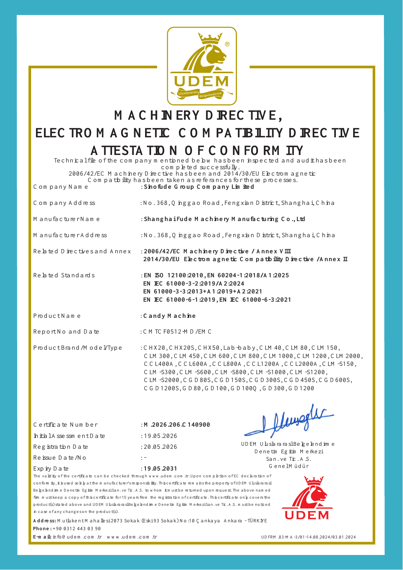
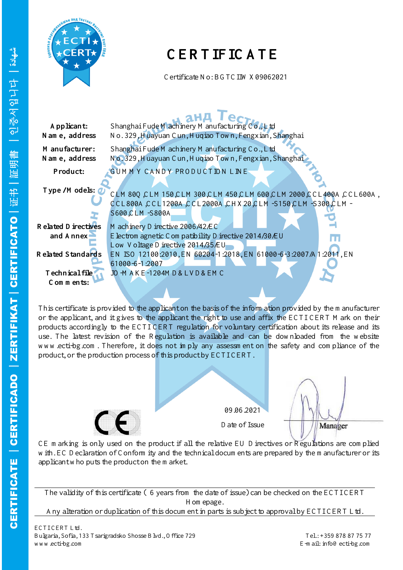
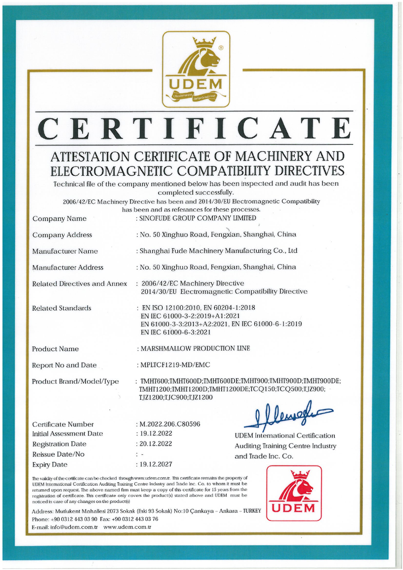
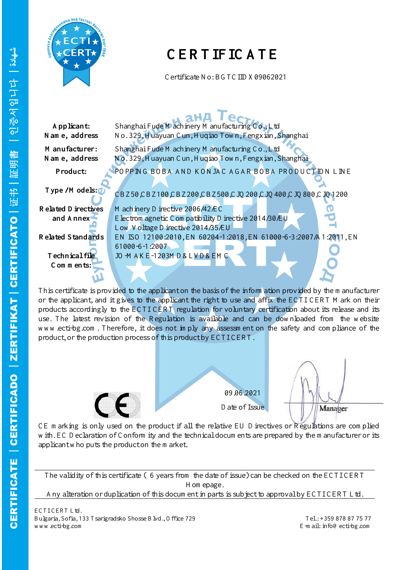
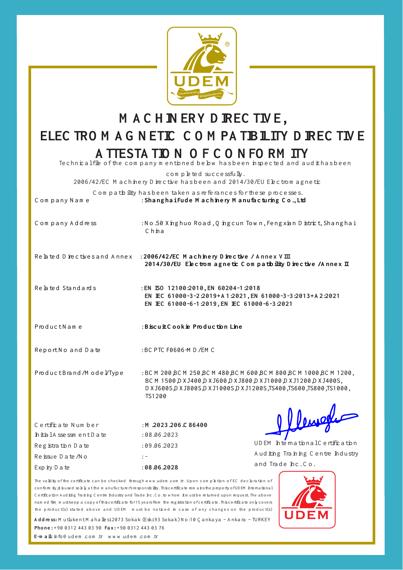
ISO Certified Parameters

Chocolate Cooling Tunnel

Chocolate Cooling Tunnel Configured Around Your Product and Line

A chocolate cooling tunnel must accommodate both the incoming product and the required output at discharge. It must also address the handoffs on the conveyor. For SINOFUDE, we begin with the chocolate route, loading pattern, room conditions, footprint, and downstream handling. This allows us to direct the inquiry to engineering with specific decisions made.
For enrobed and belt-deposited products, the design of the support surface, spacing and the route of discharge are coupled with the decision of where to place the cooling. The product brief should be forwarded as quickly as possible. The quote discussion can then be used to align the tunnel with the chocolate production line or the moulding line.
“Candy cooling tunnel” is a broad category term, not a universal compatibility claim: non-chocolate candy needs separate product and process trials before a configuration is considered.
A first brief does not have to address every engineering aspect. The first briefing should address gaps in known information. Where does the product enter? What must be true when the product leaves? What are the interfaces? What are the observations that may influence a decision to ship the product? This briefing should consolidate information for production, quality, and procurement.
Build My Cooling Brief
Chocolate Cooling Tunnel Solution

Initial Reply

Enquiries receive an initial reply within 48 hours.

Configured Build

A configured cooling tunnel is built for pre-shipment testing in 3 to 4 months, counted from deposit and confirmed technical package.

Sample Discussion

Product sample testing can be discussed; sample freight is budgeted to the buyer.

Payment

50 percent deposit by T/T, with the balance settled before shipment.

Product Routes Set the Cooling Tunnel Brief

Cooling alone cannot repair unstable temper; the tunnel is not a substitute for stable temper. The tunnel is one component of chocolate processing that begins with the state of product at the infeed and ends with an agreed observation at the discharge. That is why a product photograph or drawing, recipe and tempering context, geometry and intended surface should be part of the first engineering discussion.
For each route, describe what happens before and after the belt. Chocolate enrobing may pass a coated centre with different support concerns from a moulder releasing product from a mould. Direct deposits can introduce their contact and pickup sequence. These routes cannot be swapped. Considering them as the same route can mask the cause of marking, sticking, deformation, or an awkward transfer.
01

Moulded products

Confirm mould format, release route, piece geometry, loading pattern and the condition needed before demoulding or transfer. Mould support and the next machine handoff should be reviewed together.
02

Enrobed centres

Record coating condition, piece spacing, belt contact, edge handling and the move to packaging. Enrobed pieces need a shared view of product support and the outlet transition.
03

Direct belt deposits

Describe deposit shape, mass, spacing, belt contact and pickup method. The product route decides which conveyor and discharge details engineering needs to evaluate.

Accepted Output Makes The Cooling Load Visible

The accepted output is not always the same as the upstream nameplate speed. A line can feed quickly while changes in reject rate, spacing, piece mass or interruptions alter what actually reaches the tunnel and what must leave it ready for the next step. The assumption that the rate at which the process operates is the only factor that determines the cooling load tends to overlook those losses and the product load that is accepted by each piece.

When asking the team that runs the line for the accepted rate, do not restrict them to the desired target rate. It is also important to know how product is loaded, if pieces come in a continuous form, where queueing occurs and what happens when the line is first started or restarted. These factors do not create a new machine size, but they define an operating boundary for which a quote can be made.

Accepted-Output Cooling Load Map

Accepted Pieces Per Minute → Product Mass And Spacing → Belt Loading → Required Cooling Curve → Residence-Time And Footprint Trade-Off → Discharge Acceptance
Inputs From The Buyer
  • Accepted product rate, not only nominal feed rate
  • Piece dimensions, mass and spacing
  • Entry condition and intended discharge condition
  • Ambient temperature and humidity near the line
Items For Engineering Review
  • Conveyor support and loading distribution
  • Air movement, enclosure and access choices
  • Residence-time and available-footprint relationship
  • Outlet handoff to packaging, demoulding or buffer equipment
SYS // CFG-01

Cooling Configuration Follows the Product Path

Through cooling process interactions, the effect of recipe, tempering context, thickness of coatings, product mass and heat transfer conditions and time are interrelated. Different decisions on airflow, product support, contact of the conveyor, access to the enclosure and the method of transporting product at the end of the tunnel may require a step by step approach.
There must be sufficient choice in cooling options. The brief must document the operator’s proximity to the belt and/or the food contact area, the cleaning methodology, the required access, and how a product or air transition/change meets the adjacent machine. The expectations of the construction, including the specific stainless steel grade that the buyer requires for a food contact area of the structure, must be in the written scope and not be an assumption about the entire unit. This brings access and the selection of the material under consideration during the configuration review.
The format of product, site geometry and the size of the mould affect the choice of conveyor. A route along the floor can be assessed against how continuous the floors are, and how accessible they are to cleaning, while the more space saving route would need a separate assessment of how the ceiling would affect loading, unloading and cleaning. The two routes are often not interchangeable and assessing by floor area alone may be the wrong choice.
Cooling Configuration Path
Review point Horizontal route discussion Space-saving route discussion
Available envelope Floor plan and continuous transfer path Floor plan and vertical clearance
Product travel Infeed and discharge continuity Loading, unloading and product retention
Operator access Cleaning and service-side access Access at each transfer level
Line handoff Upstream and downstream heights Interface positions and safe access

Project Inputs and Acceptance Fields

The following is a project input and acceptance field list, not a published specification sheet. This is provided to purchasing and engineering for one unified reference prior to agreeing to a tunnel configuration, quotation scope, and pre-shipment testing. Every feature must be tied to a buyer input, an engineering response or an acceptance criterion.

The risk of acceptance increases because quotations can hide who provides an access or guarding feature. SINOFUDE engineers provide a field list in order to identify this gap prior to configuration. For U.S. food projects, the buyer can add applicable FDA requirements such as 21 CFR 117.40.

This record should be used consistently when comparing layouts, discussing sample testing and acceptance. Include field and product photos and drawings to ensure descriptions stay connected to the surrounding equipment. The final record of the project should reflect the confirmed configuration and accepted methodology.

Field Buyer input Acceptance discussion
1. Product route Moulded, enrobed or direct belt-deposited product Product support and transfer sequence
2. Product geometry Drawing, photo, dimensions, mass and spacing Shape retention and handling observations
3. Accepted output Accepted rate, rejects and interruption pattern Run record and sampling boundary
4. Entry condition Product and process condition at infeed Recorded condition at test start
5. Discharge condition Required downstream-ready condition Surface, shape and handoff inspection
6. Ambient boundary Room temperature, humidity and transition route Ambient readings and condensation observation
7. Interfaces Transfer height, width, controls and utilities Mechanical and controls handoff check
8. Safety and hygiene Cleaning, allergen controls, guards and isolation expectations Access, guarding and responsibility record aligned to the destination review
Project Inputs and Acceptance Fields for Chocolate Cooling Tunnel

Quotation Scope, Price, and Production Lead Time

A price is formed based on the supplied scope and not a generic list number. Working width, required residence time, footprint architecture, refrigeration load, belt and conveyor configuration, controls, enclosure access, utilities and line interfaces all contribute to what should be provided. Buyers looking for a chocolate cooling tunnel for sale should compare this complete boundary rather than just looking at the top-line price.

To help with a fairer price comparison, ask each supplier to place the same buyer inputs accompanying the scope proposed by each supplier. Determine what is included, what is optional, what the buyer still needs to provide, and what is still unresolved. Then, review the shipping, installation, commissioning, training, spares and exclusions within each quote. This helps to kick-start a more constructive discussion on the procurement rather than comparing a total price with an unspecified boundary. It also helps both parties to identify the key issues that need to be resolved before the technical package can be finalized.

Enquiries receive an initial reply within 48 hours. From deposit and the confirmed technical package, allow 3 to 4 months for a configured tunnel to reach pre-shipment testing. The initial reply starts the engineering review; it is separate from a quotation prepared against a defined project brief.

Product Sample Path

Product sample testing remains available for discussion, and sample freight is budgeted to the buyer. Include the product route and the observations you want to see during a test.

Payment Path

50 percent deposit by T/T, with the balance settled before shipment. The confirmed technical package should accompany the project handoff into production.

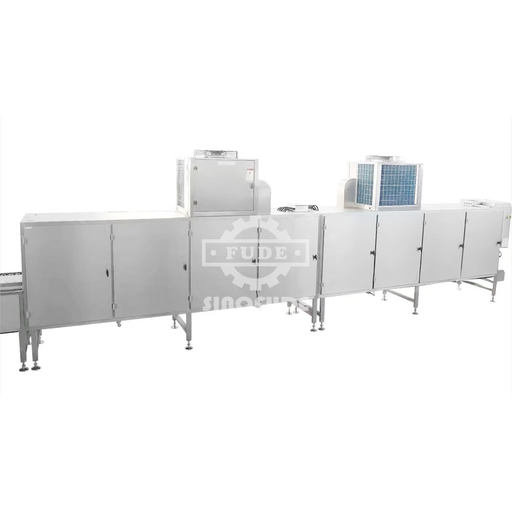
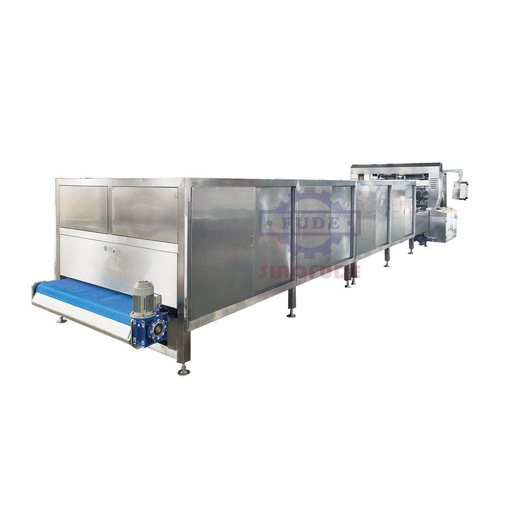
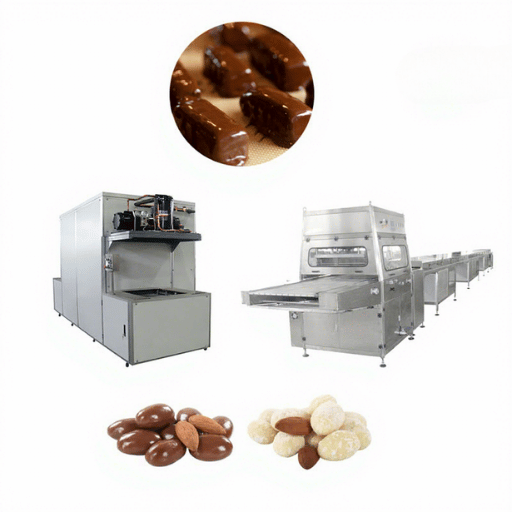
Enlarged machinery view

Pre-Shipment Acceptance Planning

A good factory-acceptance plan indicates the test formulation and batch, sampling plan, duration of test, time needed to start and stabilize the process, reject criteria and the owner to sign off on completion. It also indicates the locations of sensors and the product condition on discharge, documented reading schedules, and the ambient conditions during the test.
Express the observations in terms that will be useful to both the production and quality teams. This may include a visual and surface shape inspection, the condition of the downstream handoff, samples held for review and a clear statement regarding the change in run status from startup to steady state operation. When restarts apply, articulate the definition of restart prior to the test in order to avoid confusing the test record with different operating conditions.
Although the product can leave the tunnel in a cold state, it may still undergo condensation at the room transition. More cooling is not necessarily safer because what happens next still depends on room temperature and product condition. Note the path from the outlet to packaging or the subsequent process step and survey the surface, shape, restart behavior, and transitions in addition to upstream and downstream handoffs as part of the same test record.

FAT Evidence List

Test product, batch and sample count
Startup and sustained-run observations
Ambient and measurement locations
Reject definition and accepted-product observation
Release responsibilities
Buyer-defined acceptance method
Engineering configuration review
Instrument and record review
Named sign-off and pre-shipment actions

Engineering Review Through Shipment

The project schedule allows separation of product evidence, framing of scope decisions and expectations of acceptance. It establishes interfaces prior to production, as opposed to transfer, utility or responsibility issues being resolved by the construction phase.

Prior to the technical package being locked, verify equipment on both sides of the tunnel and the information required for their transfer. The buyer may provide a line layout, available utilities, product data and the end goal, while the SINOFUDE engineering team may address the issues and concerns associated with the brief. A written scope and acceptance record connects these contributions and keeps the record intact until the shipment is accomplished.

01

Send the product brief, line layout and required discharge condition.

Review product route, ambient boundary, utilities, floor space and interfaces.

Discuss product sample testing and define the configuration scope.

Confirm layout and quotation, then freeze the technical package with the deposit.

Build the configured tunnel for pre-shipment testing and review the agreed test record.

Settle the balance before shipment and hand over the defined project documentation.

The cooling tunnel is not complete without guards and responsibilities. Destination-specific review should cover guarding of nip-points on conveyors along with emergency stops, interlocks, hazardous energy controls and line-level safety devices as well as mechanical and controls handoff. The review in the U.S. can begin with 29 CFR 1910.212 and 29 CFR 1910.219, however, the final requirements will be determined by the installed line and jurisdiction.

01 / 07

Room Conditions, Hygiene and Line Interfaces Need Early Review

The final product transition depends on a combination of factors such as temperature and humidity, and the conditions beyond the outlet. A chocolate cooling tunnel cannot correct incorrect tempering or formulation. The tunnel should not be expected to settle an unstable product by itself. The common assumption that a colder or longer tunnel corrects every surface fault is not always true; upstream chocolate processing and the downstream room transition remain part of the diagnosis.

The enclosure along with the humidity controls and the room transition deserve the same attention as the tunnel. Record where product leaves the cooling section, whether it passes through an open space or through a door, how long it waits before packaging and the conditions in the surrounding rooms along that pathway. The objective is to identify what observations will be needed for the project. This is not the time to impose a universal temperature and humidity target on product.

Bring the same discipline to controls and utilities. Know the connection points and the control handoff. Know the services around the items and the planned operating sequence with the upstream and downstream equipment. If the line contains an enrober, moulder, depositor, demoulding station, buffer or packaging machine, note its transfer direction and the condition it expects from the preceding step.

During the cleaning discussions, the people who perform the cleaning and the route they must take to accomplish the cleaning must also be outlined. Under 21 CFR 117.40, equipment and utensils must be designed in a way that allows for effective cleaning and maintenance to prevent contamination. A product-contact area is only of value if the project enables regular inspection and maintenance, and a changeover plan is more apparent if it describes the product family, the allergen-control expectation and the cleaning method. These operational realities will help keep the line focused on the day to day operational considerations following the completion of the machinery installation.

Hygiene and Changeover

Cleanability is a machine requirement, not an afterthought. Define product-contact expectations, allergen-change process, cleaning method, access, drainage or condensate handling and maintenance access in the enquiry.

Interfaces and Safety

Map transfer gaps, belt height and width, controls handoff, utilities, guarding, operator access and outlet handling. Assign who supplies, confirms and signs off each boundary.

Moulded bars and tablets, enrobed confectionery and deposited pieces are potential applications, subject to final recipe, product and line review.

FAQ: Chocolate Cooling Tunnel Purchase Questions

QUERY_STATUS AWAITING
Start with accepted output, product mass and geometry, spacing, entry condition, discharge condition, room boundary, footprint and interfaces. Engineering then reviews the cooling curve and conveyor path as one configured brief.
There is no universal setting for every chocolate product. Recipe, tempering context, coating thickness, product mass, room conditions and desired discharge condition must be reviewed together.
Those routes should be qualified separately. Product support, spacing, shape retention, transfer and discharge handling must match the product being run.
They are linked through the product path, but accepted output, spacing and the required cooling curve matter too. A usable brief records the conditions surrounding that relationship rather than selecting one variable alone.
Review room temperature and humidity, product exit condition and the route to the next operation. The outlet transition belongs in the inspection plan, not only the tunnel discussion.
Working width, residence-time requirement, footprint route, refrigeration load, conveyor configuration, controls, enclosure and access, utilities and line interfaces all shape the quoted scope.
Product sample testing is open for discussion, with sample freight budgeted to the buyer. Share the product route, recipe or process category, sample condition and acceptance observations you need reviewed.
Set the test product and batch, sample plan, run boundary, reject definition, measurement locations, ambient record, product condition at discharge, restart behavior and sign-off owner before testing.
From deposit and the confirmed technical package, a configured unit is built for pre-shipment testing in 3 to 4 months.
Send a product photo or drawing, product dimensions and mass, process route, upstream accepted output, entry and discharge conditions, floor-space envelope, ambient conditions, utilities and interface details.
State the required material by zone and destination rule. If stainless steel is required for a food-contact or washdown area, put the grade, finish and verification method in the quote input instead of assuming every steel component has the same requirement.