
Get in Touch with SINOFUDE Company

Hard Candy & Lollipop Production Lines
We configure hard candy and lollipop production lines according to the candy you want to sell, the forming route that hard candy or lollipop needs, and the conditions under which the complete line will be accepted. Our project discussion connects cooking, forming, cooling, and packaging at the handoff point, instead of considering one candy machine the complete solution.
- Depositing and die forming
- Hard candy, ball and flat lollipops
- Cooking-to-packing line scope
- Written FAT and site inputs
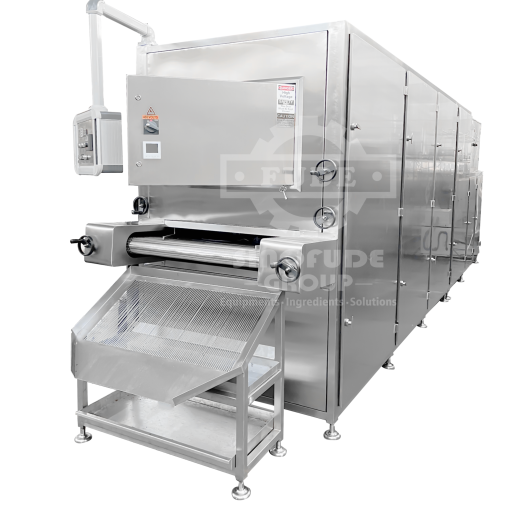
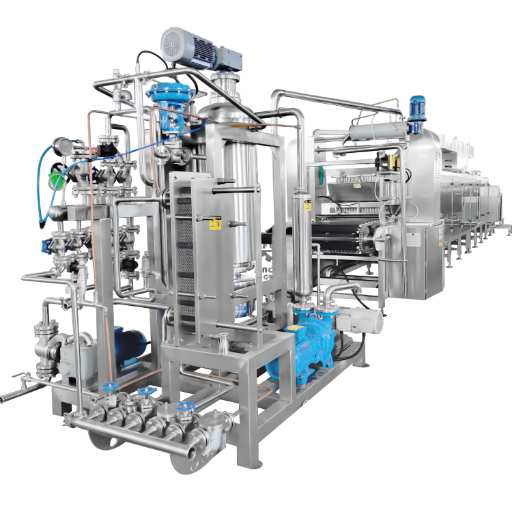
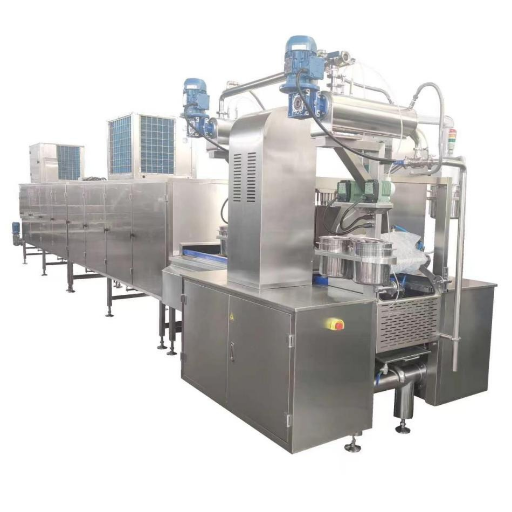
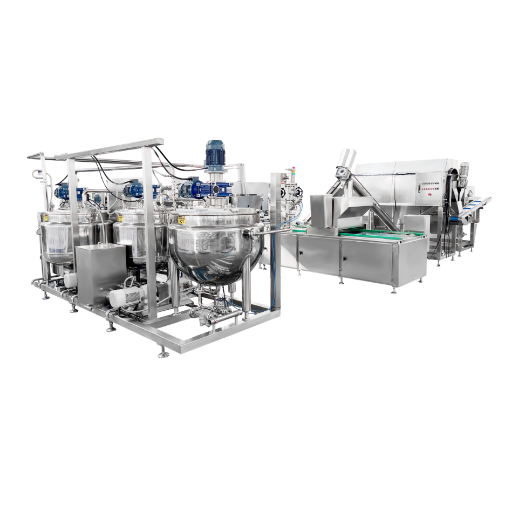
Route first
Depositing or die forming starts with product geometry and recipe behavior.
Full boundary
Cooking, forming, cooling and packaging interfaces are written into scope.
Qualified output
Accepted throughput follows the slowest stable interface under the agreed test.
Comparable proposal
Product, utilities, layout and acceptance inputs are fixed before comparison.
Choose Your Hard Candy or Lollipop Production Route
The first step for any industrial candy making process is defining the product, since the phrase “hard candy line” can result in different cooking, forming, cooling and packaging. Shape, piece weight, filling, color pattern, stick format and wrapping presentation belong in the first engineering review.
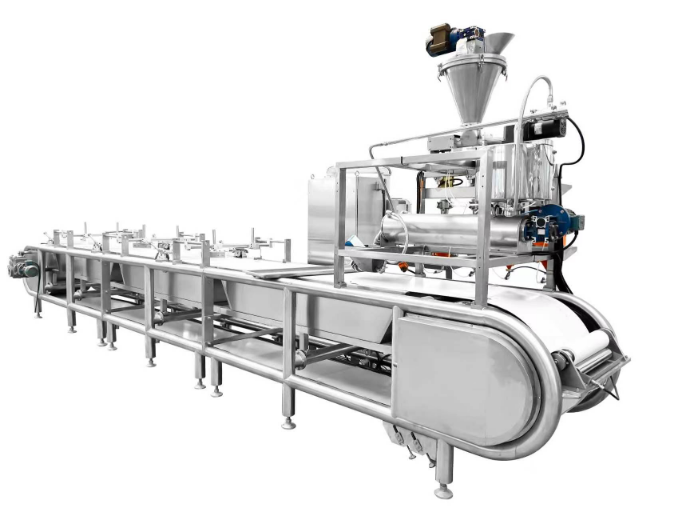
| Target product | Route to evaluate | Decision inputs | Interface to protect |
|---|---|---|---|
| Solid or patterned hard candies | Depositing into a mold | Syrup behavior, molding pitch, target weight, colors or filling architecture | Depositing temperature, product release and cooling |
| Rope-formed hard candies | Die forming | Batch condition, rope size, die geometry and piece profile | Batch roller, rope sizer, forming machine and cooling handoff |
| Deposited lollipops | Depositing with stick handling | Flat or shaped format, stick position, cavity arrangement and target weight | Stick registration, mould travel, cooling and demoulding |
| Ball or flat die-formed lollipops | Die forming | Rope condition, stick insertion, die set and finished orientation | Former-to-cooler transfer and wrapper infeed |
Define the Complete Production Line Scope
The same starting and ending points, as well as the division of responsibility, need to be the same for all suppliers when a comparable quote is sought. The proposed line boundary includes the process modules and the transfer interfaces, so a very low price is not given by skipping cooling, inspection or the packaging handoff.
Ingredient dosing and syrup preparation
Cooking and conditioning
Depositing or die forming
Cooling and product release
Inspection and packing handoff
Upstream definition
- Glucose, other syrup ingredients and dosing responsibility
- Cooking method and recipe control points
- Syrup transfer, buffering and conditioning
Core process definition
- Depositor or batch roller, rope sizer and former
- Moulds, dies, stick system and change parts
- Cooling tunnel, cooling table or product-specific cooler
Downstream definition
- Discharge orientation and inspection point
- Buffering, conveying and reject handling
- Wrapper infeed conditions and interface owner
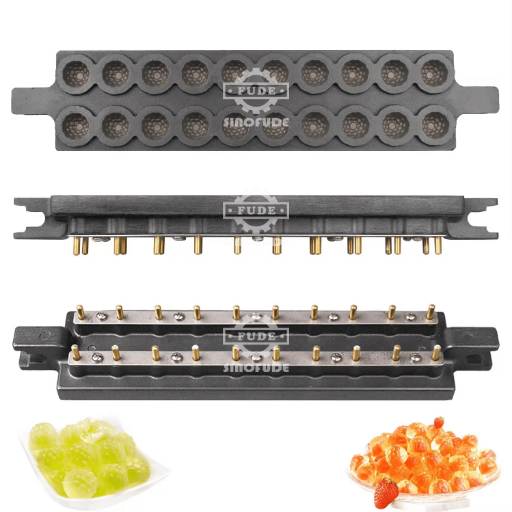
Depositing vs Die Forming
Depositing places a controlled dose into a mold, while die forming shapes a conditioned candy rope through forming tooling. The evaluation is based on the product portfolio that you want to run, not on generic statements that one approach is always better.
| Decision factor | Depositing route | Die-forming route | What we ask for |
|---|---|---|---|
| Product geometry | Mould-led shapes and cavity-defined detail | Die-led pieces formed from a sized rope | Dimensioned sample, drawing or product photograph |
| Product architecture | Solid, striped, layered, side-by-side and centre-filled concepts can be reviewed when the recipe and hardware are suitable | Solid rope-formed profiles and die-defined shapes | Section view, color arrangement and filling requirement |
| Recipe behavior | Viscosity, depositing temperature and mould release matter | Batch plasticity, rope stability and forming temperature matter | Recipe, target moisture and current process notes |
| Changeover work | Mould, nozzle, hopper and product-path changes | Die set, rope size, batch path and product handling changes | SKU list and planned campaign sequence |
| Output constraint | Cooking, dosing, mould travel, cooling or demoulding can govern | Cooking, batch conditioning, rope sizing, forming, cooling or wrapping can govern | Accepted pieces per minute, rejects and test duration |
Explore Four SINOFUDE Production Solutions
These pages separate the parent selection problem from model and product-family details. Use this page to select the route and project boundary, then go to the relevant solution for the equipment discussion.
Hard Candy Machine
Review deposited and die-formed hard candy routes, their process modules and published family references before product-level qualification.
View Machine
Lollipop Machine
Review deposited and die-formed lollipop concepts with stick handling, mould indexing or die selection, cooling and packing orientations.
View Machine
Candy Depositing Machine
Review depositing conditions for hard candy, lollipop, toffee or fondant concepts based on weight, cavity pitch, viscosity, and filling architecture.
View Machine
Toffee & Caramel Line
Open a separate process discussion when milk solids, fat, caramelization behavior, cooling and cutting or forming take the product beyond a hard candy route.
View LineCapacity, Cooling and the Slowest Qualified Interface
Published kg/h values are useful for shortlisting, but accepted output under an agreed test method belongs to a defined product. Our live product pages list deposited hard-candy references from 150 to 1,200 kg/h, die-formed hard-candy references from 150 to 1,000 kg/h and a lollipop reference range from 150 to 600 kg/h.
Accepted line output = the slowest qualified interface
Cooker
→
buffer or conditioning
→
depositor or former
→
cooling
→
inspection
→
wrapper infeed
A larger cooker is not a substitute for stable forming, cooling, release and wrapper infeed. Capacity selection protects the complete product path, because a nominal module figure cannot recover output lost at the slowest interface.
| Published family reference | Reference output | Qualification inputs |
|---|---|---|
| Deposited hard candy reference point 1 | 150 kg/h | Recipe, piece weight, cavities, cooling and acceptance method |
| Deposited hard candy reference point 2 | 300 kg/h | Recipe, piece weight, cavities, cooling and acceptance method |
| Deposited hard candy reference point 3 | 450 kg/h | Recipe, piece weight, cavities, cooling and acceptance method |
| Deposited hard candy reference point 4 | 600 kg/h | Recipe, piece weight, cavities, cooling and acceptance method |
| Deposited hard candy upper reference | 1,200 kg/h | Recipe, piece weight, cavities, cooling and acceptance method |
| Die-formed hard candy family | 150–1,000 kg/h | Batch condition, rope size, die, cooling and wrapper handoff |
| Lollipop family | 150–600 kg/h | Piece weight, stick system, cavities or die, cooling and sampling basis |
Define good product
- Piece weight and dimensional criteria
- Surface, filling and stick-placement criteria
- Permitted reject and rework treatment
Define the test
- Recipe and raw-material condition
- Run duration and sampling frequency
- Utilities and room conditions
Define the handoff
- Cooling discharge temperature or handling state
- Orientation and spacing at inspection
- Wrapper infeed and accumulation behavior
Site Utilities, Hygienic Design, Safety and Changeover Inputs
Site conditions are considered as we configure the system prior to finalizing the equipment list. The design of the service line can be impacted by available electrical service, heat, air, cooling, room temperature and humidity, drainage, access and maintenance.
- Voltage, phase and frequency
- Available heat source and water services
- Compressed air and cooling-water conditions
- Room temperature, humidity and ventilation
- Allergen and color sequence
- Wet, dry or mixed cleaning method
- Required stainless steel grade, finish, and access to product-contact surfaces
- Change-part identification and storage
- Guarding and interlock review
- Energy-isolation points for servicing
- Cleaning, unjamming and tool-change access
- Operator and maintenance working space
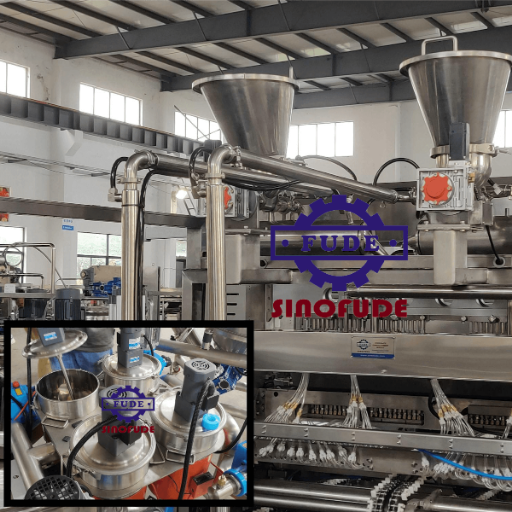
| Design input | Procurement use | Reference to include in the review |
|---|---|---|
| Cleanability and contamination control | Specify product-contact construction, accessible seams, corrosion resistance and installation clearance | 21 CFR 117.40 |
| Hygiene risk assessment | Match the design review to product, cleaning method, moisture regime and intended use | ISO 14159:2002 |
| Food-contact substances | Request component and intended-use information for the selected product-contact materials | FDA food-contact overview |
| Hazardous-energy control | Identify isolation points and service tasks for the buyer’s site energy-control program | OSHA 29 CFR 1910.147 |
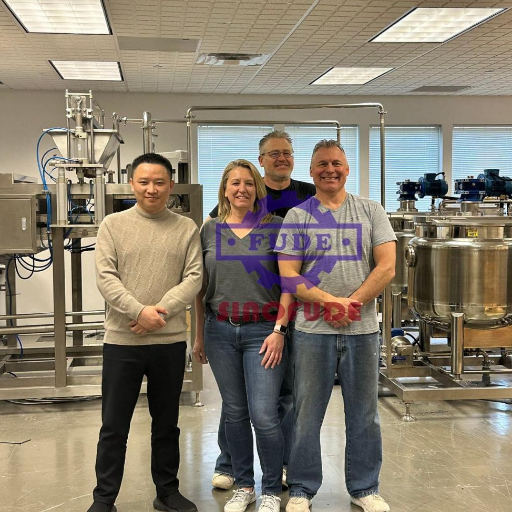
Context and Project Documentation
SINOFUDE was founded in 1998 in Fengxian District, Shanghai. Today, we operate three factories with a total area of more than 30 acres and more than 200 employees across Confectionery, Baking and Chocolate equipment divisions.
- Founded in 1998
- Three factories in Fengxian District, Shanghai
- More than 30 acres in total
- More than 200 employees
- 38 product patents
- ISO 9001 management system introduced in 2004
- Confectionery, Baking and Chocolate equipment divisions
- High-power laser cutting, laser welding, friction welding and tube welding
- CNC sawing and CNC wire cutting
- CNC machining centers, inclined-rail lathes, drilling and gantry milling
Equipment Acceptance, Food-Safety Validation and Project Responsibilities
Good acceptance language separates equipment function from recipe ownership, plant services and site validation. Fixing the responsibility matrix prior to the purchase order ensures that FAT, site readiness and commissioning are aligned.
| Work item | SINOFUDE scope to define | Buyer scope to define | Joint acceptance point |
|---|---|---|---|
| Product brief and recipe | Process review and equipment configuration | Approved ingredients, recipe, product criteria and samples | Trial recipe and permitted adjustments |
| Utilities | Utility demand schedule and connection points | Stable site supplies at the declared conditions | Measured condition before testing |
| Line output | Configured modules and control logic | Agreed raw materials and trained operating team | Run duration, sampling and accepted-good-product calculation |
| Food safety | Requested equipment and component documentation | Hazard analysis, sanitation program and product validation | Document review and site validation plan |
| Machine safety | Guarding, controls and equipment energy-isolation information | Site risk assessment and energy-control program | Pre-startup safety review |
| Packing handoff | Discharge condition, interface signals and layout point | Wrapper specification and downstream operating window | Product orientation, spacing and accumulation test |
Write into FAT
- Product, recipe and raw-material condition
- Target piece criteria and sampling method
- Run duration, stops and restart treatment
- Accepted output and reject calculation
Reserve for site acceptance
- Site utilities and environmental conditions
- Upstream and downstream integration
- Operator training and sanitation execution
- Plant-specific safety and food-safety validation
How We Work: From Product Brief to Configured Proposal
The first review is more useful when you explain the sellable product rather than just naming a piece of equipment. A brief description also decreases the probability that two quotes contain different equipment, utilities, or acceptance criteria.
Describe the product.
Give candy type, shape/style, dimensions/size, weight per piece, colors, filling if any, and include stick style (if applicable), photos or drawings.
Describe the recipe.
Include formulation, target or allowable moisture, cooking instructions or notes, restrictions on ingredients, and known temperature or viscosity constraints.
Describe the portfolio.
List all SKUs, planned sequence of campaigns, expected changeovers, and any new products that the line is to consider.
Describe the output.
Include target accepted output, shift and reject definition, test and packaging time requirements.
Map the site.
Indicate layout, height of ceilings, access routes, provided electrical service, heating & cooling, compressed air service, drainage, and conditions of the spaces.
Fix the boundary.
Identify ingredient handling, inspection, metal detection, packing, coding, and secondary packaging, and interface with the plant system.
Fix acceptance.
Describe the location of FAT, trial material, sampling plan, destination requirements, document requirements, and site acceptance.
Attach current product samples or benchmark photographs when available. The brief lets us compare route, module scope, change parts, utilities, layout and the records required for acceptance.
Technical Evaluation & Selection Tools
Hard Candy and Lollipop Line FAQs
Can one production line make both hard candy and lollipops?
System Configuration
Some upstream cooking or transfer functions may be shared, but forming, stick handling, cooling, and packing interfaces must be customized for each product. The review analyzes whether a shared vs. dedicated configuration is a better fit for each SKU and changeover plan.
Which route fits depositing versus die forming?
Process Routing
Depositing is well suited for products defined by moulds where dosing, viscosity and release can be controlled. Die forming suits products shaped from a conditioned rope, where batch behavior, rope sizing and forming tooling govern the route.
What machines are included in a hard candy production line?
Boundary Scope
A full scope may include dosing, syrup preparation, cooking, and conditioning as well as depositing or die forming, cooling, conveying, inspection, and a packing handoff. The quotation should describe where our supply begins and ends.
What production capacity should I specify?
Capacity Metrics
Start with accepted sellable product per hour and your planned shift pattern. Our published references span 150–1,200 kg/h for deposited hard candy, 150–1,000 kg/h for die-formed hard candy and 150–600 kg/h for lollipop families, with final selection qualified to product and test conditions.
Why can cooling limit a candy production line?
Thermal Dynamics
As the cooked mass cools to a glassy state, hard candy begins to develop its quality. During this period, the handling of the candy is affected by temperature, humidity, moisture, and the behavior of the candy during the crystallization process. The cooler should be able to demould, convey, and wrap the product, rather than just matching the nameplate kg/h.
Can a candy depositing machine make filled or multi-color products?
Hardware Capabilities
Our live depositor page describes solid, striped, layered, side-by-side and centre-filled concepts when the recipe and hardware are suitable. Send a section view, target weight, colors, filling and cavity arrangement for review.
Which utility information is needed for a proposal?
Facility Utilities
Please provide information on voltage, phases, frequency, a heat source, compressed air, cooling services, water and drainage. Knowing this will allow us to prepare the utility schedule and connection plan. Please also provide the room temperature and humidity.
How should hygienic design and machine safety be reviewed?
Compliance Standards
Use the product, cleaning method and destination as the basis for a documented review. Useful references include 21 CFR 117.40 and ISO 14159 for hygienic design inputs, plus OSHA 29 CFR 1910.147 for the buyer’s hazardous-energy control program.



