
Get in Touch with SINOFUDE Company

ISO 9001 Certified
Konjac, Crystal & Tapioca Pearl Equipment
Konjac Ball Machines, Crystal Boba Lines & Tapioca Pearl Equipment
Choose the production process from the finished food, gel system and plant conditions before comparing a machine. SINOFUDE’s named popping boba machine routes cover liquid-centre popping boba, translucent crystal boba, konjac jelly ball products and imitation caviar, with traditional tapioca pearls kept on a separate starch-dough route.
- 50–200 kg/h admitted model range
- 3–15 mm+ admitted diameter range
- Electric or steam heating options
- Plant-readiness and RFQ tools
Send Your Product Brief
The final configuration, local food-category review and delivery scope are confirmed in the written quotation.
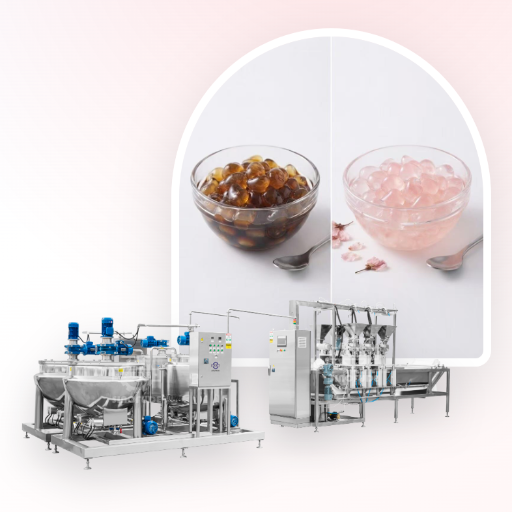
One Pearl Name Can Hide Several Equipment Routes
01 / PRODUCT
Liquid-centre popping boba
A calcium-alginate route forms a thin gel skin around a liquid centre. Ingredient preparation, droplet forming, reaction time, rinse and package stability belong in the trial.
02 / GEL
Crystal or konjac ball
A konjac or agar jelly route can use different heat, pH, alkalinity, cutting and cooling controls. It should not inherit a popping-boba recipe by assumption.
03 / SIZE
Imitation caviar
A small pearl changes the deposit or template decision. The current CBZ100S page lists a minimum of 3 mm, subject to recipe and controlled model confirmation.
04 / BOUNDARY
Traditional tapioca pearl
Tapioca pearls start from starch dough, then move through forming and cooking. This is not the same liquid-depositing ball machine route.
Market, Product Format and Process Before Machine Family
A narrow machine keyword can tempt a buyer to start with a model. That order is reversed in our review: market and food category lead to the finished ball, pearl route, gel system, machine family, factory fit and the quote inputs that still need evidence.
Market
Food category
End-product format
Pearl route
Gel system
Machine family
Plant readiness
Quote inputs
01
Food category and serving format
State whether the ball is a beverage inclusion, dessert topping, jelly confectionery, mini-cup gel or another category. Add the container, package discharge method, serving method and intended consumer group.
02
Physical product format
Measure diameter and shape, then describe firmness, chewy or soft texture, slipperiness, dissolution behaviour and the expected bite. These inputs can matter independently of the ingredient name.
03
A quotation can match nominal kg/h and still fail because the gel route, package or site utilities do not match. Sinofude treats those gaps as stop conditions: the wrong choice is not hidden behind a feature list, and each trade-off stays visible in the engineering scope.
For the United States, FDA Import Alert 33-15 identifies packaging, size, shape, consistency, texture and slipperiness as risk dimensions for certain firm gel products. For the European Union, E425 treatment depends on the defined food category, so a destination review belongs before equipment commitment.
Food Category, Product Format and Formulation Inputs
The buyer’s product becomes our engineering reference. Photos and packs, along with a physical sample, are more useful than simply saying “boba making machine,” because that broad phrase can describe a candy, drink topping, jelly ball or retail kitchen device.
| Input group | What the buyer sends | Why it changes the project |
|---|---|---|
| Destination and category | Country/region, local classification and intended use | Sets the market-review boundary before a product or ingredient promise |
| Finished format | Diameter, shape, texture, firmness, slipperiness and bite | Changes forming, cutting, inspection and product-safety questions |
| Package and serving | Bulk tub, pouch, cup or other container; spoon, straw or direct-use method | Connects the ball to storage, discharge, consumer use and the packaging line |
| Recipe ownership | Buyer formula, target flavor, sugar/syrup context and restricted ingredient list | Defines whether we test an existing recipe or develop a controlled trial formulation |
| Gel system | Alginate/calcium, konjac/agar or unknown | Separates droplet reaction from heat- or alkalinity-sensitive jelly processing |
| Process controls | Viscosity, pH, temperature, hold time, rinse, cool and storage targets | Defines instruments, monitoring and the acceptance record |
Recipe-language filter
Consumer terms such as tbsp, pour, cook, fridge, cup, milk, taro, shaved ice or classic milk tea belong to home recipe intent. We do not use them to select an industrial konjac ball machine, even when the product is fruit flavored, plant-based or made for bubble tea.
Cooking and holding
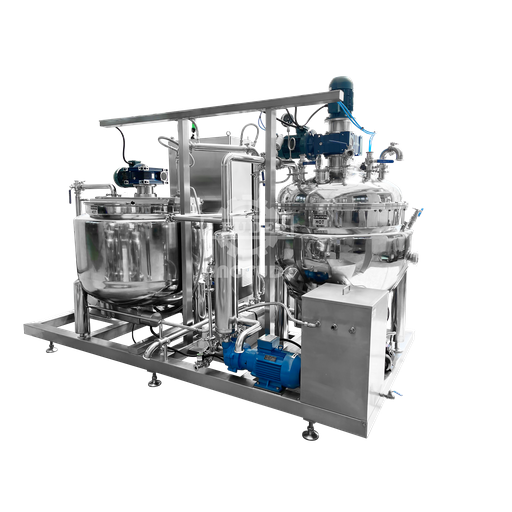
The current CBZ pages describe two cookers, storage tanks and transfer pumps. We still ask which ingredients see heat, how the batch is held and which zones must be cleaned between flavors.
Depositing and change parts
Nozzles, cutting wires, hoppers and model templates can change droplet or jelly-ball form. We treat each part as a model- and recipe-specific scope item, not a universal customization promise.
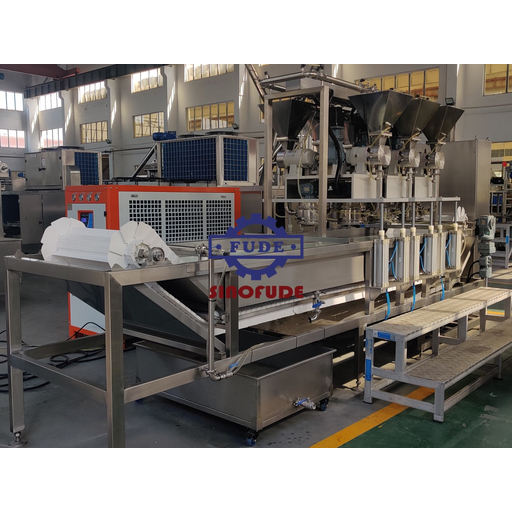
Setting, rinsing and cooling
A popping boba reaction bath is not automatically the same as a konjac jelly setting route. Rinse water, cooling capacity and liquid-waste handling can become the hidden plant bottleneck.
Inspection
Define a good pearl before the run: diameter band, shell or gel condition, texture, appearance, leakage rule and acceptable handling damage. A droplet count alone does not define saleable output.
Packaging interface
Bulk syrup, pouch, tub and cup filling can require different conveyance and preservation scope. The boba production line ends only where the agreed package handoff begins.
Changeover
We map the recipe, allergen, color, flavor and pearl-size sequence. Cleaning access, retained syrup and change-part removal can matter more than the number of products shown in a supplier video.
Model Specifications and Utility Requirements
Only rows associated with current named-model pages are published. Even a precise-looking machine table can contain a shifted model row. Thus a nameplate is not a substitute for a controlled datasheet and quotation. The biggest crystal boba machine is not always the right answer; diameter, recipe, air and floor layout can rule a model out. The shifted higher CJQ rows and CBZ1200 label on the family page are deliberately omitted.
| Model | Listed output | Listed diameter | Heating / power | Listed line dimensions | Configuration note |
|---|---|---|---|---|---|
| CBZ50A | 50 kg/h | 5–12 mm | 61 kW electric or 30 kW steam | 6500 × 3500 × 1800 mm | 30 nozzles; current page supports popping and crystal boba through component changes |
| CBZ100 | 100 kg/h | 8–12 mm | 60 kW electric or 35 kW steam | 6500 × 2000 × 2100 mm | 98 depositing plates on the current page |
| CBZ100S | 100 kg/h | 3–12 mm | 60 kW electric or 35 kW steam | 6500 × 2000 × 2100 mm | Two model templates; smaller range is relevant to imitation caviar review |
| CJQ200 | 150–200 kg/h | 5–15 mm | +5.5 kW listed drive power | 4500 × 1200 × 1850 mm | Air: 0.5 m³/min at 0.4–0.6 MPa; listed weight 1200 kg |
Source control
CBZ50A values come from the current CBZ50A page; CBZ100 and CBZ100S values come from the current CBZ100 page; only the coherent CJQ200 row is taken from the current CJQ family page.| Minimum project evidence | Details & Requirements | Status before layout approval |
|---|---|---|
| 01 — Electrical | Voltage, frequency, connected load, panel location and local code interface | Buyer to confirm |
| 02 — Heating | Electric or available steam pressure/capacity for the selected configuration | Configuration dependent |
| 03 — Compressed air | Capacity, pressure and treatment when the shortlisted model or food-contact use requires it | Model dependent |
| 04 — Water and drainage | Process/cleaning water quality, flow, temperature, drains and effluent route | Buyer to confirm |
| 05 — Floor plan | Equipment envelope, operator access, cleaning access, maintenance pull space and material flow | Site drawing needed |
| 06 — Packaging handoff | Container, storage medium, cooling state, feed orientation and upstream/downstream ownership | Scope boundary |
Pricing Drivers and Production Lead Time
A konjac ball machine price becomes comparable only when both quotations describe the same finished food and scope. Pricing follows alignment of the pearl route, gel system, target good-piece output, model, change parts, heating method, utilities, layout, packaging boundary, safety/hygiene evidence and commissioning work. The cheapest line is not necessarily the lowest-cost production route when cleaning, rejects or a packaging bottleneck remain outside scope.
01
Core line scope
Preparation, transfer, depositing or cutting, setting/reaction, rinsing, cooling and inspection can be included or split across systems. The included module list matters more than a single “automatic” label.
02
Factory interface
Voltage, steam, treated air, water, drainage, floor layout, controls and packaging integration change engineering and installation work. Those inputs are requested before final pricing.
03
Trial and acceptance
Recipe work, sample material, run duration, good-piece definition, inspection records, training and commissioning scope affect the project. Included work is stated in the quotation.
04
Bronze ROI rule
A numeric payback needs the buyer’s current labour, utilities, saleable output, rejects, cleaning time, downtime and operating plan. This page compares cost drivers but does not invent savings, yield or return figures.
STANDARDS & PROCEDURES
Recipe Trials, Hygienic Design, Machine Safety and Process Acceptance
Being able to define a measurable product and a record that is reviewable is necessary for running a successful trial. FDA HACCP guidance lists product and intended-consumer definition, process flow, scientifically based limits, monitoring, calibration, records and corrective actions as distinct controls; each real plan remains product- and facility-specific.
PHASE 1
Product acceptance
- Approved recipe or controlled trial formulation
- Reference sample, diameter band, shape and appearance
- Shell/gel integrity, texture, bite and leakage rule
- Package, storage and serving target
- Good-piece and reject definitions under agreed run conditions
PHASE 2
Process acceptance
- Batch identity and ingredient traceability
- Temperature, time, pH, viscosity or other agreed variables
- Instrument accuracy and calibration evidence
- Sampling frequency, deviation handling and signed record
- Packaging handoff and retained-sample plan
REQUIREMENT
Hygienic-design evidence
- Food-contact material and corrosion-resistance records
- Cleanable construction, smooth seams and drainability
- Installation access around pumps, tanks and conveyors
- Cleaning method, changeover sequence and inspection points
- Treated compressed air where air contacts food or product surfaces
REQUIREMENT
Operator and maintenance safety
- Guards at points of operation, nip points and rotating parts
- Interlocks and emergency-stop locations
- Hot surface, liquid, pressure and chemical exposure review
- Hazardous-energy isolation for cleaning and change parts
- Manuals, training scope and residual-risk record
COMPLIANCE
Legal & Evidence Rule
For U.S. food operations, 21 CFR 117.40 is a useful checkpoint for cleanability, installation access, food-contact surfaces, smooth seams, instrument accuracy and compressed-air treatment. OSHA’s food-processing interpretation confirms that sanitation concerns do not remove machine-guarding duties. Guards must also avoid contaminating food.
Evidence rule: Food-grade wording, stainless appearance or “meets 3A” language is not a certificate. A stainless enclosure is not necessarily evidence of cleanability, drainability or guarding. The model-specific document, authorization or test record must show who verifies it and who validates the process.
01 / 05
Cases That Need a Different Equipment Route
| Situation | Why the current page should stop | Better next step |
|---|---|---|
| Traditional tapioca starch pearl | A tapioca pearl machine uses dough preparation, forming and cooking rather than a liquid gel deposit | Route the project to starch-dough equipment |
| Home or shop appliance request | A countertop boba machine, pearl cooker or vending device does not match an industrial production line | Use foodservice or appliance sourcing |
| Food category not confirmed | Destination rules may treat a beverage inclusion, topping, candy or jelly confectionery differently | Complete local product and ingredient review |
| Recipe has no stable sample | The machine cannot settle unknown gel strength, viscosity, heat response or storage stability | Run formulation and product trials first |
| Required range exceeds admitted data | A higher family label is not enough when the source row is internally shifted | Request a corrected controlled datasheet |
| Packaging is undecided | The pearl may pass forming but fail syrup holding, container filling, transport or serving | Freeze pack and storage targets with the trial |
Search phrases such as “boba pearl machine,” “cereal ball machine,” “make machine,” “balls making machine,” “gummy machine” or “gummy production” can appear beside industrial terms, but they do not establish this page’s equipment scope. Likewise, a subtle flavor change, a second topping or a different drink brand does not automatically require a new production line.
Konjac & Pearl Equipment Engineering Tools
01
Konjac and Boba Line-Fit Selector
Build a first-pass model shortlist from the product route, gel system, target output and diameter. The result is a discussion aid, not a final machine recommendation or market-eligibility decision.
Access Tool
02
Konjac Ball Machine RFQ Brief Builder
Turn your product, plant and acceptance inputs into a copyable engineering brief. Blank fields stay visible as “To confirm” so quotation gaps are not hidden.
Access Tool
03
Konjac and Boba Plant-Readiness Checker
Check the factory interfaces that should be resolved before layout approval. This tool does not calculate utility capacity; it shows which evidence and site decisions are still missing.
Access Tool
Konjac Ball Machine FAQs
Popping boba usually describes a liquid centre held by a thin gel shell, often through an alginate/calcium route. A konjac ball or crystal boba is a solid or chewy translucent gel pearl and can need a different heat, pH, cutting, setting and washing route.
Current SINOFUDE pages support multiple products on certain CBZ configurations through nozzles, wires, hoppers or templates. The supplier still needs the exact recipe, diameter and change-part scope before confirming compatibility.
The current CBZ50A page lists 50 kg/h and 5–12 mm. Treat that as a shortlist signal, then confirm heating, recipe, good-piece definition, utilities and downstream scope in the quotation.
The current CBZ100S page lists two templates and a 3–12 mm range. A controlled trial is still needed because liquid properties and deposit behaviour can affect the achieved product.
The current family table has shifted later rows and a CBZ1200 label inside the CJQ list. We admit only the coherent CJQ200 row and ask for a corrected model datasheet before using higher-row values.
No. The buyer should review model-specific materials, cleanability, seams, drainability, access, instruments, compressed-air treatment and any claimed authorization or certificate.
Record batch and recipe identity, target diameter and texture, time/temperature/pH or other agreed variables, instrument status, sample frequency, good-piece and reject rules, deviations, packaging/storage checks and sign-off.
Public buyer discussions raise leakage and drying as practical concerns, but they do not establish a universal cause. The trial should bind shell or gel integrity to the recipe, setting or reaction step, rinse, holding medium, package, storage condition and observation period.
That depends on the finished product, recipe, package, shelf-life target and destination requirements. Define the preservation and storage plan before the supplier assigns equipment boundaries; this page does not prescribe a universal heat treatment or shelf life.
Compare saleable kg/h under an agreed recipe, product size, run duration, reject definition and downstream condition. Nominal forming output can hide losses or bottlenecks in reaction, rinsing, cooling, inspection or packaging.
Product route, gel system, output, diameter, change parts, heating, utilities, layout, hygiene/safety evidence, automation, packaging interface, documentation, installation, trial and commissioning scope all affect price.
Send destination and food category, product sample and dimensions, recipe/gel system, target kg/h, package/storage target, electricity/steam/air/water/drainage, floor plan, cleaning and safety requirements, plus acceptance and commissioning scope.



