
Get in Touch with SINOFUDE Company

Hard Biscuit Line for Configured Industrial Production
We design Hard Biscuit Line projects based on your product, processing route, output target, choice of heating method, and preference for plant layout. The sequence of operations on the line could include tasks such as dough preparation, forming, baking, cooling, inspection, and packing.
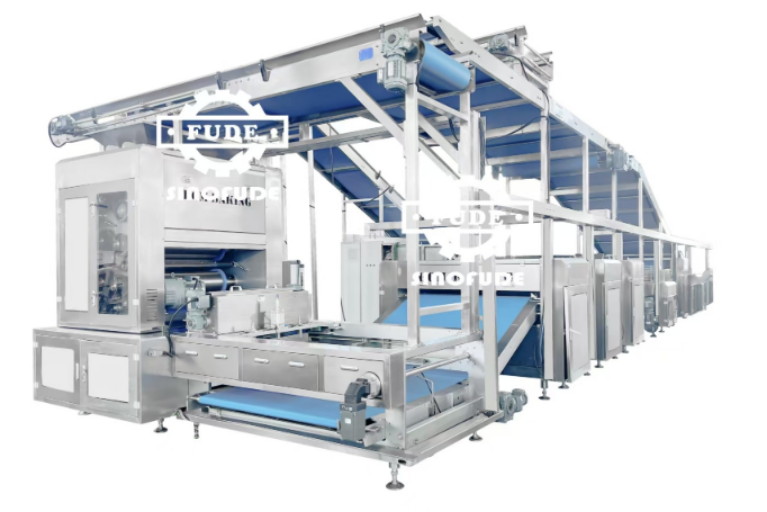
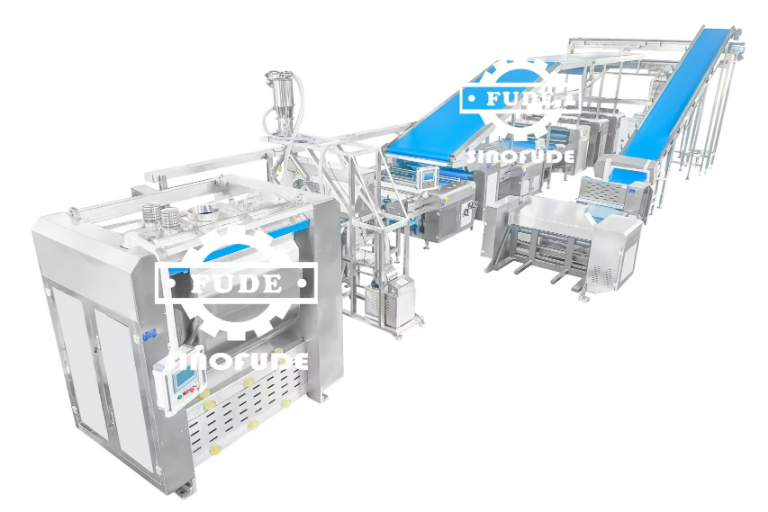
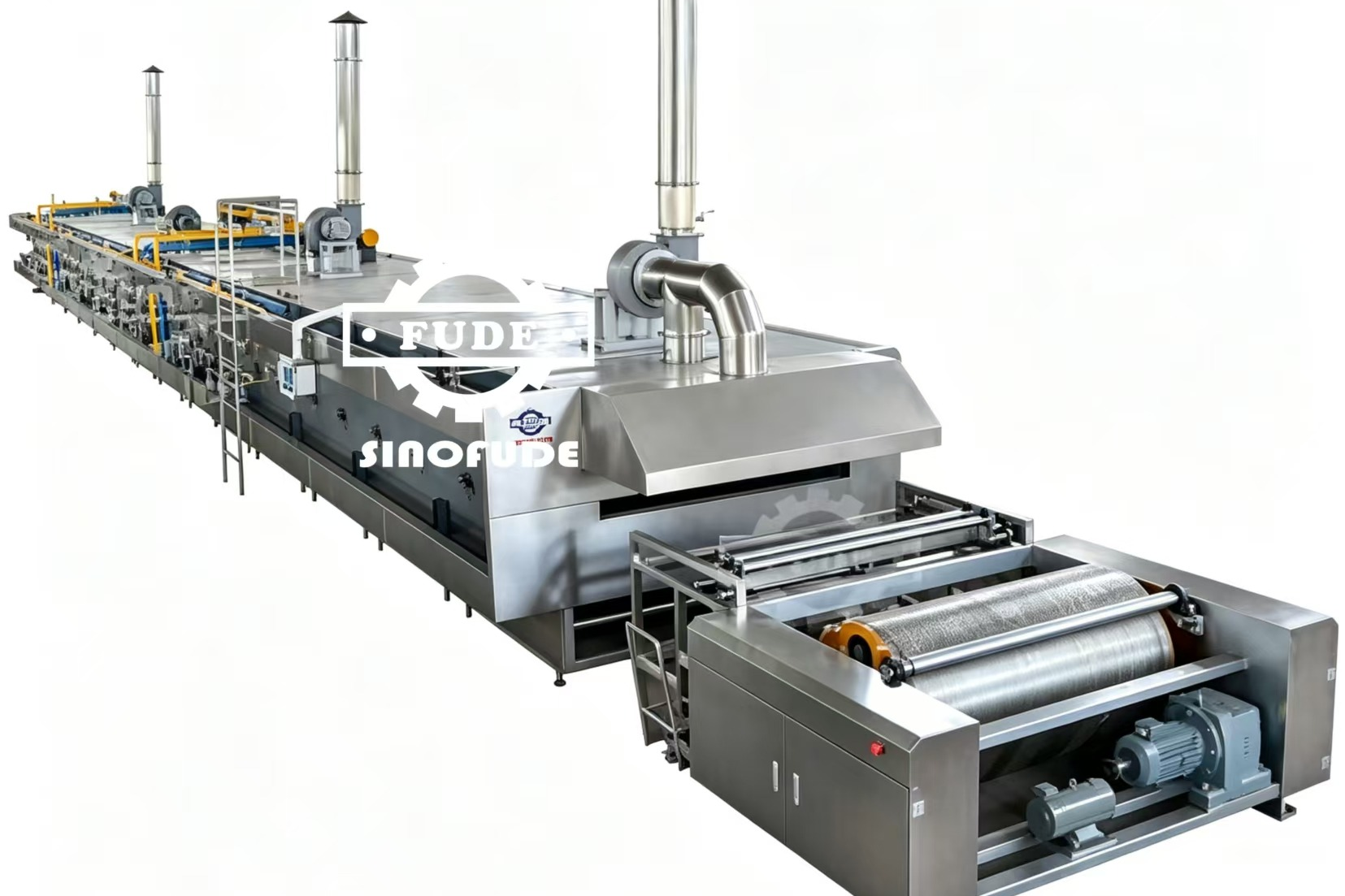
Complete Production Scope and Project Boundary
Our scope for hard biscuit production begins with the product and the route required to produce it. A hard biscuit production line is a connected production process. Therefore, we evaluate complete production lines as opposed to biscuit forming machines in isolation.
COMMERCIAL BOUNDARY
A quote can omit lamination, scrap return, cooling, stacking or packing unless this modular boundary is explicitly specified.
MANUFACTURING RESOURCES
SINOFUDE was founded in 1998 and operates three factories totaling more than 30 acres in Fengxian District, Shanghai. Our Confectionery, Baking and Chocolate equipment divisions develop food production lines with support from more than 200 employees, 38 product patents, an ISO 9001 management system introduced in 2004, high-power laser cutting and laser welding, CNC machining centers and CNC gantry milling.
Mixing & feeding
Sheeting & gauging
Rotary cutting
Multi-zone baking
Cooling & packing
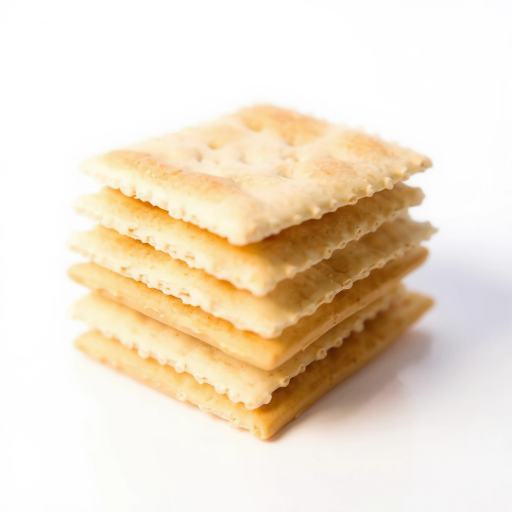
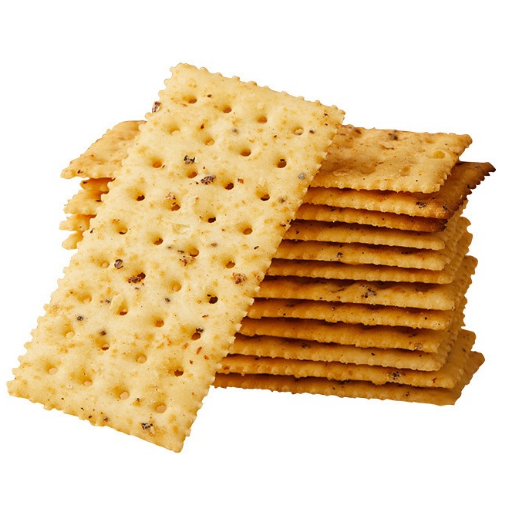
Marie biscuits, soda crackers, animal crackers, tea biscuits and other hard or semi-hard biscuit types.
Mixing, feeding, optional lamination, sheeting, cutting, baking, cooling, stacking, inspection, and packing.
Formula, shape, piece weight, target output, heating availability, layout and downstream boundary.
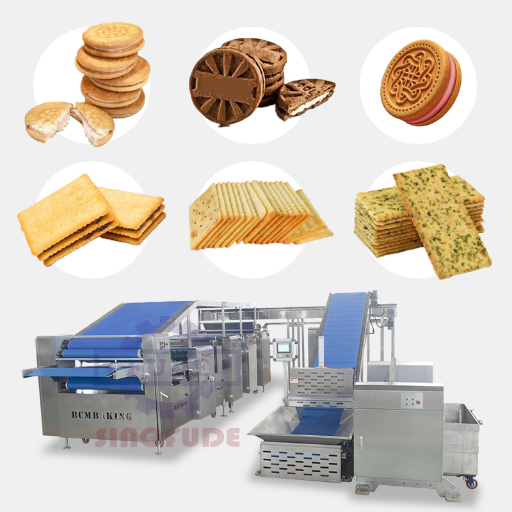
Product Families and Forming Paths
Product families shape the first forming discussion. Marie biscuits, soda crackers, animal crackers, tea biscuits and related hard or semi-hard formats are included in the documented product scope.
- Marie biscuits
- Soda crackers
- Animal crackers
- Square and rectangular hard biscuits
- Laminated crackers
- Puff-type biscuits
- Products requiring a layered internal structure
- Hard-biscuit products that need a sheet-based route
Dough Preparation, Feeding and Lamination
Stable dough preparation and consistent feeding establish the conditions for forming. From mixing and feeding, the documented sequence moves the dough into lamination or sheeting as required by the selected product.
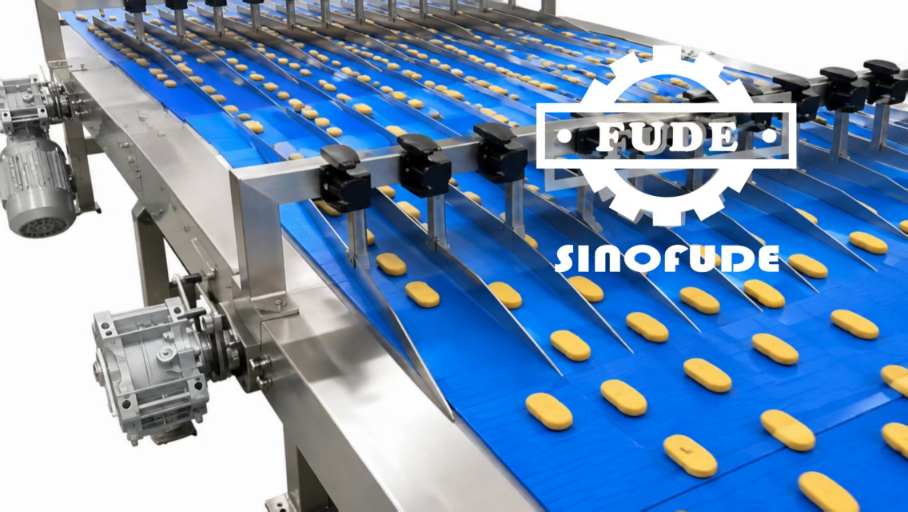
For laminated cracker products, the supplied reference describes 8–12 layers.
Mixing time is stated as 10–25 minutes and remains batch-dependent.
Line design basis: mixing, sheeting and lamination reference
- 01 Vertical or horizontal dough mixing
- 02 Transfer and dough-feeding equipment
- 03 Optional lamination before final sheeting
- 04 Sheeting and gauging with a relaxation stage
Sheeting, Gauging and Rotary Cutting
Progressive sheeting, gauging and a rotary cutter define the biscuit forming machine stage. In the documented hard-biscuit route, cutting and dockering follow sheet preparation and precede separation and scrap recycling.
01
Sheet control
Gradual thickness reduction helps to achieve a continuous dough sheet that is ready for final forming.
02
Rotary cutting
The forming roll can cut the biscuit profile and apply product-specific surface detail.
03
Dockering
In hard biscuits and crackers, dockering can be done where it is necessary along the product route. After cutting, the separation stage lifts the formed pieces from the surrounding sheet and pushes the scrap toward recycling. This keeps the material hand-off visible in the line discussion instead of treating the cutter as a stand-alone machine.
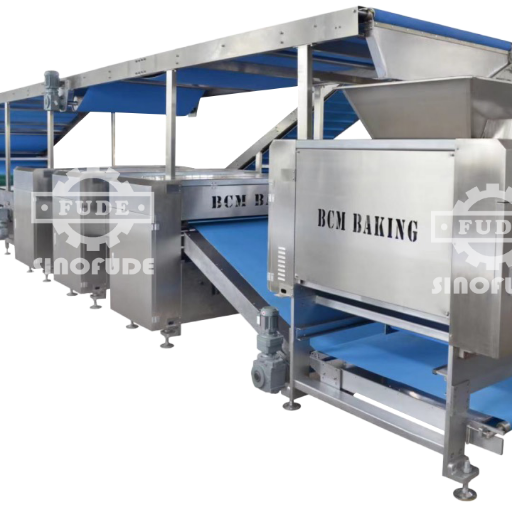
Rotary Cutter and Rotary Moulder Selection Boundary
Of the two forming methods described for the hard biscuit line, the rotary cutter is the primary forming method. A rotary moulder is a separate comparison route for short or soft dough applications; the routes are not interchangeable, and one is not a substitute for the other. A buyer may select the wrong forming method if the behavior of the dough, layering and docking are reduced to just a machine name.
- Hard biscuits and crackers
- Optional lamination before sheeting
- Rotary cutting and dockering
- Separation and scrap recycling after forming
- Separate short- or soft-dough discussion
- Not a substitute title for this complete hard-biscuit line
- Standalone equipment selection belongs to a dedicated component route
- Final route review depends on product information
Baking, Cooling and Downstream Handling
After forming, the described baking process moves the biscuit blanks to a tunnel oven for baking, oil spraying, cooling, stacking, inspection and packing. Heating options listed for the oven are electric, gas, diesel and thermal oil.
Thermal reference
The source reference gives baking-temperature coverage of 190–240°C and lists representative zone ranges of 190–200°C, 200–220°C, 220–240°C and 190–210°C. These values support a configuration discussion; the final bake profile remains product-specific.
- Oven inlet
- Multi-zone baking
- Oil spraying
- Cooling conveyor
- Stacking & inspection
Safety, Hygiene and Operating Responsibility Boundaries
Our team collects plant and product requirements early so the equipment discussion covers guarding, flour-dust control, oven safeguards, cleaning access, allergen management and post-oven handling. Because these conditions create facility-level risk, the review separates machine scope from plant controls and destination-market responsibilities.
Facility inputs
Available utilities, layout, access, ventilation and operating interfaces.
Product inputs
Recipe, allergens, surface treatment, piece characteristics and packaging hand-off.
Review inputs
Guarding, cleaning, dust-control, oven safeguards and acceptance expectations.
SINOFUDE engineering uses OSHA 29 CFR 1910.263, FDA preventive-controls guidance, and 21 CFR 117.40 as public scoping references. Safety, allergen and cleanability duties cannot be reduced to a machine badge; they require project-specific safety, hygiene and legal review.
PROJECT REVIEWFactory Acceptance and Documentation Scope
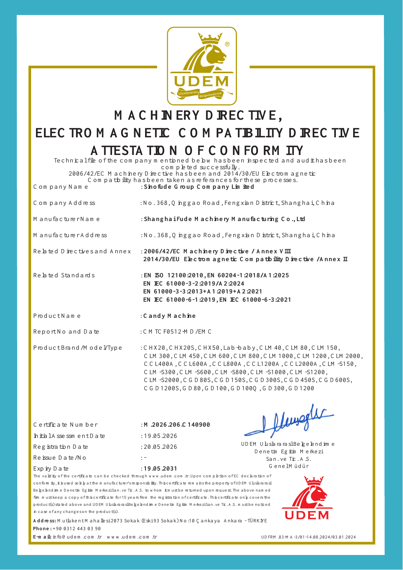
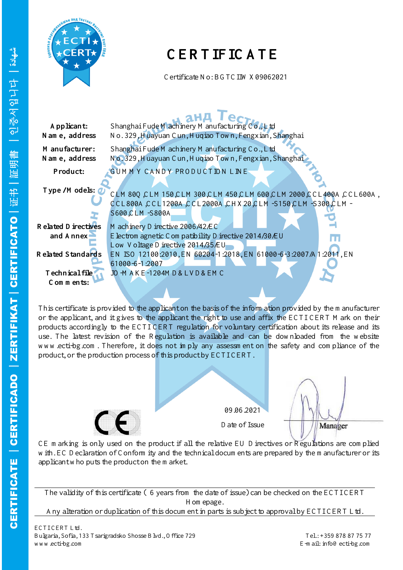
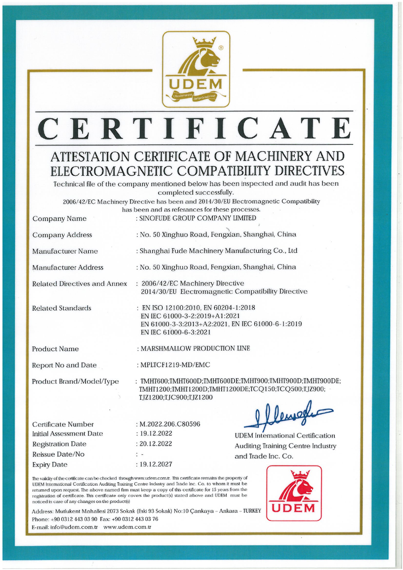
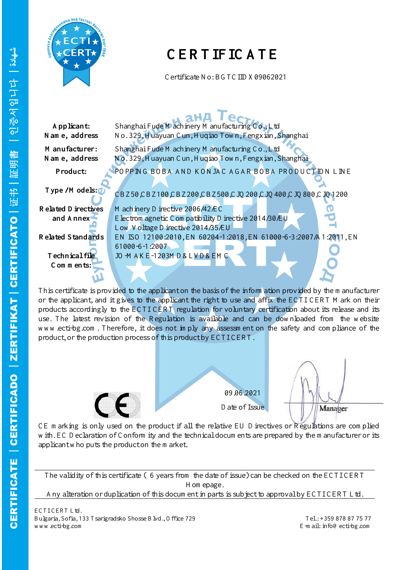
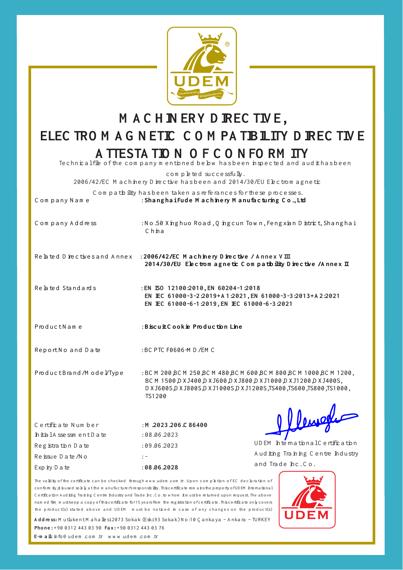
The supplied documentation before shipment describes a Factory Acceptance Test against the approved technical specification. The listed review areas cover equipment configuration plus mechanical, electrical, safety and control-system operation.
Mechanical review
Structure, conveyor operation, transmission, safety protection and moving parts.
Electrical review
PLC control, touch screen operation, motor direction and control, sensors and alarm system operation, and emergency stop.
Process review
Forming stability, conveyor operation, oven control, cooling performance, and product transfer.
BCQ Configuration Comparison
The BCQ series provides documented capacity bands from up to 50 kg/h through up to 1500 kg/h. The trade-off between output headroom, footprint, installed power and downstream handling is reviewed before a configuration is confirmed. A model label can be mistaken for its kg/h output, so the highest model is not always the right answer.
| Model | Capacity | Granules/h | Dimensions L × W × H | Total no-swerve length | Floor area | Electric-oven installed power | Compressed air |
|---|---|---|---|---|---|---|---|
| BCQ-250 | Up to 50 kg/h | 5000 | 40000 × 10000 × 5000 mm | 29600 mm | 400 m² | 105 kW | 50 m³/min |
| BCQ-480 | Up to 150 kg/h | 15000 | 40000 × 10000 × 5000 mm | 64500 mm | 400 m² | 190 kW | 60 m³/min |
| BCQ-600 | Up to 300 kg/h | 30000 | 40000 × 10000 × 5000 mm | 85500 mm | 400 m² | 300 kW | 80 m³/min |
| BCQ-800 | Up to 500 kg/h | 50000 | 60000 × 10000 × 5000 mm | 92500 mm | 600 m² | 400 kW | 100 m³/min |
| BCQ-1000 | Up to 1000 kg/h | 100000 | 80000 × 10000 × 5000 mm | 125000 mm | 800 m² | 500 kW | 120 m³/min |
| BCQ-1500 | Up to 1500 kg/h | 150000 | 100000 × 10000 × 5000 mm | 125000 mm | 1000 m² | 750 kW | 150 m³/min |
Hard Biscuit Line Engineering Tools
Buyer FAQ and Project Scoping Answers
01 Which products fit the rotary-cutting route?
SCOPE DEFINITION
The rotary-cut documented route includes Marie biscuits, soda crackers, animal crackers, and tea biscuits.
02 When does lamination belong in a hard-biscuit process?
PROCESS ALIGNMENT
Lamination belongs where a cracker or puff-type biscuit needs a defined layered structure. The supplied process reference lists 8–12 layers.
03 How does rotary cutting differ from rotary moulding?
TECHNICAL DISTINCTION
Hard dough is sheeted, gauged and rotary cut. Docking is done where the product requires it. Short or soft dough is shaped directly by a rotary moulder.
Because of this, we will discuss the rotary moulder in a separate equipment discussion rather than calling it a cutter.
04 What BCQ output bands are documented?
CAPACITY REFERENCE
The supplied BCQ table lists capacities up to 50, 150, 300, 500, 1000 and 1500 kg/h. Those are reference bands, not a promise that every dough, piece geometry and pack format will run at the same accepted output. Product trials, stable operation, cooling and the downstream packer still shape the final selection.
05 Which heating methods can be discussed?
THERMAL OPTIONS
Electric, gas, diesel, and thermal oil are the options for heating. The best fit will depend on the energy source and the final oven.
06 What happens after baking?
DOWNSTREAM FLOW
The process continues with oil spraying, cooling, stacking, inspection, and packaging. We confirm conveyor hand-offs, biscuit condition, inspection requirements and the selected packaging format. The forming-line specification alone does not define the agreed product-packaging interface.
07 What compressed-air value should a buyer use?
UTILITY METRICS
The BCQ table contains source-supplied compressed-air planning values for each model. They are unusually large and are therefore carried forward without silent normalization. SINOFUDE engineering must validate the applicable units and demand against the order-specific line, utility schedule and agreed scope before quotation.
08 What is included in the Factory Acceptance Test discussion?
QUALITY ASSURANCE
The documented FAT scope covers equipment configuration, conveyors, transmission, electrical systems and controls, emergency stops and alarms, oven control, cooling and product transfer against the approved technical specification. Customer samples, if available, can support the product trial and acceptance observation agreed before testing.
09 Which documents can follow Factory Acceptance Testing?
DOCUMENTATION
The documented scope lists a FAT report, inspection checklist and test certificate. Layout drawings, operation manuals, electrical drawings and maintenance manuals can be included in the approved project scope, so the quotation should state the final handover list.
10 Which inputs help start a line conversation?
PROJECT INITIATION
For an engineering evaluation, we need the product description, preferred piece size, target weight, expected output, heating type, available layout, packing boundary and FAT requirements.



