
Get in Touch with SINOFUDE Company

ISO 9001 Certified Equipment
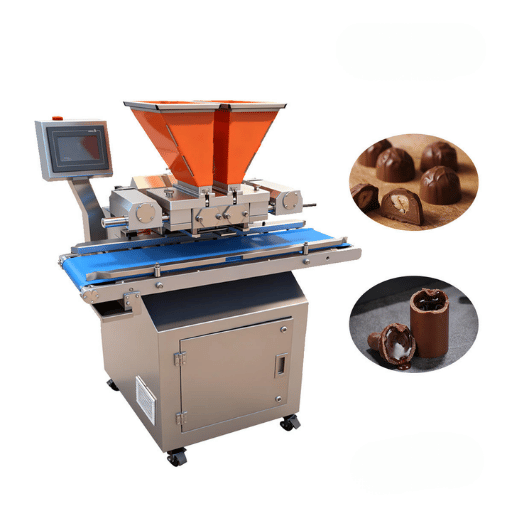
Chocolate Depositing Machine
Chocolate Depositing Machine for Moulded and One-Shot Products
A chocolate depositing machine should be selected around the finished product, mould and line boundary. SINOFUDE uses these inputs to scope either a depositor module or an integrated moulding-line project for plain, inclusion and centre-filled products.
-
Initial Response:
Enquiries receive a reply within 24 hours. -
Production Window:
A depositor or integrated line is built for pre-shipment testing in 45 to 90 working days after the deposit and confirmed technical package. -
Product Validation:
Free sample testing is available; sample freight is paid by the buyer. -
Standard Payment:
Payment runs on a 30 percent deposit by T/T, with the 70 percent balance settled before shipment.
24h
Initial Response
45-90
Days Window
100%
Free Testing
30/70
Payment Rules
DEPOSITING
Depositing Routes for the Product You Intend to Sell
No single machine arrangement fits every chocolate product. Selecting a chocolate depositor machine by headline output alone creates a mismatch risk. Tablets, nut-containing pieces and centre-filled pralines place different demands on the hopper, piston or dosing system, nozzle path, mould transport, vibration and cooling handoff; the project starts with the product and its production context, then defines the equipment scope.
As an illustrative buyer scenario, changing from a 30 mm cavity to a 45 mm cavity is enough to trigger a new nozzle, indexing and mould-interface review. These dimensions explain the review logic; they are not published machine limits.
Route 01
Plain moulded chocolate
This route is for bars, tablets and shaped pieces without a center. The brief outlines tempered chocolate condition, target piece weight, cavity count, mould dimensions, deposit pattern, vibration and cooling.
- Single mass and deposit path
- Weight consistency and clean cut-off
- Mould indexing and cavity alignment
Route 02
Chocolate with inclusions
This route is for a recipe with nuts, crisped grains or other ingredients. Inclusion dimensions and distribution are significant as a particle that passes through one feeding path may bridge or disrupt cut-off.
- Particle size and concentration
- Suspension and distribution behavior
- Cleaning and changeover access
Route 03
One-shot centre filling
A one shot chocolate depositor positions shell chocolate and filling via concentric flow paths. It may shorten the forming sequence, but unsuitable materials may still require a staged shell-form-fill process.
The common assumption is that one-shot is automatically the fastest route. Recipe flexibility is the trade-off. Praline-filling research and the mechanism described in EP1825760A1 both show why shell and filling behavior matters. If a stable shell cannot be formed, a better production route can be the staged route, even with additional process steps.
- Shell and filling viscosity
- Density and depositing temperature
- Centre ratio, shell integrity and leakage
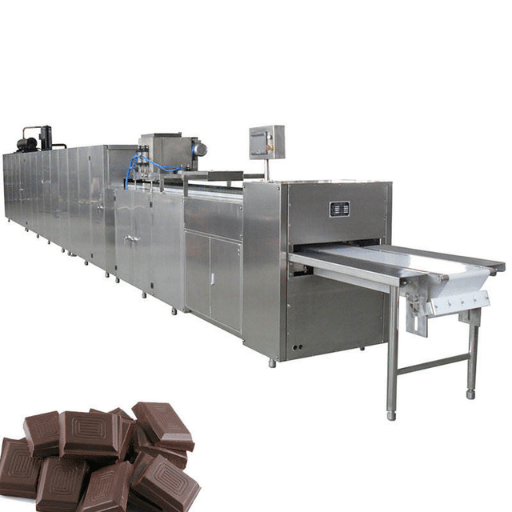
Depositor-Only and Integrated Moulding-Line Scope
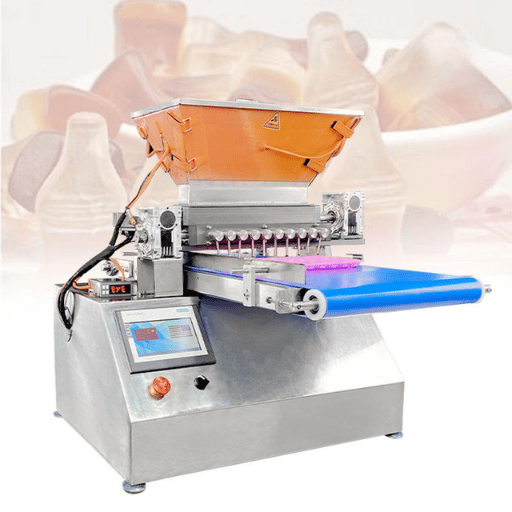
The comparison must include what is before and what is after the depositing head. An automatic chocolate depositor can be quoted as a defined machine module or integrated into a broader chocolate moulding machine line. That choice affects interfaces, responsibility, factory testing and the work your team must complete on site.
| Scope item | Depositor-only project | Integrated moulding-line project | Buyer decision |
|---|---|---|---|
| Chocolate condition | Buyer supplies a compatible tempered mass at the agreed interface. | Tempering and transfer can be included in the reviewed line boundary. | State existing tempering equipment and discharge connection. |
| Mould movement | Buyer confirms loading, indexing and discharge around the module. | Mould feed, positioning and return are reviewed as a connected flow. | Send mould drawings, material and handling method. |
| Vibration | Interface and timing are coordinated with existing equipment. | Vibration can be considered as part of the line sequence. | Describe surface finish and trapped-air concerns. |
| Cooling | Buyer confirms available tunnel conditions and residence strategy. | Cooling handoff and mould logistics are included in the scope review. | Provide product, mould and room-condition inputs. |
| Demoulding and packing | Remain outside scope unless separately listed. | Interfaces can be defined without assuming downstream equipment is included. | Mark the exact end point required in the quotation. |
| Controls and utilities | Required interface signals and services are documented. | Line-level sequence and utility schedule are prepared after configuration. | Confirm plant voltage, frequency, air and layout constraints. |
The wider scope is often not the best quote. It offers you ownership of more defined interfaces only if the complete upstream and downstream are also described. If not, two supplier quotes can describe very different scopes of work.
Product and Process Flow from Mass to Released Piece
Depositing is one controlled handoff in a chocolate processing equipment system. The buyer has a risk of product rejection since product quality can be degraded prior to the nozzle or after the deposit. Therefore, the production specification follows the entire chain rather than treating the depositing head as an isolated purchase.
Condition
Hold shell chocolate and filling in the agreed working condition. Record temperature and behavior at the actual depositing point.
Meter
Feed the selected dosing route and coordinate the chocolate and filling streams for the target cavity and product format.
Deposit
Align nozzle motion, mould position and cut-off so the dose enters each cavity cleanly without trailing or bridging.
Set
Use vibration and cooling conditions that support air release, shell formation and stable crystallization.
Release
Check demoulding, surface appearance, weight, centre position and downstream handling before the process is accepted.
“A useful quotation starts with the finished piece, the mould and the line boundary, not a catalogue capacity selected in isolation.”
Air bubbles can cause moulding defects by leaving marks on the shell and disrupting clean mould release. This combined risk involves more than the depositor. Mould condition, chocolate fluidity, vibration and cooling all affect the finished piece, so every handover is defined before the final layout is frozen.
PRECISION DEPOSITING SYSTEM
DATA CONTROL
The Depositing Brief That Prevents a Wrong Line Quote
Price follows the chosen route, required scope and validation work. The best way to get to a usable quote is to send one shared input package to each supplier. This avoids comparing a depositor-only number with a full moulding line and pricing an untested one-shot assumption as a finished solution.
Input group
What to send
Why it changes the design
Quotation output
Finished product
Product drawing, photographs, nominal piece weight, centre ratio and acceptable appearance.
Defines deposit route, cavity fill sequence and acceptance checks.
Recommended process route and validation items.
Shell chocolate
Recipe family, working temperature, viscosity behavior and tempering method.
Influences flow, cut-off, shell formation and transfer interface.
Mass-handling and depositor configuration review.
Filling or inclusions
Ingredient type, particle size, density, viscosity, temperature and allergen status.
Determines whether one-shot, inclusion or staged processing is suitable.
Compatibility decision and test plan.
Mould
Overall drawing, cavity map, pitch, material, condition and handling direction.
Controls nozzle layout, indexing, alignment and conveyor interface.
Mould-interface definition.
Production need
Shift pattern, target output, SKU mix, batch size and changeover pattern.
Changes the required operating envelope and automation boundary.
Quote-stage throughput and scope proposal.
Plant interface
Available footprint, entry path, voltage, frequency, compressed air, room conditions and upstream equipment.
Prevents a machine package that does not fit the site or connect to existing equipment.
Layout, utility schedule and interface list.
Acceptance
Sample materials, test mould, product criteria, documentation and witness requirements.
Turns general machine testing into a product-relevant release plan.
Pre-shipment test protocol and open-item list.
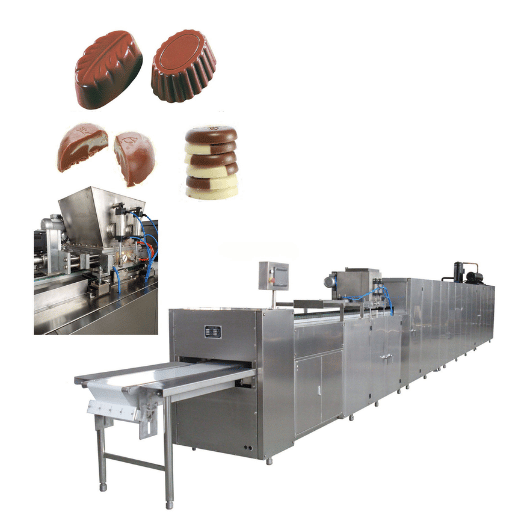
Validation Plan Before the Equipment Is Released
A sample run is most valuable when it addresses the commercial release concerns. It should test the buyer’s materials and mold per the agreed upon observations and should not produce a nice sample that is set to undisclosed values.
Product checks
- Deposit completeness, piece weight and cavity-to-cavity consistency
- Shell coverage, centre position and visible leakage
- Surface appearance, bubbles, tails and contamination
- Cooling response, release from the supplied mould and handling stability
Process checks
- Actual shell and filling temperature at the depositing point
- Recipe behavior during the planned run window
- Mould indexing, alignment and line-interface signals
- Changeover access, cleaning sequence and allergen-control discussion
Machine and site checks
- Guarding concept against the intended operating and maintenance tasks
- Electrical supply and acceptance route for the US installation
- Utility schedule, footprint, access and shipping split
- Recommended spares, manuals, training and commissioning boundary
Release record
- Approved product and mould identification
- Test observations, open items and responsibility owner
- Included equipment, excluded equipment and interfaces
- Documents required before shipment and at installation
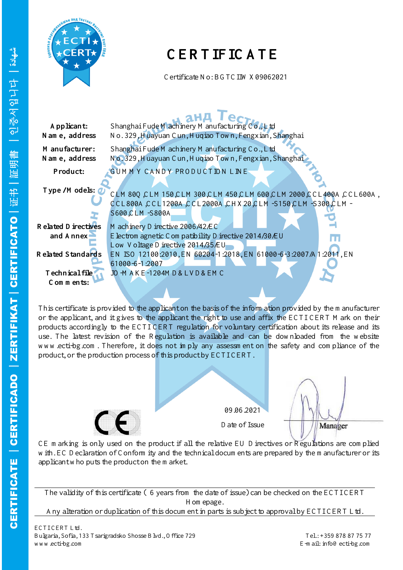
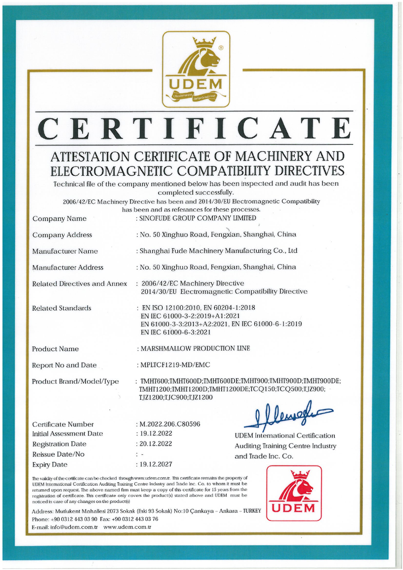
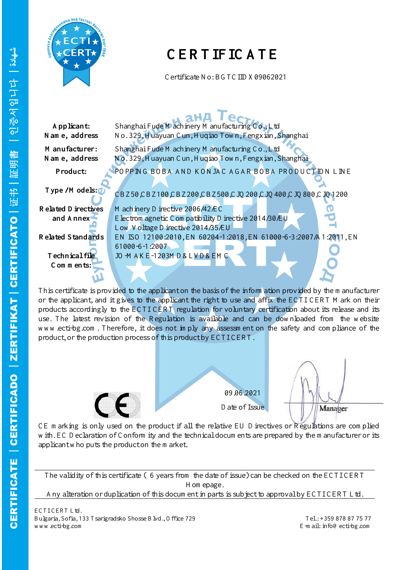
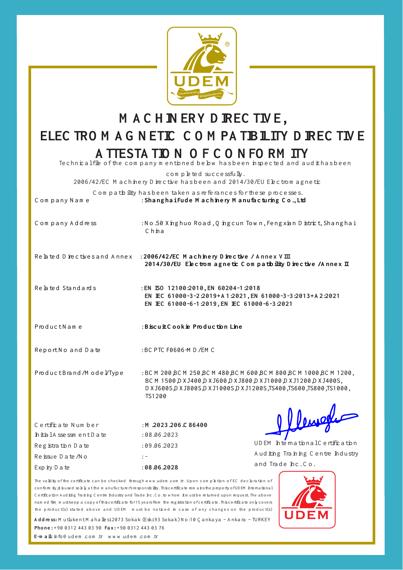
❮
❯
×
Lead Time, Payment and Decision Checkpoints
Response time, engineering review and equipment build are different timelines. Treating them as one creates a risk to the procurement timeline. Separating them gives procurement a realistic schedule and gives engineering time to answer the product and interface concerns before manufacturing can start.
01
Phase / 01
Enquiry
Initial review
Enquiries reach our team and receive a reply within 24 hours; the priced quotation follows the reviewed product and line brief.
02
Phase / 02
Scope freeze
Technical package
The project advances after the product route, mould, included equipment, interfaces, validation plan and commercial scope are confirmed in writing.
03
Phase / 03
Production
Build and pre-shipment test
A depositor or integrated line is built for pre-shipment testing in 45 to 90 working days, counted from the deposit and the confirmed technical package.
Manufacturing Resources Behind the Project
Sinofude was founded in 1998 in Shanghai. The company operates three factories across more than 30 acres with more than 200 employees. Company-level due diligence can combine these platform facts with the project-specific sample, interface and acceptance records.
| Company Proof Point | Recorded Fact | Procurement Relevance |
|---|---|---|
| Operating History | Founded in 1998 | Establishes the company timeline used for supplier review. |
| Manufacturing Sites | 3 factories | Shows a multi-site manufacturing platform. |
| Combined Footprint | More than 30 acres | Provides a company-scale reference for factory due diligence. |
| Team | More than 200 employees | Provides a company headcount reference. |
| Management History | ISO9001 management system introduced in 2004 | Provides the company management-system timeline. |
| Company Portfolio | 38 product patents | Provides a company-wide innovation reference. |
Food-Safety, Guarding and Installation Inputs
A US equipment review should address the food, cleaning method, allergen program, operator tasks and maintenance access along with the site electrical routing. If any one of these is missing there is a compliance or installation risk since it can change the construction, access, controls, documentation and the scope of commissioning. SINOFUDE engineers incorporate the agreed upon inputs in the configured project package.
Food-contact review
21 CFR 117.40 addresses cleanability, maintenance, contamination prevention and food-contact surfaces. Confirm the product-contact area, cleaning method and allergen-changeover expectation in the brief.
Machine guarding
29 CFR 1910.212 requires guarding against machine hazards. Review normal operation, clearing, cleaning and maintenance tasks rather than treating a perimeter enclosure as the entire safety plan.
Electrical acceptance
State plant voltage, frequency, control requirements and the authority or inspection route that will accept the installation. Define the product-specific US electrical acceptance route in the project package.
Moulded Chocolate Applications and Format Expansion
The configured route can be assessed for plain pieces, bars, tablets, pralines, filled chocolate, and selected inclusion products. A buyer creates a format-mismatch risk when expansion is assumed rather than reviewed, because each production application returns to product behavior, mould interface, line scope and acceptance criteria.
Plain
Bars and tablets
Prioritize weight control, cavity alignment, cut-off, vibration and cooling handoff.
Shaped
Moulded pieces
Prioritize cavity detail, trapped-air release, mould temperature and demoulding condition.
Centre-filled
Pralines and filled pieces
Prioritize shell/filling compatibility, centre position, shell integrity and leakage control.
Inclusions
Nut and crisp products
Prioritize particle passage, suspension, distribution, cleaning and recipe changeover.
Chocolate Depositing Line Engineering Tools
Chocolate Product Route Selector
Use product and recipe inputs to prepare the first engineering conversation. The result is a planning route, not a machine specification.
Depositor Line Scope Builder
Mark each module as included, existing at your plant or outside the project. The output exposes interface gaps before supplier prices are compared.
Quote Input Readiness Checker
Check whether the enquiry covers the product, material, mould, output, site, scope and acceptance inputs needed for an engineering review.



