
Get in Touch with SINOFUDE Company

Candy Packaging Machine for Gummies and Hard Candy: Flow Wrap, Weigh and Count
A candy packaging machine should match the piece, the finished package and the accepted production pace. It should not be based on the largest catalog number. SINOFUDE configures confectionery packaging machine routes for pillow bags, weighed pouches, counted bottles and filled rigid containers, then confirms the selected route with your own product and packaging material.
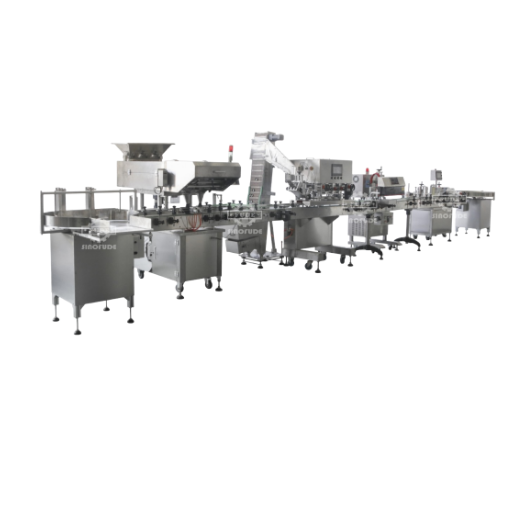
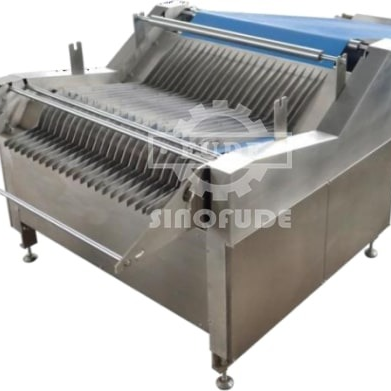
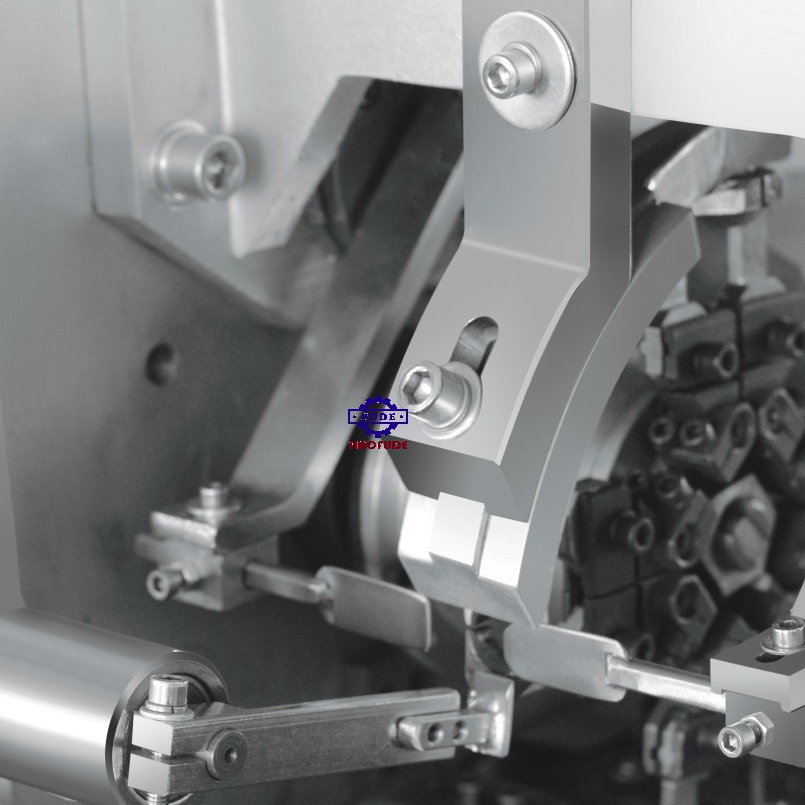
Engineer-reviewed quotation within 24 hours on business days
About 60 days of production after drawing approval
Pack lengths from 12 mm to 400 mm across listed flow wrappers
12-month warranty after installation
SINOFUDE Packaging Equipment at a Glance
The main sourcing risk is choosing a packaging route before the product and acceptance conditions are fixed. SINOFUDE ties the quotation to the agreed pack, product trial and factory acceptance test, then puts the commercial sequence in writing.
Flow wrap, weigh and bag, count and bottle, or weigh and fill rigid containers.
Production starts after the 7-day technical briefing and drawing confirmation; factory acceptance testing follows the build.
40% deposit with the order and 60% against a copy of the bill of lading.
See the same model running in production with a visit booked 7 working days ahead.
Starts when installation is complete and covers hardware quality faults with free replacement parts.
Ordered spares are picked, checked and dispatched after order confirmation; a wear-part list ships with the machine.
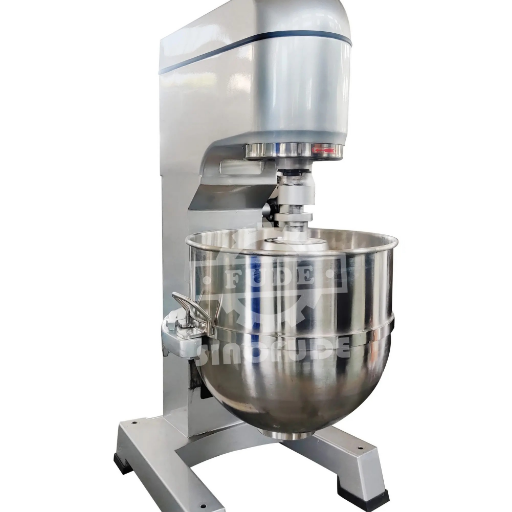
Candy Packaging Machine Range: Four Automatic Packaging Systems
A candy packing machine fails commercially when its feeder, dosing method and pack format fight the product. Sticky surfaces bridge in a feed path, fragile coatings scuff under uncontrolled contact, and a line with no accepted-output definition can miss its production target even when every catalog rate looks adequate.
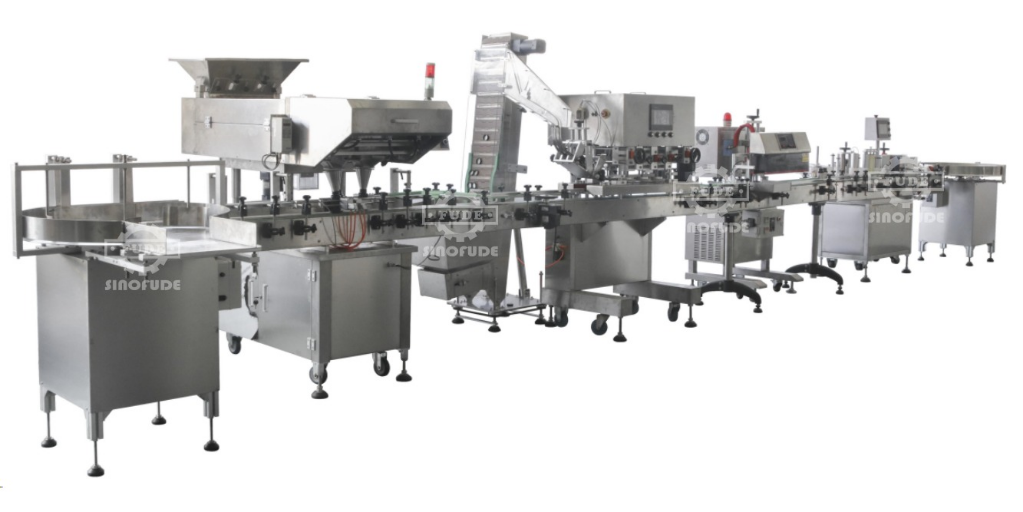
| Route | Best fit | First model window to check | Acceptance focus |
|---|---|---|---|
| Horizontal flow wrapper | Discrete pieces in pillow packs | CP-Z1200: 12–50 × 12–30 × 5–18 mm | Feed spacing, seal quality and accepted packs/min |
| VFFS or premade pouch bagger | Gummies and wrapped candy sold by weight | SF-2.0T / SF-3.0T: 100–1,500 g | Weight error, product flow and bag opening |
| Electronic counter and bottle line | Fixed piece counts in bottles | Product size 3–25 mm; 15–9,999 pieces | Singulation, count check and container handling |
| Rigid-container weigh-and-fill line | Popping boba and other heavy fills | 1–3 kg buckets at 20–30 buckets/min | Weighing, liquid fill, seal, cap and label sequence |
The CP-ZL900, CP-ZL600 and CP-XPL660/ZDP350 combine automatic feeding with horizontal flow wrapping for discrete confectionery. Their rated ranges cover one shared package-specification window and different pace windows; the right call starts with stable singulation and the real pack dimensions, because a fast sealing jaw does not correct irregular product spacing.
CP-ZL900
100–1,000
bags/min rated range, with a 20–150 mm pack length and a 10–60 mm width.
CP-ZL600
100–800
bags/min rated range across the same documented 20–150 × 10–60 × 5–30 mm pack window.
CP-XPL660/ZDP350
100–660
bags/min, with heat-seal or cold-seal film and an inclined-plate handling route.
For smaller packs, CP-Z1200 is rated at 100–1,200 bags/min within a 12–50 × 12–30 × 5–18 mm package-specification window. CP-QB550 combines cut-and-wrap pillow packaging for bubble gum, milk candy and nougat, while CP-Z400 runs 30–140 packs/min with a single knife on 170–400 mm bags and 80–400 bags/min with four knives on 55–110 mm bags up to 50 mm wide.
Product-temperature control matters. Chocolate and coated pieces can soften or smear before the seal is made. CP-ZL900 uses water-circulation cooling in the feed for these products, so SINOFUDE engineers include product temperature and surface condition in the trial brief.
Candy Types We Pack, from Wrapped Candy to Gummies
The fastest catalog machine is not always the best choice. Product shape, surface tack, breakage risk and the way each saleable unit is defined determine whether we wrap one piece, weigh a bulk fill, count pieces or fill a rigid container.
Buyer language points to the same three decisions. The entry price matters only after the route and change parts are known. The useful comparison is cost per accepted pack, not purchase price alone. A buyer may need a fixed count rather than a weighed portion. The least expensive machine does not provide the best overall value when it creates manual feeding, crushed product or excess giveaway; the matrix below identifies the first trial route, and the signed quotation and sample run fix the final product window.
| Candy or product form | Handling issue | Measurement | Pack route | Starting machine family | Trial or window basis |
|---|---|---|---|---|---|
| Small hard candy | High piece rate and spacing | One piece per pack | Pillow wrap | CP-Z1200 | 12–50 × 12–30 × 5–18 mm package specification |
| Larger hard candy | Piece orientation | One piece per pack | Pillow wrap | CP-ZL600 / CP-ZL900 | 20–150 × 10–60 × 5–30 mm package specification |
| Lollipops | Stick orientation and product pitch | One piece | Dedicated wrapping route | Product review before model selection | Coordinate with the lollipop line |
| Already wrapped mixed candy | Irregular bulk flow | Weight or fixed count | Bag, pouch or bottle | SF weigher or electronic counter | Run a flow and singulation trial |
| Toffee and caramel pieces | Tack and deformation | One piece or weight | Pillow bag or bulk pouch | CP-Z family or SF bagger | Compare how the pieces are formed and cooled upstream |
| Bubble gum | Cut length and transfer timing | One cut piece | Pillow wrap | CP-QB550 | 100–550 bags/min rated range |
| Milk candy | Cut consistency and sealing | One cut piece | Pillow wrap | CP-QB550 | Product trial with final film |
| Nougat bars or blocks | Cut face and crumb control | One piece | Pillow wrap | CP-QB550 / CP-Z400 | Check bag length and width against the CP-Z400 knife rows: 170–400 × 35–100 mm (1 knife), 80–200 × 35–100 mm (2), 60–130 × 35–80 mm (3), 55–110 × 15–50 mm (4) |
| Chocolate blocks | Heat and surface marking | One piece | Pillow wrap | CP-ZL900 | Water-circulation cooling in the feed |
| Coated chocolate | Smearing or bloom from heat | One piece | Pillow wrap | CP-ZL900 | Trial product temperature and dwell time |
| Oiled or sugared gummies | Residue and feed distribution | Weight or count | Pouch or bottle | SF weigher or electronic counter | Compare flow stability on both routes |
| Uncoated sticky gummies | Bridging and double feeding | Weight | Bag or stand-up pouch | SF-2.0T / SF-3.0T | Weighing route is the safer first trial |
| Supplement gummies | Fixed count and moisture control | Count | Bottle with desiccant and foil seal | Electronic counting bottle line | Align the packaging record with the nutraceutical gummy line |
| Retail gummies | Piece-to-piece weight variation | Weight | Pillow, gusset or stand-up pouch | SF multihead weigher | 100–1,500 g documented fill range |
| Filled gummies | Compression and leakage risk | Weight | Premade pouch | SF bag-feeder configuration | Low-drop transfer and seal-contamination trial |
| Biscuits and energy bars | Breakage and trayless transfer | One piece | Pillow wrap | CP-Z400L5 trayless pillow-packing route | Final model and speed set after sample review |
| Popping boba | Liquid-bearing fill and closure sequence | Weight | Bucket or jar | Popping-boba packaging line | 1–3 kg at 20–30 buckets/min; connect to the popping boba machine |
Count and weight are not interchangeable. A fixed retail count favors singulation and electronic counting; a declared net weight favors a multihead weigher and a package-verification plan. Sticky product that cannot separate cleanly is the wrong choice for a photoelectric counter even when its nominal size fits.
Consult Our EngineersPackaging Options: Films, Bag and Pouch Styles, Containers
A poor material-to-machine match may cause poor final seals, wrinkled film, poor bag opening and other process problems. Final-package performance is assessed with the final film or container at the factory acceptance test, not against sealing temperature alone.
Film Width and Roll Envelope
The CP-Z400, CP-Z1200, CP-QB550, CP-ZL600 and CP-ZL900 accept a film roll up to 390 mm in diameter and 250 mm in width. CP-XPL660/ZDP350 uses a roll up to 390 mm in diameter and 200 mm in width, so the final bag width and print repeat must be checked before artwork release.
| Pack option | Machine route | Critical check | What we fix in the quotation |
|---|---|---|---|
| Pillow bag | Horizontal wrapper or VFFS | Piece pitch, bag width and end-seal clearance | Product window, film width and rated pace |
| Gusset or hanging-hole bag | SF film-drawing bagger | Former and change-part set | Finished dimensions and bag-making hardware |
| Stand-up pouch | SF premade-bag feeder | Opening reliability and zipper clearance | Pouch sample, gripper range and fill sequence |
| Bottle | Counter, capper, induction sealer and labeler | Bottle stability, neck, cap and label panel | Container drawing and line interfaces |
| Bucket or jar | Weigh-and-fill rigid-container line | Fill splash, film seal and cap location | Container diameter, fill mass and closure recipe |
| Stick packs or sachet | Separate dosing and sealing assessment | Piece singulation, lane loading and product damage | Scope only after sample and target stick length review |
Use of a stainless frame or thicker laminate may give a false sense of security about hygiene and shelf life; the real trade-off includes cleanability, seal contamination, moisture transmission, product residue and changeover access, and we document the selected material, cleaning points and the final packaging specification.
Packaging Machine Specifications and High-Speed Ranges by Model
Catalog speed is a shortlist input, not a promise of sustained accepted output. The structural reason is simple: feed stability, seal dwell, product rejection, upstream starvation and downstream blockage can reduce the number of saleable packs even while the machine itself cycles at its rated rate.
Acceptance rule.
The following first-party model ranges build the initial equipment shortlist. The accepted rate agreed for your own product and film is verified at the factory acceptance test before shipment, with the agreed run duration, reject definition and stop boundary written into the protocol.
| Model | Type | Rated speed | Catalog package-specification, product or container window | Reference inches | Film / container | Power | Envelope / weight |
|---|---|---|---|---|---|---|---|
| CP-ZL900 | Automatic feed flow wrapper | 100–1,000 bags/min | 20–150 L × 10–60 W × 5–30 H mm | 0.79–5.91 × 0.39–2.36 × 0.20–1.18 in | Roll ≤390 dia × 250 mm wide | 9.6 kW; 380 V, 50 Hz | 8,700 × 1,000 × 1,700 mm; 2,150 kg |
| CP-ZL600 | Automatic feed flow wrapper | 100–800 bags/min | 20–150 L × 10–60 W × 5–30 H mm | 0.79–5.91 × 0.39–2.36 × 0.20–1.18 in | Roll ≤390 dia × 250 mm wide | 9.6 kW; 380 V, 50 Hz | 8,180 × 900 × 1,600 mm; 1,650 kg |
| CP-XPL660/ZDP350 | Inclined-plate flow wrapper | 100–660 bags/min | 20–150 L × 10–60 W × 5–30 H mm | 0.79–5.91 × 0.39–2.36 × 0.20–1.18 in | Heat/cold seal; roll ≤390 dia × 200 mm | 7 kW; 380 V, 50 Hz | 5,300 × 1,403 × 1,600 mm; 1,550 kg |
| CP-Z1200 | High-speed flow wrapper | 100–1,200 bags/min | 12–50 L × 12–30 W × 5–18 H mm | 0.47–1.97 × 0.47–1.18 × 0.20–0.71 in | Roll ≤390 dia × 250 mm wide | 4 kW | Confirmed on layout drawing |
| CP-QB550 | Cut-and-wrap pillow packer | 100–550 bags/min | Bubble gum, milk candy and nougat samples | Set from approved sample | Heat-sealable film | 5.2 kW | Confirmed on layout drawing |
| CP-Z400 | One- to four-knife flow wrapper | 30–140 packs/min (1 knife); 80–290 bags/min (2); 80–350 (3); 80–400 (4) | Bag L×W×H: 170-400×35-100 (1); 80-200×35-100 (2); 60-130×35-80 (3) | 6.69-15.75×1.38-3.94 in (1 knife ref.) | Roll ≤390 dia × 250 mm wide | 3.0 kW | Confirmed on layout drawing |
| SF-2.0T | Multihead weigher + VFFS/pouch filler | 10–45 bags/min | 100–1,500 g; 100–400 L × 80–250 W mm | 3.94–15.75 × 3.15–9.84 in | OPP/CPP, OPP/PE, PET/PE, PE | Confirmed per configuration | Confirmed on layout drawing |
| SF-3.0T | Multihead weigher + VFFS/pouch filler | 20–70 bags/min | 100–1,500 g; 100–480 L × 80–350 W mm | 3.94–18.90 × 3.15–13.78 in | OPP/CPP, OPP/PE, PET/PE, PE | Confirmed per configuration | Confirmed on layout drawing |
| Electronic counter | 8-channel counter; 12/16/32 tracks optional | Up to 4,000 pieces/min, subject to loading | 3–25 mm product; 15–9,999 pieces | 0.12–0.98 in product | Bottle or agreed discharge | 1.1 kW | Integrated to bottle-line layout |
| Bottle feeder | Rotary unscrambling/feed table; 304 SS | Up to 150 bottles/min | Φ20–80 × 30–180 H mm | Φ0.79–3.15 × 1.18–7.09 H in | Round bottles | 500 W | 1,200 × 1,140 × 1,100 mm; 110 kg |
| Round-bottle labeler | Vertical label applicator | 30–150 bottles/min | Φ30–80 mm bottle; 15–120 H × 20–200 L mm label | Φ1.18–3.15 in; label 0.59–4.72 × 0.79–7.87 in | Round bottle | 1,200 W | 2,000 × 1,200 × 1,500 mm |
| Popping-boba line | Weigh, liquid fill, seal, cap and label | 20–30 buckets/min | 1–3 kg; Φ30–120 mm at capper | 2.2–6.6 lb; Φ1.18–4.72 in | Bucket or jar; SUS304 frame | Confirmed per layout | Confirmed on layout drawing |
How We Integrate a Candy Packaging System into Your Production Line
One machine cannot be judged in isolation when upstream flow, buffer capacity, inspection, cartoning and downstream labeling determine usable output. A shared layout closes those interfaces so the complete packaging solution does not inherit a conveyor bottleneck or unmatched control signal during commissioning.
-
01Send the Piece–Pack–Pace brief with the product, packaging format, accepted-output target, local utilities and available floor space.
-
02Receive the route and first layout identifying the wrapper, weigher, counter or rigid-container system and its included interfaces.
-
03See the same model running in production with 7 working days' advance booking.
-
04Approve the interface drawing after a 7-day technical briefing closes elevations, conveyor handoffs, power and control responsibilities.
-
05We build the equipment in about 60 days of production after drawing approval, then run FAT using the agreed product and packaging material against the written acceptance protocol.
-
06We ship, install and support the line under the manuals, training scope, installation terms and warranty start in the signed quotation, with the wear-part list supplied with the machine.
| Design Choice | Why it changes line economics | Our Engineering Action |
|---|---|---|
| Pack dimensions near the middle of a model's package-specification window | Leaves adjustment margin and reduces an over-constrained setup. | We compare at least two candidate windows when the sample sits near a limit. |
| Count for fixed-piece sale; weigh for mass sale | Avoids forcing variable-weight pieces through the wrong measurement method. | We trial count stability and weight stability before choosing the route. |
| Final film or container at FAT | Exposes seal, opening and transport problems before shipment. | We bind the approved packaging material to the acceptance recipe. |
| One coordinated line layout | Reduces interface ambiguity between production and packaging equipment. | We align the packer with SINOFUDE turnkey projects and the upstream output basis. |
Quality, Hygiene and Warranty Terms for Packaging Equipment
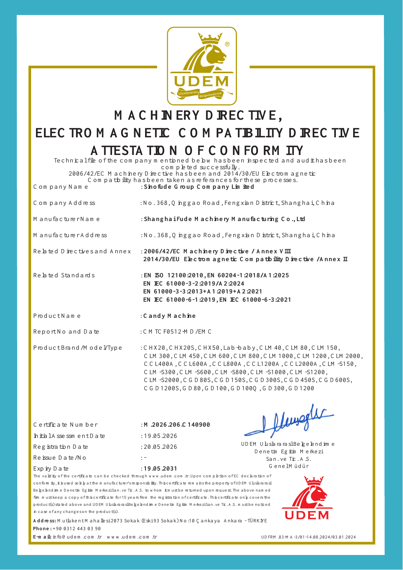
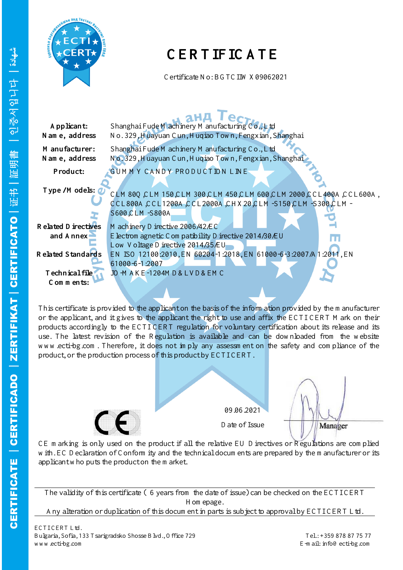
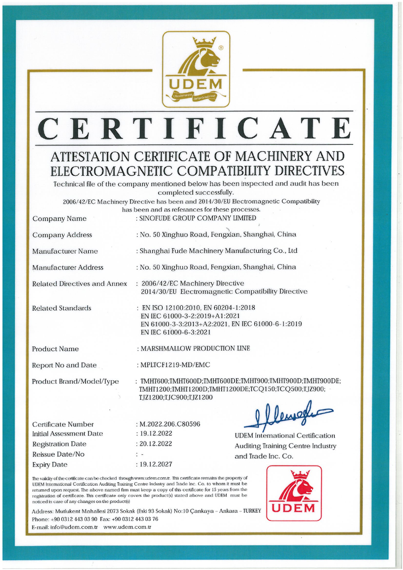
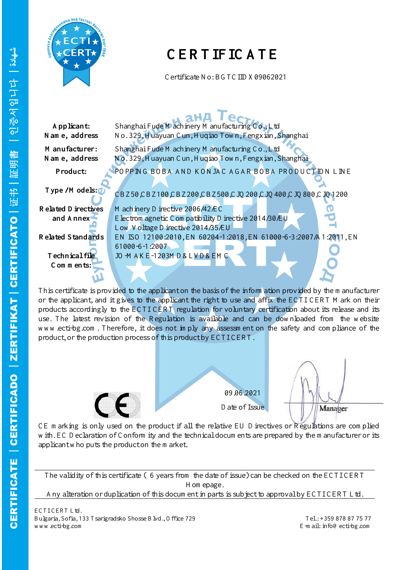
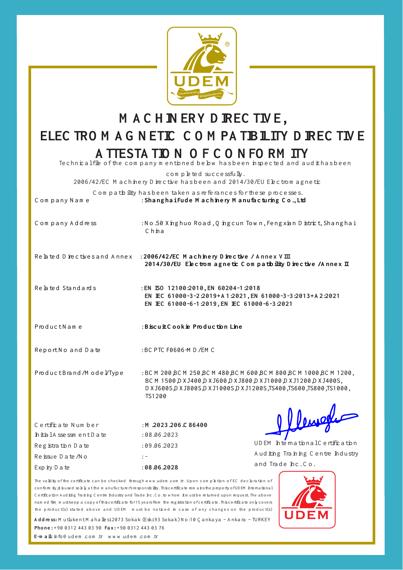
Food-contact material, cleanability, machine guarding and finished-package verification solve different risks. They are not interchangeable: 304 stainless steel does not by itself prevent residue traps, a counter accuracy figure does not release finished packages, and a quality-management certificate does not approve an individual machine.
Product-Contact Construction
CP-ZL900 product-contact surfaces are 304 stainless steel. The SF bagging frame, bottle feeder and popping-boba line also use documented 304 or SUS304 construction in their stated scope.
Cleaning and Changeover
We review access, removable contact parts, seams, residue collection and the change sequence against the actual product. For U.S. food plants, 21 CFR 117.40 is the relevant equipment-cleanability and contamination-control reference, not a machine approval mark.
Guarding and Servicing
The SF bagging line stops automatically when a door is opened. The site risk assessment must also address point-of-operation guarding and hazardous-energy control during service, including the principles in OSHA 29 CFR 1910.212 and 1910.147 where they apply.
Finished-Pack Release
We separate the machine's dosing or counting result from the buyer's release plan. Net-content checks, package-count sampling, seal inspection and label controls belong in the agreed quality specification.
“The acceptance rate needs a product, a pack, a run time and a reject definition. A catalog maximum without those four items is not a production promise.”
Quality-System and Shipping Documents
SINOFUDE's quality-management system is certified to ISO 9001 under certificate 16426Q00865R001, issued by Huazhong International Certification and Inspection Group and valid from 2026-05-07 to 2029-05-06. The certificate scope states research, development and production of candy, bakery, chocolate and popping-boba production equipment.
Documents supplied with the agreed order.
The package includes an operation manual and technical information covering structure, principle, operation, maintenance and repair. For the documented 304 stainless steel, an EN 10204 3.1 steel-mill material certificate is supplied; this mill certificate is not a third-party food-contact test report.
Warranty, Service and Spare Parts
-
Warranty12 months from completed installation, covering hardware quality faults with free replacement parts; misuse, wear parts and process or recipe issues are excluded.
-
Remote support7×24 online technical support; site visits depend on visa and scheduling.
-
Spare partspicked, checked and dispatched within 2 working days of order confirmation, with a wear-part list supplied with the machine.
-
Export installationa paid service using 1–2 technicians at USD 200 per technician per day; the buyer covers return flights, local transport and accommodation.
When a Different Packaging Route Fits Better
Not all packaging decisions should require full automation. A better alternative in this case may protect the product and business case instead of implementing full automation.
Route Diagnostics
Very Low Volume
A simple bag, impulse sealer or band sealer can be the better first stage when labor and accepted-pack cost do not justify a fully automatic line. CP-Z400 with a single knife on 170–400 mm bags, or SF-2.0T, becomes relevant when repeat volume supports automation.
Twist or Fold Wrapping
Single-piece twist and fold packs belong on a dedicated wrapping route rather than a pillow bagger. SINOFUDE's CP-SNZ800/S800/D800 twist packaging machines cover chocolate, nougat, hard candy and milk candy when the visual wrap style is part of the product.
Sticky Product That Will Not Singulate
A photoelectric counter is the wrong choice when uncoated gummies bridge or travel in doubles. An SF weigh-and-bag route, or an oiling or sugaring step after the gummy depositor system, is the stronger trial path.
Powder, Liquid or Oversize Packs
Powder sachet packaging and free-flowing granule products call for an auger filler or dedicated doser; liquid sachet packs use a pump or piston filler. The filling and sealing sequence is a separate solution, while packs longer than the documented 150 mm window on the CP-ZL and CP-XPL flow wrappers are checked against the CP-Z400 bag-length table, which runs up to 400 mm with a single knife, before moving to a larger bag, tray or cartoning route.
Multi-lane stick packs need a dedicated product review.
Discrete gummies require controlled singulation, counting or grouping and lane-by-lane dispensing. Stick packs are scoped only after the product and target stick length are reviewed; no lane count or speed is assumed on this page.
Packaging Engineering & Selection Tools
Frequently Asked Questions on Packaging Hard Candy, Gummies and Chocolate
Yes. Whole pieces can be flow wrapped, weighed or counted when their geometry and surface allow stable feeding; already wrapped candy can be weighed into bags or counted into a secondary pack. We use a product trial to select the feeder and measurement route.
Count when the retail unit promises a fixed number and the gummies can singulate cleanly. Weigh when the pack is sold by mass, piece weights vary or tack makes counting unstable; the SF systems document ±1% weighing error depending on the material.
They can be configured after a handling trial. Low-drop transfers, controlled vibration, cooled feeding or a weigh route reduce crushing, smearing and bridging, but the final answer depends on the supplied product at its real packing temperature.
Pillow bags, gusset bags, hanging-hole bags, string bags, premade stand-up pouches and bottles are documented routes. Bucket and jar filling is available for popping boba and other agreed rigid-container applications.
The line can combine counting, desiccant insertion, capping, aluminium-foil induction sealing and labeling. The brand owner's quality team still defines count sampling, net-content checks, closure inspection and label release; for dietary-supplement gummies, the manufacturer must also establish packaging and label specifications under 21 CFR Part 111 Subpart E.
It can be assessed, but ordinary stick pack machine capability is not a substitute for discrete-piece singulation. The engineering review must define how pieces are counted or grouped, loaded into each lane and checked without damage before a multilane format is quoted.
Documented rated ranges run from 10–45 bags/min on the SF-2.0T weigh-and-bag route and 20–30 buckets/min on the popping-boba bucket line, through 30–140 packs/min on a single-knife CP-Z400 up to 100–1,200 bags/min for CP-Z1200, while the electronic counter is rated up to 4,000 pieces/min, subject to product size and loading. We confirm accepted output with the actual product, packaging material and FAT protocol.
Yes, when the interface is defined. We need the upstream output basis, discharge elevation, conveyor direction, buffer logic, sensor and control signals, downstream inspection or cartoning equipment, local power and available footprint; the quotation identifies servo and non-servo axes where they affect the interface.
CP-Z400 in a single-knife setup (30–140 packs/min on 170–400 mm bags) or the SF-2.0T weigh-and-bag route (10–45 bags/min) can be shortlisted for smaller automated requirements. At very low volume, a manual fill with an impulse or band sealer may be financially stronger until repeat demand supports full automation.
Price follows the machine family, speed range, dosing method, package, film or container, change parts, line interfaces and installation scope. Send the Piece–Pack–Pace brief for a scoped quotation; we do not use a public price band that hides these differences.
The agreed order includes an operation manual and technical documentation for structure, principle, operation, maintenance and repair. The documented 304 stainless steel is supplied with an EN 10204 3.1 steel-mill material certificate.
Yes. Buyers can see the same model running in production with a visit booked 7 working days ahead, and the ordered machine is tested against the agreed product and packaging material at FAT before shipment.



