
Get in Touch with SINOFUDE Company

ISO Standard
Popping Boba Machines by Capacity
20–500 kg/h published nominal range
- Five model references
- Accepted-output qualification
- Forming-to-packaging scope review
Popping boba machines by capacity should be compared on accepted product, not on a model code alone. SINOFUDE helps industrial bubble tea, beverage and dessert producers match a popping boba machine to recipe, pearl diameter, shift plan, utilities and the downstream rate that must leave the line.
Send us the accepted kg/h and the package format. We will prepare a shortlist of models and identify the probable bottleneck and define the information needed for a written configuration review.
Request a Capacity & Configuration Review
The most useful first enquiry includes the recipe status, target diameter, accepted-quality criteria, hours per shift and required delivery scope.
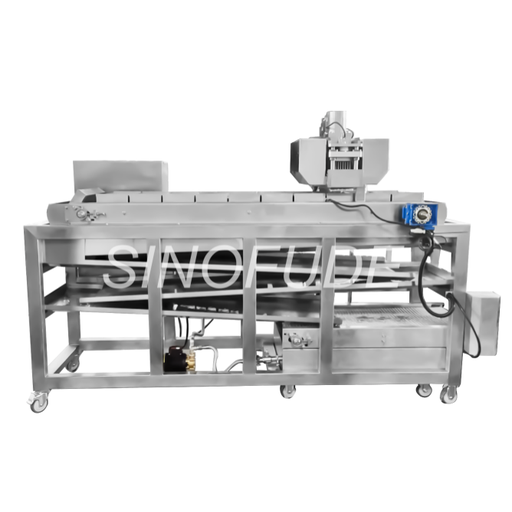
01
Published Model Range
CBZ50A, CBZ50, CBZ100, CBZ200 and CBZ500
02
Published Nominal Span
20–500 kg/h across reviewed model rows
03
CBZ50A Diameter Reference
5–12 mm with 30 nozzles
04
Production & Selection Output
Minimum order: 1 set
Production schedule: 60 days
Capacity card, model shortlist and bottleneck check
Production schedule: 60 days
Capacity card, model shortlist and bottleneck check
Capacity Matching Starts With Accepted Output
A model’s nominal kg/h is an upstream rate, not accepted finished output. The purchasing decision depends on how many kilograms meet the agreed bead size, membrane integrity, fill, texture and appearance criteria at the defined measurement point. We separate nominal forming output from accepted product and from sealed and preserved product.
Accepted output = nominal rate × scheduled time × availability × first-pass accepted yield. Record the result at the same line boundary for every candidate. If one quotation stops at the depositor and another includes rinsing and packing, the numbers are not comparable.
“Capacity is comparable only after the recipe, diameter, accepted-quality criteria, test window and measurement point are fixed.” SINOFUDE Engineering Team
These model bands are not interchangeable. A model code is not a capacity contract; the choice is between the installed surplus and the obtainable hours, recipe range and the downstream flow that the project limit can sustain. The right answer is the smallest configuration that meets the accepted output with the operating margin.
Forming rate
The amount deposited and formed before rejects, holding time and downtime are applied. It is useful for sizing the forming section, not for forecasting cases shipped.
Accepted output
Product that passes the written quality limits over the agreed test window. This is the central metric for comparing the making machine under your reference recipe, because SINOFUDE quantifies nominal kg/h, usable hours, yield and downstream limits in one capacity qualification card; the trade-off is measurable, and a model name is not a substitute for that evidence.
Packaged output
Accepted product that the preservation and packing machine stages can close in the intended bucket, cup or pouch. The slowest stage sets the line ceiling.
Decision roles covered
- Production engineering: recipe, diameter, utilities, shift pattern and changeover.
- Quality: sampling method, reject definitions, sanitation release and preservation process.
- Procurement: model, scope, MOQ, production schedule and quotation exclusions.
- Project management: scale-up path, floor space, staffing and bottleneck risk.
Product Families and Recipe Boundaries
Popping boba production uses spherification to form juice containing spheres with a gel membrane. The formulation and process window govern viscosity, gelation, leakage, bite and survival through handling. Product-family names are not interchangeable, so we qualify the product before selecting boba making machines.
Popping boba and popping pearls
Fruit juice or another flavored filling is enclosed by a membrane. Define filling viscosity, sodium alginate system, calcium exposure, diameter, target juice burst and the acceptable number of leaking spheres.
Tapioca and cassava products
Chewy tapioca pearls and a cassava ball are dough-based products. An automatic tapioca pearl making machine, tea pearl maker or ball maker is a different equipment family and should not be routed to the popping boba depositor.
Konjac and crystal balls
A konjac ball or jelly ball can require a different forming and thermal route. Confirm whether the target is liquid-filled popping boba, solid jelly, crystal boba or another nutraceutical or confectionery sphere.
Gummy and candy products
A gummy or chewy candy deposit can resemble ball making, but a candy machine is not automatically a popping boba making machine. Share the actual recipe and acceptance texture instead of selecting from the product name.
Popping boba is used in bubble tea, milk tea, frozen yogurt, ice creams, smoothies and plated dessert products. Each application changes the handling, storage and package compatibility questions that belong in the review.
Production Modules and Line-Scope Boundaries
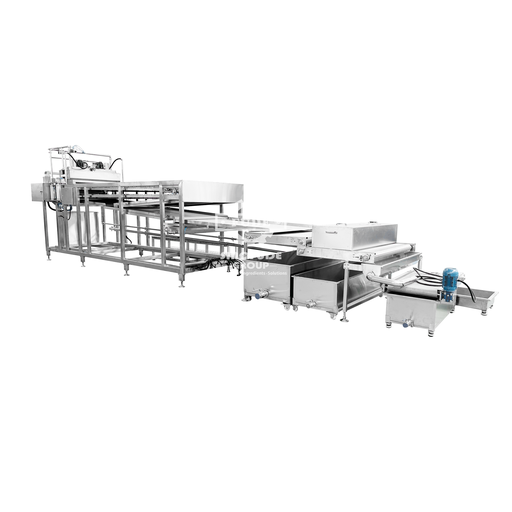
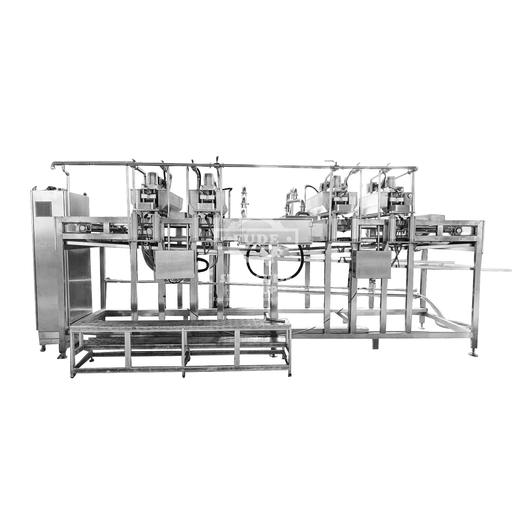
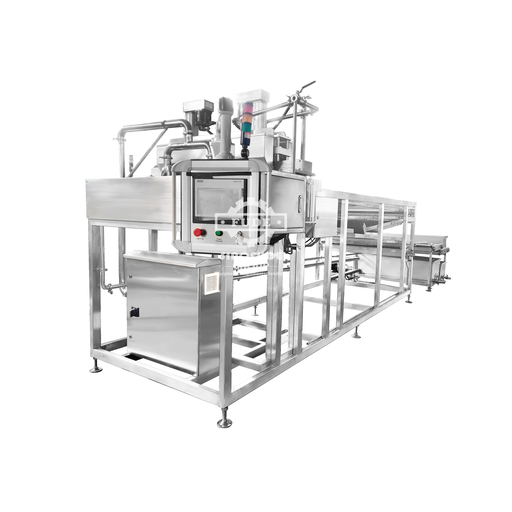
A complete popping boba production line can include ingredient preparation, automatic cooking, solution holding, depositing and forming, rinsing or stabilization, transfer, preservation and packaging. The quoted boundary must name which modules, controls, tanks, pumps and connections are included because an omitted holding or packing stage creates a hidden capacity gap.
| Module | Input to confirm | Output to accept | Capacity risk |
|---|---|---|---|
| Recipe preparation and cooking | Batch size, viscosity window, temperature profile | Stable feed condition at the hopper | Batch replenishment can starve the depositor |
| Depositing and forming | Nozzle set, drop size, recipe, bath condition | Formed spheres per written size and shape criteria | Nominal kg/h is not accepted yield |
| Rinsing and stabilization | Residence time, agitation, calcium carryover | Membrane strength and clean surface | Insufficient residence time creates leakage later |
| Holding and transfer | Buffer volume, pump type, maximum hold time | Undamaged spheres delivered at a steady rate | Pumping and accumulation can damage product |
| Preservation | Target market, product classification, pH, water activity, storage plan | Validated product and process combination | A generic machine cannot define the food process |
| Packaging | Container, fill weight, syrup ratio, closure and coding | Closed packs at the specified weight and seal criteria | The packing rate may be below the forming rate |
Construction, cleanability, and contact with product are part of the line specification. Stainless steel grade, weld finish, drainability, access, cleaning method and chemical compatibility should be confirmed for every wetted module instead of being reduced to a generic “food grade” phrase.
Published SINOFUDE Capacity References
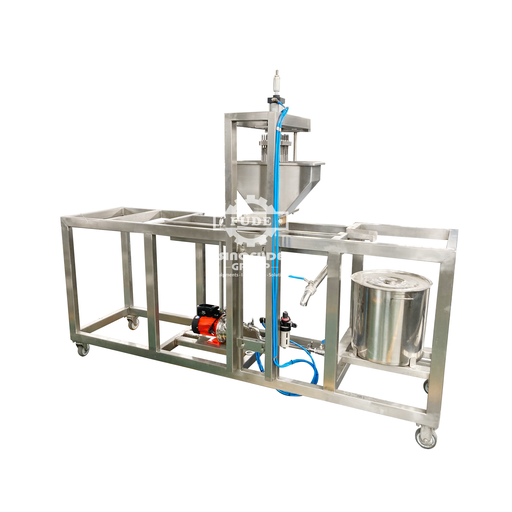
The reviewed first-party published model references are shown below. They can help identify the capacity band, which should then be run against one capacity qualification card. CBZ50A and CBZ50 remain separate configurations even where their published output overlaps.
| Reference | Published figure | Configuration context | RFQ action |
|---|---|---|---|
| CBZ50A | 50 kg/h | 5–12 mm; 30 nozzles | Confirm recipe, bead diameter and accepted-output test |
| CBZ50A utilities | 61 kW electric or 30 kW steam | Alternative heating context on the reviewed product page | Confirm available supply and selected heating route |
| CBZ50 | 20–50 kg/h | Published within a shared line table | Request its own configuration and utility sheet |
| CBZ100 | 50–100 kg/h | Published nominal range | Confirm nozzle count, diameter and line boundary |
| CBZ200 | 200–300 kg/h | Published nominal range | Confirm upstream cooking and downstream holding rates |
| CBZ500 | 400–500 kg/h | Published nominal range | Confirm preservation and packaging capacity |
| Separate bucket packing module | 1–3 kg; ±1%; 20–30 buckets/min | Published packing-machine figures, not depositor output | Normalize to product kg/h using the selected fill weight |
Product Safety and Hygienic Acceptance
In the case of food safety, the package, process, and facility should be analyzed together. When boundaries are crossed between these elements, the risk of an improper process increases. 21 CFR 117.130 ties hazard analysis to formulation, equipment and facility design, processing, packaging, storage, distribution, intended use and sanitation. SINOFUDE bases its configuration review on these defined inputs; a machine label does not replace a facility assessment.
Food-process inputs to resolve before line release
- Classify the product and distribution route. Record whether the product is shelf-stable, refrigerated or otherwise controlled, together with the intended container and closure.
- Define formulation limits. Record finished equilibrium pH, water activity where relevant, preservatives and the reference recipe’s variability.
- Validate preservation. Thermal, pressure or another preservation route must be compatible with the membrane, filling, package and sensory shelf-life target.
- Release sanitation. Define access, disassembly, CIP or COP sequence, time, temperature, chemical concentration, rinse endpoint and pre-operational inspection.
Acidified and low-acid canned-food requirements are not universal to every popping boba product. Container type, pH, water activity, thermal processing and refrigeration status determine the applicable pathway. We collect those inputs before treating preservation equipment as part of the same production system.
Hygienic equipment acceptance
- Accessible product-contact areas for inspection, cleaning and sanitation.
- Documented materials, weld condition, drainage and gasket compatibility for the selected chemistry.
- Recorded cleaning parameters and defined release criteria after a product or flavor change.
- No inaccessible retention points where syrup, gel or cleaning chemical can accumulate.
Capacity Qualification and Factory Testing
Send the operating target. Provide accepted kg/h, shift pattern, package format and project location.
Lock the reference product. Provide the recipe status, filling viscosity, diameter range and quality limits.
Map the complete flow. We mark cooking, forming, rinsing, holding, preservation and packaging as included, excluded or buyer-supplied.
Normalize each rate. We compare candidate modules at the same recipe, diameter, measurement point and time window.
Write the acceptance card. The parties set test duration, sampling, rejects, downtime and accepted-output calculation.
Release the configuration. The quotation fixes the equipment boundary, utilities, documentation, FAT, delivery and commissioning scope.
Capacity Qualification Card
| Field | Value to lock | Evidence at test |
|---|---|---|
| Reference recipe | Ingredient list, batch method, viscosity window | Batch record and feed condition |
| Product geometry | Target diameter and allowed size band | Sampling plan and measurement record |
| Membrane quality | Leak, breakage, shape and texture limits | Accepted/rejected sample counts |
| Test window | Start rule, stable-run duration and stop rule | Timestamped production log |
| Availability | Included and excluded downtime | Stop log with reason codes |
| Measurement boundary | After forming, stabilization, preservation or packing | Weighed accepted output at the named point |
| Sanitation/changeover | Product sequence and release rule | Recorded time and inspection result |
Configurations That Need a Different Route
The lowest capacity machine is not automatically the safest first choice and the largest model is not automatically the most scalable. The highest published number is not always the right answer. Match the configuration to the product process risk and the facility operating window.
Baked-product projects need a separate equipment route. Compare the wafer production line or the cupcake and Swiss roll production line without transferring their specifications to popping boba production.
| Situation | Why it works against the selection | Better route |
|---|---|---|
| Unstable recipe or unknown viscosity | Nozzle and bath behavior cannot be qualified from kg/h alone | Run product development or a controlled recipe trial before final sizing |
| Packaging rate below forming rate | Work-in-process accumulates and handling damage can rise | Resize the packer, add a qualified buffer or lower upstream rate |
| Several diameters and frequent flavor changes | Changeover and sanitation reduce usable hours | Model the actual campaign sequence and use accepted kg/shift |
| Shelf-life process not established | Equipment selection cannot substitute for a validated product and package process | Define preservation, container, storage and target-market requirements first |
| Solid or chewy pearl product | The material family may not use liquid-core spherification | Route to the appropriate tapioca, konjac, jelly or gummy machinery family |
Popping Boba Machine Capacity Planning & Optimization Tools
INTERACTIVE
Capacity-to-Model Shortlist
Use target accepted output to find the smallest published SINOFUDE capacity band worth qualifying. The result is a starting point for recipe and line-scope review.
INTERACTIVEAccepted-Output Calculator
Turn a nominal kg/h row into a testable planning number by applying scheduled hours, availability and first-pass accepted yield.
INTERACTIVELine Bottleneck Checker
The slowest qualified stage sets the planning ceiling. Compare rates at the same accepted-output basis before choosing a depositor.
00
Popping Boba Machine FAQs
These answers apply the same product, process and facility qualification boundaries used above.
It is a published nominal mass rate for the stated equipment context. For purchasing, turn it into accepted kg/h or kg/shift by defining recipe, diameter, availability, first-pass accepted yield and the line point where product is weighed.
No comparison should merge them, because CBZ50A and CBZ50 are separate configurations rather than alternate labels for one machine. CBZ50A is published at 50 kg/h with 5–12 mm and 30 nozzles, while CBZ50 appears as a separate 20–50 kg/h row that needs its own nozzle, diameter and scope confirmation. Request a configuration sheet for each before making a commercial comparison.
Popping boba, chewy tapioca pearls, konjac ball, jelly and gummy products are different material and process families. A bubble tea machine or tea making machine used at a tea shop is also different from industrial boba manufacturing machinery.
Only when every qualified downstream stage supports that accepted rate over the same stable-run window and acceptance definition. Rinsing, stabilization, preservation and packaging can each set a lower ceiling through dwell time, handling losses, container size or closure speed. Use the line bottleneck checker before comparing quotations, and ask the supplier to state the measurement point, reject rule and test duration for packaged output.
Provide target accepted kg/h, hours per shift, reference recipe, 5–12 mm or other diameter range, package format, target market, utilities and included line modules. These inputs distinguish production capacity from model-name matching.
Run the reference recipe for a written stable-run window, log stops, sample against size and membrane criteria, weigh accepted product at the named point and calculate availability and first-pass accepted yield. Keep reject product outside the accepted total.
Minimum order quantity is 1 set for a complete line, used here as the governed peer baseline until the quotation confirms the order scope. Production runs are scheduled at 60 days and confirmed with the quotation; transit, installation and commissioning are scoped separately, so they must be added to the site-ready project schedule rather than treated as factory production time.
The main drivers are accepted output, recipe range, heating route, tanks and transfer, controls, hygiene specification, preservation interface, packing machine, FAT material, delivery and commissioning scope. Send those inputs for a configuration-led quotation.
Name the cleaning route, disassembly or CIP/COP boundary, chemistry, temperature, time, rinse endpoint and release inspection. Include the resulting changeover time in usable shift capacity instead of treating it as full-rate production.



