
Get in Touch with SINOFUDE Company

Soft Biscuit & Cookie Line for Flexible Industrial Production
- Rotary moulding, wire-cut, depositing or sheeting
- Six BCQ reference capacity bands
- Gas, diesel or electric heating routes
- FAT scope built around the approved specification
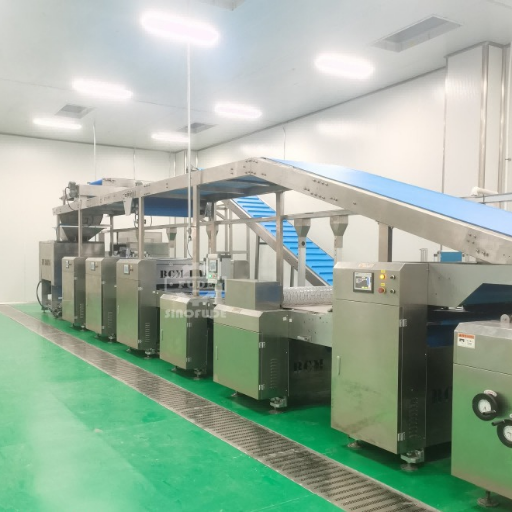
We configure a Soft Biscuit & Cookie Line according to your dough behaviour, product geometry, target saleable output, and factory conditions. Collectively, these components connect forming, tunnel ovens, cooling, product handling, and packaging to one production line, instead of each being its own purchase.
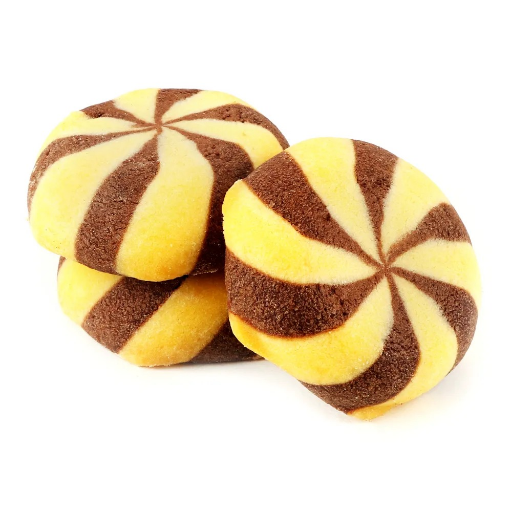
Forming Capabilities for Soft Biscuit and Cookie Products
The wrong forming route can be selected when all other variables such as dough viscosity, fat and sugar balance, inclusion size, surface detail, and the desired shape are summarized in one product label. Product samples and criteria for trials drive our short list.
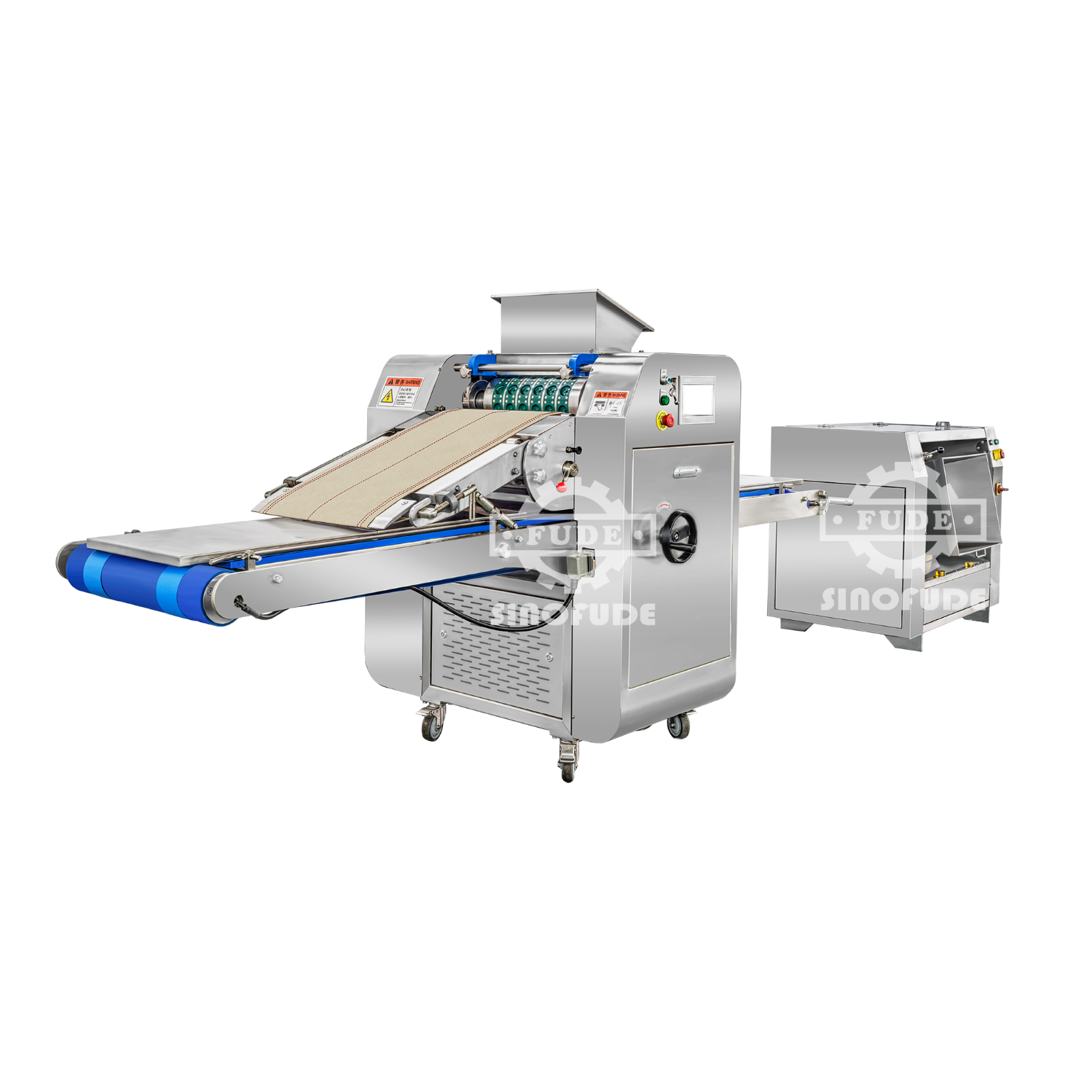
Choose this route for dough that must fill an engraved mould, release cleanly and transfer without losing edge or surface detail. Its trade-off is that product definition depends on mould filling and release behaviour.
- Mould release
- Engraved detail
- Piece-weight control
A wirecut cookie machine must coordinate dough feed, nozzle or die geometry, inclusion clearance and cut-off timing.
- Stiff dough handling
- Inclusion clearance
- Cut profile control
A depositor head suits flowable or shape-sensitive recipes when nozzle geometry, tail control and repeatable dosing define the finished product.
- Viscosity window
- Nozzle selection
- Deposit repeatability
Sheeting and cutting depend on a stable dough sheet, controlled thickness, clean release and a cutter matched to the product outline.
- Gauge control
- Sheet transfer
- Cutter release
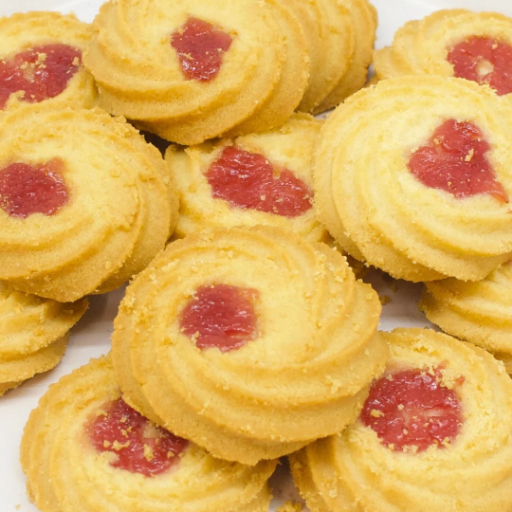
Screen the route before the line
- Describe the dough at mixing, hopper and forming temperatures.
- Record the largest inclusion and whether it deforms, smears or fractures.
- Define target dimensions, piece weight, surface detail and permissible variation.
- Separate one flagship SKU from the full changeover family.
Integrated Line Scope From Mixing To Packaging
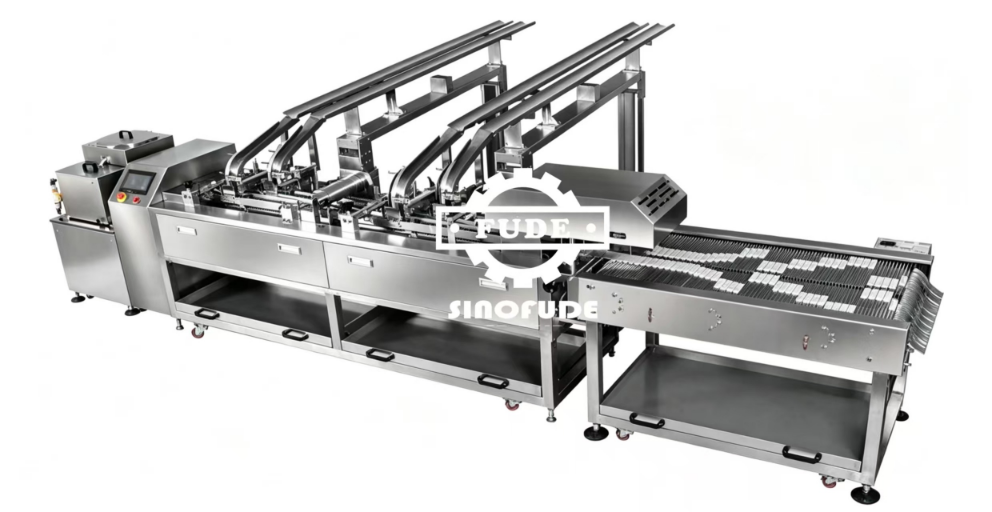
Our soft biscuit production line is configured as a cookie production line that connects mixing, feeding, forming, baking, cooling, stacking, optional filling/coating and the packaging interface. A machine list is not an acceptance plan because a modular scope can still leave transfers, controls or responsibilities undefined.
PROCESS SEQUENCE
- 1. Mixing
- 2. Feeding
- 3. Forming
- 4. Baking
- 5. Cooling
- 6. Stacking
- 7. Filling or Coating
- 8. Packaging Interface
- 9. Controls
- 10. Acceptance
Batch planning maps mixing sequence, rest time, temperature and transfer method to the former. Each handoff must protect consistency without starving or overloading the next machine.
Product tests set the oven zones, belt loading and heat-source inputs. An oven setting is a process variable, not a universal food-safety result.
Cooling time, conveyor belt speed, transfer height and stacking stability influence breakage and packing readiness. These modules must match the finished product rather than only the nominal oven discharge.
Sandwich filling or coating adds temperature, alignment, sanitation and downstream-control inputs. Project scope includes the module only when the product and packaging boundary are defined.
Project records define product orientation, spacing, queue behaviour and signal exchange at the interface. Packaging equipment itself is included only when the written scope says so.
Controls coordinate line speed, alarms, product change and equipment status across the line. Recipe names and adjustable parameters still need an agreed validation method.
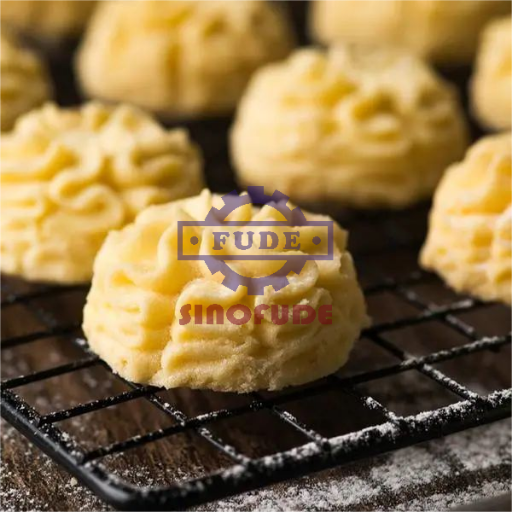
Factory, Utility and Product Validation Inputs
A production line can meet the output target, only to fail the fit when one or more of the assumptions for heating, electricity, exhaust, cooling, or access were made. For this assessment, we consider the plant, the cookie making machine and the inputs to the product in their entirety.
| Input group | What we need | What the input controls |
|---|---|---|
| Dough and raw materials | Recipe range, mixing method, temperature, inclusions and handling limits | Former type, hopper and feed behaviour, tooling and cleaning plan |
| Finished product | Shape, thickness, weight, texture, colour, moisture target and acceptable variation | Forming setup, baking profile, cooling and quality checks |
| Heating route | Available gas, diesel or electric supply and local engineering constraints | Oven configuration, connections, exhaust and controls |
| Electrical supply | Voltage, phase, frequency, connected-load review and panel requirements | Motor, heater, control and protection design |
| Factory layout | Verified length, width, clear height, columns, doors, access and service zones | Line arrangement, installation path and maintenance access |
| Cooling environment | Ambient conditions, available length and product temperature before packing | Cooling residence time, conveyor arrangement and pack readiness |
| Hygiene and allergens | Product families, allergen matrix, cleaning method and changeover acceptance | Access, cleanability, sequence and validation responsibilities |
| Downstream interface | Stacking pattern, filling/coating scope, wrapper rate and signal requirements | Accumulation, synchronization and true saleable output |
BCQ Reference Configurations and Production Envelope
BCQ 250 starts at up to 50 kg/h; the ladder continues through 150, 300, 500 and 1,000 kg/h; BCQ 1500 is listed at up to 1,500 kg/h. These are reference capacities from the supplied model table, not guaranteed saleable output.
| Reference model | Listed capacity | Selection questions |
|---|---|---|
| BCQ 250 | Up to 50 kg/h | Product size, forming route, oven loading and packing method |
| BCQ 480 | Up to 150 kg/h | Dough feed stability, recipe family and cooling boundary |
| BCQ 600 | Up to 300 kg/h | Former width, heat transfer, stacking and labour allocation |
| BCQ 800 | Up to 500 kg/h | Oven zones, changeover pattern and downstream synchronization |
| BCQ 1000 | Up to 1,000 kg/h | Utility supply, line balance, quality yield and maintenance access |
| BCQ 1500 | Up to 1,500 kg/h | Multi-stage flow, cooling length, accumulation and packaging capacity |
Staffing reference
The supplied table lists four operators per shift. Actual staffing depends on automation, feeding, packing, quality checks and factory practice.
Weight reference
The table states a ±0.1 g weight-tolerance reference. Engineering review confirms the acceptance method by product, dough, forming route and test conditions.
Changeover reference
The table lists a 60-minute mould-change reference. Tooling, recipe purge, sanitation and restart approval can create separate clocks.
Baking window
The supplied table lists a 190–240 °C baking-temperature range. Product testing treats it as a starting reference and confirms the baking window using recipe, thickness, piece weight, sugar and fat content, oven loading and product-safety controls.
Saleable Output, Waste and Commercial Performance
The nameplate kg/h can overstate expected saleable output when forming, oven, cooling, stacking or packaging is the constraint. A production-envelope model separates reference capacity from available capacity, stable running speed, and good product yield, instead of transforming it into a financial return on investment.
Cleaning, recipe changes, mould changes, faults, warm-up and planned maintenance reduce scheduled running time. Record each stop separately before choosing more capacity.
Actual belt speed can fall below the reference when dough feed, oven residence, cooling or packing cannot keep pace. The constraint may sit outside the former.
Off-weight pieces, colour variation, breakage, sticking and packaging rejects reduce good output. Quality yield belongs inside the production model.
Hidden-bottleneck map
| Observed symptom | Possible constraint | Evidence to collect |
|---|---|---|
| Former pauses while dough is available | Oven loading, cooling or downstream accumulation | Timestamped stop reason and buffer condition |
| Oven runs below planned belt loading | Piece spacing, baking window or colour variation | Zone settings, belt speed and product checks |
| Good pieces break after cooling | Transfer height, product temperature or stacking pressure | Breakage count by transfer point |
| Packing rate controls the whole line | Orientation, queue logic or wrapper availability | Infeed rate, micro-stops and reject causes |
| Changeover exceeds the mould swap | Cleaning, allergen release, recipe stabilization or inspection | Separate timestamps for each changeover stage |
Financial terms will be provided only after the forming route has been confirmed along with the line boundary, oven, and heating configuration, the extent of automation, tooling, controls, and integration with the factory. The trade-off is explicit: The forming route and the line boundary will be confirmed after the other inputs have been provided within the project scope and documented.
FAT, Safety And Hygiene Evidence
FAT planning starts with the approved technical specification instead of a generic machine-running demonstration. The stated scope covers mechanical, electrical, safety and process verification, with customer-product testing conditional on samples and agreed conditions.
Food-Safety Controls
A temperature setpoint can be mistaken for a validated baking or food-safety result, creating a compliance risk because product conditions have not been proven. SINOFUDE therefore asks the food manufacturer to define monitoring and verification under its FDA 21 CFR 117.135 control plan.
Hygiene And Allergen Change
Cleaning access, residue removal, allergen sequencing and release checks must match the product family. A mechanical mould change does not include every sanitation step.
01
Mechanical verification. Confirm installed modules, direction of travel, guards, access, drive operation and change-part fit against the approved scope.
02
Electrical Verification. Review control functions, interlocks and alarms, emergency stop behaviour, and supply basis documentation.
03
Safety Verification. Record responsibility for safeguarding points of operation, nip points, conveyors, and maintenance access, prior to acceptance.
04
Process Verification. Run the agreed upon test product/material under the agreed upon conditions, and capture the evidence of acceptance in the protocol.
Project Engineering from Product Samples to Handover
We tie the project sequence to documented operating conditions and acceptance evidence.
Include the recommended recipes, sample photos, dimensions, target weight, texture, and inclusions, along with the full range of SKUs.
The team evaluates rotary moulding, wire-cut forming, depositing and sheeting against the dough and product geometry.
Our scope includes mixing, feeding, baking, cooling, optional filling or coating, handling, and packaging.
Review the electrical supply, the heat source, exhaust, access, layout, cooling, and connections downstream.
Both sides agree regarding the product, the output, the quality, the safety, the documents and FAT evidence prior to signing off.
Installation, training, commissioning support and final documentation are defined in the signed project agreement.
Changeover planning for a multi-SKU bakery
| Change element | Planning question | Acceptance evidence |
|---|---|---|
| Recipe | Can the next dough use the same feed and forming window? | Stable feed, shape and piece weight |
| Mould, die or nozzle | Which parts change, and which settings must be recalled? | Change-part list and approved first pieces |
| Oven profile | Do zone settings and belt speed change with thickness or colour target? | Recorded settings and product checks |
| Allergen sanitation | Which residues and contact surfaces require a validated release? | Cleaning record and release criterion |
| Packing format | Does stacking, orientation or wrapper pitch change? | Stable transfer and pack-quality result |
SINOFUDE Manufacturing and Project Evidence
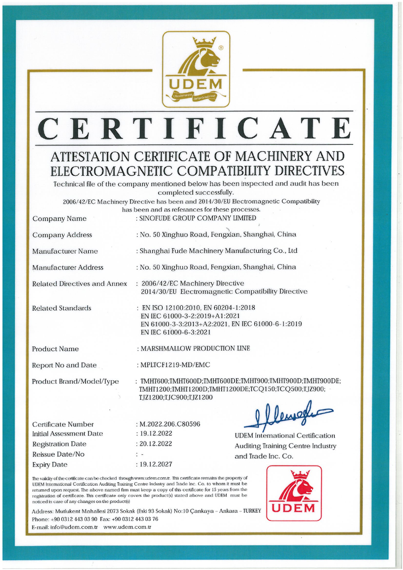
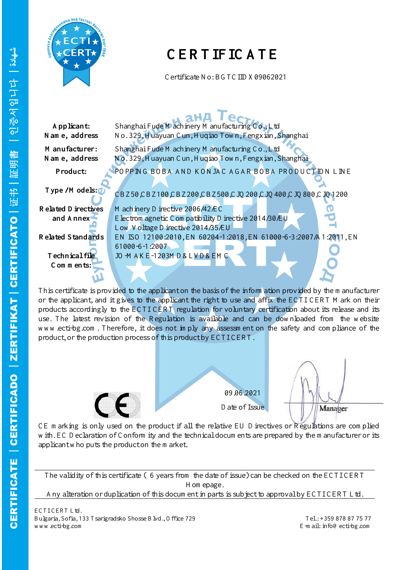
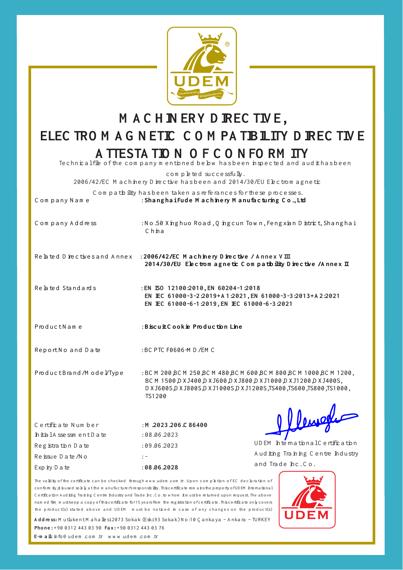
SINOFUDE was founded in 1998 in Fengxian District, Shanghai, and now operates three factories covering more than 30 acres with more than 200 employees. Our Confectionery, Baking and Chocolate equipment divisions support food-production projects across the product range.
Management and product development
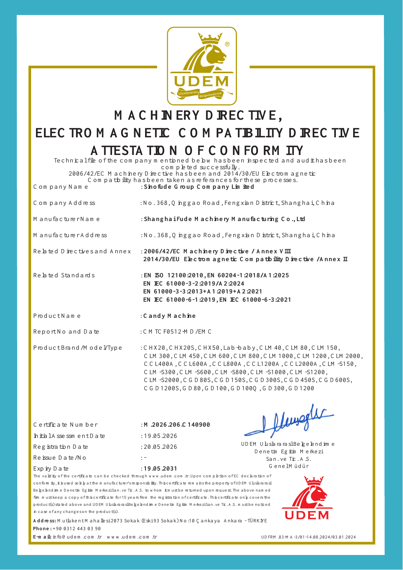
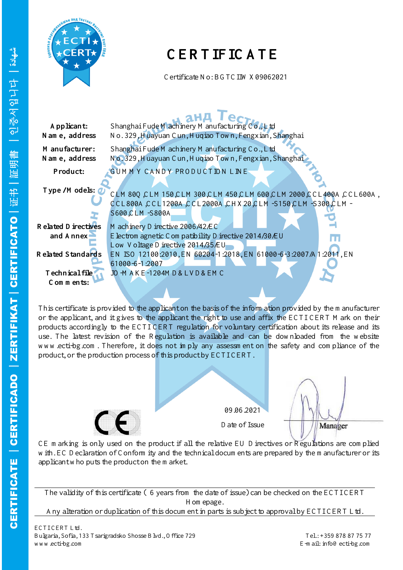
Our company introduced an ISO 9001 management system in 2004 and reports 38 product patents across the company. These company-level facts do not assign certification or patent coverage to a specific BCQ configuration.
Processing capability
Our biscuit machinery manufacturing methods include high-power laser cutting and laser welding, plus CNC machining centers and CNC gantry milling. These processes support component accuracy, fabrication quality and repeatable equipment assembly.
When This Production Route Is Not the Best Fit
Every route has a trade-off, and a flexible industrial line is valuable only when its forming method and system boundary address the product portfolio. Our review focuses the project toward trials, another process or a narrower scope when the inputs do not permit a responsible line selection.[1]
Situation
Why it works against the project
Better next step
The dough behaviour is unknown or changes widely
Former selection and piece control cannot be confirmed from a product name
Run recipe and forming trials before fixing the machine route
The highest nameplate figure is the only selection criterion
Oven, cooling, stacking or packing may become the real constraint
Model saleable output and locate the bottleneck first
Factory utilities and access are not verified
Heating, exhaust, electrical and installation assumptions can change the design
Complete a site-input and layout review before approval
A fixed temperature is expected to prove product safety
Recipe, product geometry, residence time and validation method affect the result
Define the food-safety validation owner and evidence plan
Changeover means only replacing a mould
Cleaning, allergen release, recipe stabilization and inspection may dominate time
Map the complete changeover clock by SKU family
Soft Biscuit and Cookie Line FAQ
The product range can include rotary-moulded biscuits, wire-cut cookies, deposited products and sheeted/cut formats when the selected forming route matches the dough. Product samples and trials define the actual scope.
Start with dough plasticity, inclusion size, target shape, surface detail and release behaviour. Rotary moulding emphasizes mould filling and release, while wire-cut forming emphasizes dough feed, inclusion clearance and cut-off control.
No. The BCQ 250–1500 ladder is listed from up to 50 to 1,500 kg/h, while saleable output also depends on uptime, running speed, good-product yield and the slowest connected module.
Gas, diesel or electric heating can be considered according to project requirements. Our engineers confirm the route against the factory supply, oven design, exhaust, controls and local engineering requirements.
No. It is a supplied reference range, and the working profile must be tested against recipe, thickness, piece weight, sugar and fat content, belt loading and product-safety controls.
The supplied table lists four operators per shift as a reference. The actual team depends on automation, ingredient feeding, quality inspection, packing, cleaning and the site’s work practice.
Not automatically. The 60-minute mould-change reference does not include every recipe purge, allergen-cleaning, restart and acceptance task unless the approved method says so.
Our stated FAT framework covers mechanical, electrical, safety and process checks against the approved specification. Product testing depends on supplied samples and agreed test conditions.
The agreed scope can include layout drawings, operation manuals, electrical drawings and maintenance instructions. The exact language, format, model mapping and delivery stage belong in the written document list.
Optional filling or coating and the packaging interface can be engineered into the line boundary. The scope must state whether each downstream machine, signal and accumulation section is included.
Define the allergen matrix, cleaning method, release criteria, housekeeping and dust-risk responsibilities for the installed system. These controls are site- and product-specific and cannot be inferred from the machine model alone.[3]
Send the recipe range, product samples or drawings, target dimensions and weight, target saleable kg/h, utilities, verified space, packaging boundary and acceptance priorities. The eight-field project-input tool helps expose missing information.



