
Get in Touch with SINOFUDE Company

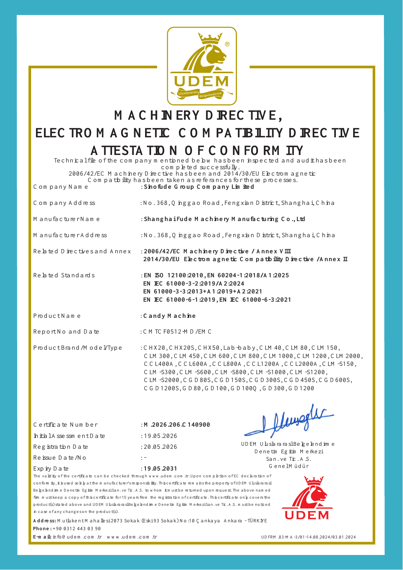
ISO Certified
Fondant Line
Fondant Production Line for Controlled Creme Preparation
Configure a fondant production line for cooked, cooled, and crystallized confectionery fondant, fondant cream, filling, coating, or formed candy products. Our engineers will review your formula, final state, required output, cleaning plan, and downstream equipment to finalize the machine scope.
“fondant” indicates an industrial confectionery mass, not a home cake roller, sheeter, or small decoration machine. If your product is rolled icing, please inform us so we can differentiate this requirement from preparation of fondant creme.
- Product first: Formula and finished state define the review
- One line boundary: Cooking through agreed downstream handoff
- BFJ400 reference rate: 400 kg/h
- Real SINOFUDE equipment images
- Formula-led engineering review
- RFQ, FAT, and SAT planning tools
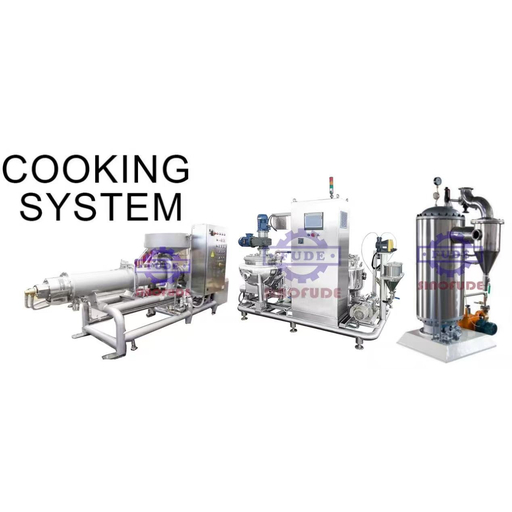
400 kg/h
BFJ400 nominal reference output
20 kW
Published reference connected power
6,400 mm
Published reference machine length
Written Acceptance
FAT and SAT criteria agreed before testing
SINOFUDE Fondant Line Capabilities.
A request for a viable confectionery line should outline the intended confectionery product, rather than a catalog model. Our review outlines the preparation of the recipe and product from the preparation of the ingredients, cooking, controlled cooling, crystallization or beating, storage, and the agreed forming or transfer point.
Engineering Rule
Freeze the product and acceptance basis before freezing the technology and machine list.
CONFECTIONERY TECHNOLOGY
ENGINEERING EXCELLENCE
01
Recipe and process definition
SINOFUDE reviews sugar, glucose syrup or invert sugar, water, fat, milk, fruit, colour, flavor, and allergen inputs. The same machine name can cover products with very different viscosity, crystal structure, handling temperature, and smoothness.
02
Cooking and syrup transfer
The cooker, pumps, holding or warming equipment, and transfer sequence are configured around the agreed feed condition and cooking endpoint. Instrument ranges, product-contact materials, and heating method belong in the technical agreement.
03
Cooling and crystallization
Cooling and beating stages are sized around the product’s release state rather than an unverified setpoint. Controlled temperature history and agitation influence the balance between sugar crystals, liquid phase, and entrained air.
04
Forming and downstream handoff
The line boundary is placed at a defined interface, such as a depositor, former, coating process, cooling conveyor, or packaging feed. The proposal should state which drives, controls, guards, supports, and transfer points are included.
05
Controls and operating recipes
Control points, alarms, interlocks, operator inputs, and recipe-management scope are confirmed in the quotation. Automatic operation does not remove the need to define ingredient tolerances and an approved operating window.
06
Factory and site acceptance
The agreed run basis is documented before FAT: formula, batch or continuous mode, run duration, output measurement, product temperature, texture checks, yield, and punch-list closure. SAT then confirms installation, utilities, interfaces, training, and site performance.
Capacity is a system result. A faster cooker does not raise saleable output when feeding, cooling, forming, changeover, or packing is the bottleneck. The proposal must use one throughput boundary from raw-material feed to the agreed downstream handoff.
Product Brief Inputs and Finished-State Targets
Core Definition
“fondant production” may refer to cream centers, fillings, coatings, poured products, formed pieces, or cake icing. We would appreciate knowing the state that leaves the line, what happens next, and how the buyer determines that the product is acceptable.
Buyers need a product definition before a model choice.
Operational Brief
Cleaning method, allergen changeover, and inspection access belong in the initial brief. Nominal machine speed must be checked against cooling, forming, and packing.
Acceptance Path
New-supplier buyers need a visible scope and acceptance path.
| Input group | Information to provide | Why it changes the line |
|---|---|---|
| Product identity | Fondant cream, filling, coating, deposited mass, formed candy, or rolled icing | Prevents a machine-category mismatch |
| Formula family | Sugar, syrup, water, fat, dairy, fruit, color, flavor, inclusions, and processing aids | Changes cooking, pumping, cooling, cleaning, and allergen scope |
| Incoming condition | Ingredient temperature, solids, batch size, feed form, and variability | Sets the real duty for heating, mixing, and transfer |
| Finished state | Temperature, moisture or water activity, hardness, stickiness, viscosity, texture, and shape | Creates measurable release criteria |
| Output basis | Net kg/h, scheduled hours, product yield, changeovers, and required continuous run | Separates nameplate rate from saleable production |
| Next process | Depositing, forming, enrobing, bake use, cooling, packing, or manual handling | Defines elevation, temperature, controls, and transfer interfaces |
Cooking, Cooling, Crystallization and Forming Modules
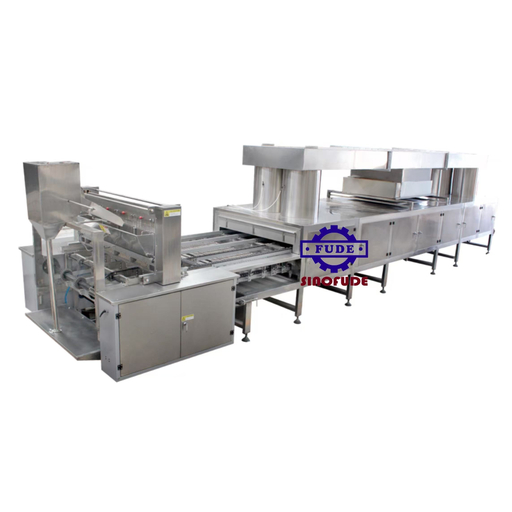
Each complete production line is a linked thermal and mechanical process. Only modules that are approved for the product process are integrated, with responsibility identified at every connection.
01
Step 1 Ingredient preparation
Dissolve and combine the approved sugar, syrup, liquid, and other recipe components under controlled mixing. Powdered additions, milk, butter, fruit, pectin, shortening, or chocolate ingredients need their own addition and allergen plan when present.
02
Step 2 Cooking and concentration
The cooker establishes the thermal and solids history used by the later cooling stage. No universal cook temperature is published because the correct endpoint belongs to the buyer’s formula and validation basis.
03
Step 3 Controlled cooling
The mass must cool into an agreed operating window before or during crystallization. Heat-transfer area, flow, residence time, and product viscosity influence the equipment choice.
04
Step 4 Beating and crystallization
Agitation promotes a fine crystalline structure while the remaining liquid phase supports a cream or paste texture. Continuous fondant machinery can stabilize this stage only when feed conditions stay inside the specified window.2
05
Step 5 Holding and transfer
Warming, gentle agitation, and sanitary transfer help preserve the agreed handoff condition. Pump selection and pipe routing must account for viscosity, shear sensitivity, drainage, access, and cleaning.
06
Step 6 Forming or customer interface
The final module can feed a depositor, mold, forming system, dip or coating step, center-filling process, cooling conveyor, or packing line. Interface confirmation covers signals, speed range, product temperature, and physical connection points with both equipment parties.
Processing fondant via continuous method shows how cooled stator and rotor surfaces are able to cool and induce crystallization in the process. It adds no claim that every SINOFUDE integration uses this particular patent or its corresponding parameters.
BFJ400 SERIES
BFJ400 Reference Configuration and Machine Specifications
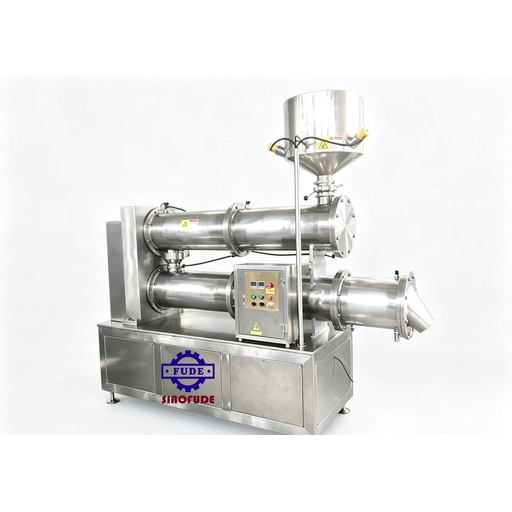
The following figures come from a SINOFUDE-affiliated product page and describe one BFJ400 reference configuration. Quotation review confirms them against your recipe, required product state, utilities, layout, destination, and downstream interfaces.
Capacity mismatch becomes a project risk because a nominal rate says nothing about the approved formula, yield, or downstream constraint. SINOFUDE therefore treats 400 kg/h as a reference basis to be tested against one written acceptance boundary.
| Reference item | Published value | Quotation check |
|---|---|---|
| Model | BFJ400 | Confirm final model and included modules |
| Nominal output | 400 kg/h | Define formula, net-output basis, run time, yield, and acceptance sample |
| Connected power | 20 kW | Confirm installed and operating loads plus heating utilities |
| Reference weight | 3,000 kg | Confirm shipping and installed weights |
| Reference length | 6,400 mm (252.0 in) | Allow access, maintenance, pipework, and interfaces |
| Reference width | 1,300 mm (51.2 in) | Check aisles, doors, guards, and operator space |
| Reference height | 2,300 mm (90.6 in) | Check ceiling, services, lifting, and cleaning access |
These values are intended to provide an early estimate of layout and capacity, and should not be understood to provide a guarantee of performance. The written technical agreement and FAT should specify the conditions under which output, product quality, power, and interfaces will be accepted.
Formula and Product State
What Changes: Heating, cooling, mixing, pumping, residence time, and cleaning duty Input That Reduces Uncertainty: Approved formula range and representative samples
Line Boundary
What Changes: Number of modules, controls, guarding, supports, and interfaces Input That Reduces Uncertainty: Process flow and responsibility matrix
Output and Operating Pattern
What Changes: Equipment size, thermal load, buffer volume, and downstream coordination Input That Reduces Uncertainty: Net kg/h plus shift and changeover plan
Destination and Site
What Changes: Electrical design, documentation, packing, freight, installation, and service Input That Reduces Uncertainty: Country, plant layout, utility schedule, and delivery terms
Production Schedule
We schedule production within 90 days after deposit receipt and confirmation of production-related technical details. The quotation should identify when this production period starts and separate transport, installation, and site acceptance timing.
Commercial Terms
SINOFUDE’s stated payment term for this offer is 30% T/T deposit and 70% T/T before shipment. We supply product test samples when agreed; courier or freight charges are paid by the buyer.
This page does not define a list price or a payback period or a savings percentage, as total-cost comparison includes utilities, changeover, cleaning, installation, training, consumables, wear parts, maintenance access, spare parts, and the effect of the slowest downstream step.
Process Control, Cleaning and Acceptance
Food equipment should use food-contact surfaces and avoid seams or spaces that can collect product or organic matter. For U.S. based projects, 21 CFR 117.40 provides a procurement baseline for equipment and utensils; it does not specify machines.
Process-control review
- Ingredient and feed tolerances
- Cooking endpoint and instrumentation
- Cooling and product-temperature window
- Agitation or beating speed range
- Holding time and downstream handoff
- Alarms, interlocks, and safe-stop behavior
Hygienic-design review
- Product-contact material schedule
- Weld, seam, gasket, and seal details
- Drainability and retained-product points
- Manual access, COP, or CIP boundary
- Cleaning chemicals, time, and temperature
- Inspection, rinse, or swab acceptance
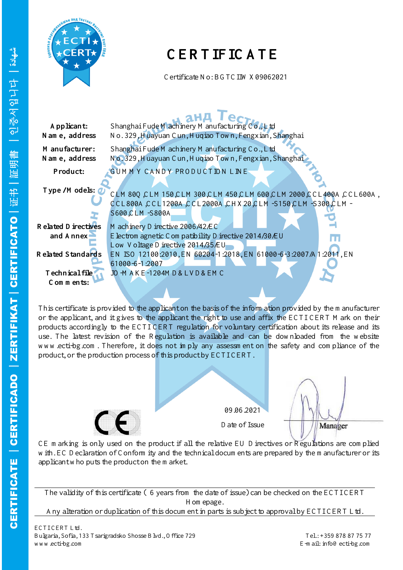
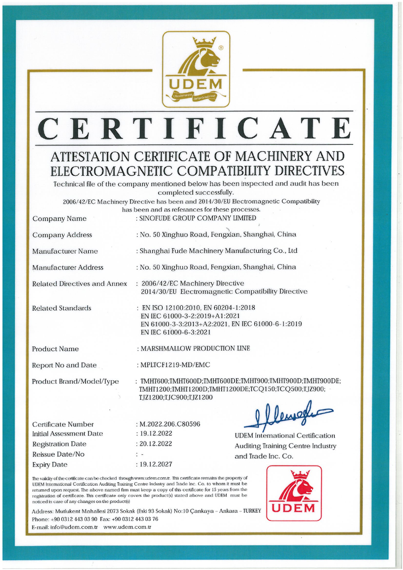
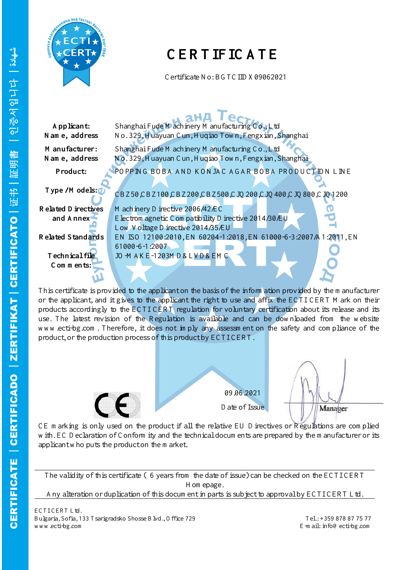
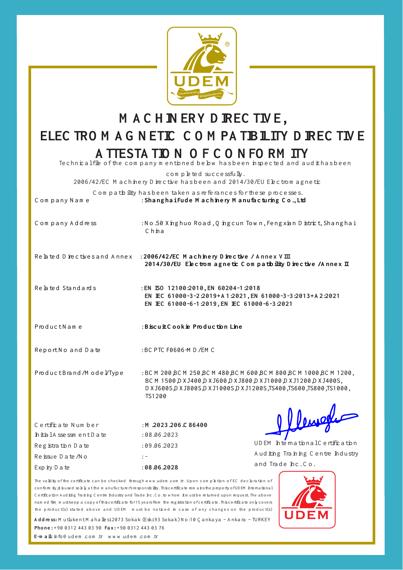
The cleaning method should not be replaced by “stainless steel”; rather, this review defines the cleaning method. If a CIP connection is provided, the agreement should still define circuit coverage, flow, drainage, manual cleaning steps, inspection, and cleaning validation.
Dry sugar handling is a separate safety review. Fine airborne sugar dust can be combustible, so ingredient receiving, tipping, screening, conveying, collection, and housekeeping need a facility-specific dust hazard assessment and engineered controls. This is not evidence that the BFJ400 itself creates or solves every dust risk.
Acceptance evidence to agree
| Test group | Define before FAT | Record at closeout |
|---|---|---|
| Function | Operating modes, alarms, interlocks, sequences, and interfaces | Pass/fail record and punch list |
| Throughput | Formula, run duration, net measurement boundary, yield, and interruptions | Time-stamped production record |
| Product | Sampling point, temperature, moisture, texture, hardness, stickiness, shape, or rheology | Approved sample and measurement results |
| Cleaning | Method, changeover target, access, inspection, and validation responsibility | Observed procedure and open actions |
| Documents | BOM, manuals, drawings, certificates, declarations, calibrations, and spare-parts list | Configuration-linked document register |
×
![Enlarged view]()
Click anywhere to close
Project Delivery from Product Brief to SAT
01
Define the product.
Include intended use, formula range, finished state limits, output basis, samples and destination.
02
Review process path.
This reviews the thermal, mixing, cooling, crystallization, holding, forming, and packing interfaces.
03
Confirm line boundary.
This proposal separates SINOFUDE supply, buyer utilities, third-party equipment, installation work, and site responsibilities.
04
Freeze the technical agreement.
This confirms the model, modules, product-contact materials, controls, layout, utilities, documentation, and acceptance criteria.
05
Build and run FAT.
This uses the agreed recipe or representative basis, instruments, run duration, pass/fail criteria, and punch-list process.
06
Install, train, and close SAT.
Site utilities, interfaces, operator training, calibration, spare parts, and open actions are recorded before acceptance.
Buyer inputs that prevent rework
Provide a current plant layout, utility conditions, feed and discharge elevations, interface signals, cleaning restrictions, destination documents, and the person who approves the product sample.
Supplier outputs that make scope visible
Request an itemized quotation, equipment list, layout, utility schedule, control description, responsibility matrix, FAT plan, document register, spare-parts proposal, and service boundary.
Application Fit and Trade-offs
This line fits products that rely on cooked syrup, controlled cooling, crystallization, and a repeatable industrial handoff. This is not the best basis for selecting a process when selling a product called fondant.
The 400 kg/h nameplate is not a substitute for a balanced line.
Fondant creme and rolled icing are not interchangeable requirements.
The wrong choice locks in a process that may never reach the approved texture.
Every cleaning trade-off must be evaluated with the real formula and allergen plan.
Situation
Why it changes the decision
Better next step
Situation
Rolled cake-decorating icing is the finished product
Why it changes the decision
Kneading, sheetability, plasticity, and packaging can dominate rather than fondant creme crystallization
Better next step
Send the rolled-icing formula and finished sheet or pack specification for a separate process review
Situation
Several products have conflicting temperatures or allergens
Why it changes the decision
One fixed sequence can create long changeovers or compromise cleaning access
Better next step
Compare segregated circuits, removable product-contact parts, campaign production, or separate lines
Situation
Packaging or cooling is slower than 400 kg/h
Why it changes the decision
The downstream bottleneck limits saleable output and can force product holding
Better next step
Balance the whole line and add a defined buffer only when product stability allows it
Situation
The recipe and acceptance sample are not settled
Why it changes the decision
Machine sizing can move after the formula, viscosity, or finished state changes
Better next step
Run product development and sample trials before freezing the equipment contract
Situation
Dry sugar handling has no hazard assessment
Why it changes the decision
Dust collection and site integration cannot be selected responsibly without the actual material and process
Better next step
Complete the facility dust review and give its design basis to every equipment supplier
Fondant Line Engineering & Acceptance Tools
01
Engineering Tool
Fondant Line RFQ Readiness Checklist
Capture the inputs that affect line scope, process review, utilities, cleaning, and acceptance. This checklist does not select a machine automatically.
Access Tool
→
02
Planning Tool
Fondant Line Reference Output Planner
Translate a nominal line rate into a planning quantity after scheduled hours, planned availability, and saleable yield. The prefilled 400 kg/h is the BFJ400 reference rate published by a SINOFUDE-affiliated source.
Access Tool
→
03
Acceptance Tool
Fondant Line FAT and SAT Acceptance Builder
Select the acceptance groups that must be written into the quotation or technical agreement. A checked box means “include in the discussion,” not “already passed.”
Access Tool
→
Fondant Production Line FAQs
The intended scope is industrial confectionery fondant or fondant cream used for fillings, coatings, depositing, forming, or related candy processes. Rolled cake-icing products should be identified separately because their mixing, kneading, forming, and packaging requirements can differ.
An approved syrup or recipe is cooked to the required condition, cooled into a controlled range, and agitated or beaten to develop a fine crystalline structure. Holding and transfer then preserve the agreed temperature and texture before filling, coating, forming, or another downstream step.
BFJ400 is listed at a nominal 400 kg/h in a SINOFUDE-affiliated reference. The contract should define formula, incoming condition, finished temperature and texture, run duration, yield, utilities, and the measurement boundary before 400 kg/h becomes an acceptance requirement.
Send the product type, formula range, allergens, required net output, scheduled hours, finished-state limits, site utilities, layout, cleaning method, downstream equipment, destination, and FAT or SAT expectations. The 12-section RFQ checklist turns those inputs into one discussion brief.
The affiliated reference lists 20 kW for BFJ400, but the quotation must clarify connected load, operating load, heating medium, pumps, auxiliary equipment, and third-party modules. Ask for one utility schedule covering every included item.
Agree the approved formula or representative basis, run duration, 400 kg/h measurement boundary if applicable, product sampling, instruments, tolerances, alarms, interlocks, cleaning observation, documents, training, and punch-list closure. Use the 8-group acceptance builder to prepare the meeting.
Those ingredients can change heat transfer, viscosity, allergen controls, cleaning, shelf-life validation, and downstream behavior. Submit the complete formula and intended product state so each module and cleaning boundary can be reviewed.
No. Material grade is one part of the review; seams, welds, seals, drainage, access, retained product, cleaning method, and validation also matter under equipment requirements such as 21 CFR 117.40.
We schedule production within 90 days after deposit receipt and confirmation of production-related technical details. The quotation should show transport, installation, commissioning, and SAT separately from that production period.
SINOFUDE’s stated payment term for this offer is 30% T/T deposit and 70% T/T before shipment. We supply product test samples when agreed; courier or freight charges are paid by the buyer.



